Car Crash First Aid: Don't Forget the Defibrillator
Car crashes can cause sudden cardiac arrest, yet defibrillators are often forgotten in the panic. This section reminds rescuers and first responders to “Send for the AED.” Learn why rapid defibrillation matters, how to identify safe use conditions at a roadside scene, and how communities can increase survival rates with accessible AEDs. Every post reinforces one truth: quick action saves lives, and preparedness starts long before an emergency call.Don’t Forget the Defibrillator at a Car Crash
It Could Save a Life
When a serious car crash happens, people often think about calling 000, checking for injuries, and giving CPR. But one critical step is too often forgotten: sending someone to grab a defibrillator (AED).
The truth is, sudden cardiac arrest can happen at the scene of trauma. The shock of an impact, underlying medical conditions, or the stress of the event can stop the heart. An AED may be sitting just a few hundred metres away in a shopping centre, service station, school, or sports club. But unless someone is told to go get it immediately, those precious minutes slip away.
Why the Defibrillator Matters
Survival drops fast without it. Every minute without defibrillation reduces survival chances by up to 10%.
CPR alone is rarely enough. CPR keeps blood flowing, but only a defibrillator can restart a heart in most cardiac arrests.
They’re closer than you think. In many towns and suburbs, AEDs are installed in public spaces, businesses, or even roadside rest stops.
Common Mistake in First Aid Response
In the chaos of a crash scene, bystanders focus on visible injuries like bleeding or broken bones. Meanwhile, the person who is unconscious and not breathing may need defibrillation as urgently as oxygen or bleeding control.
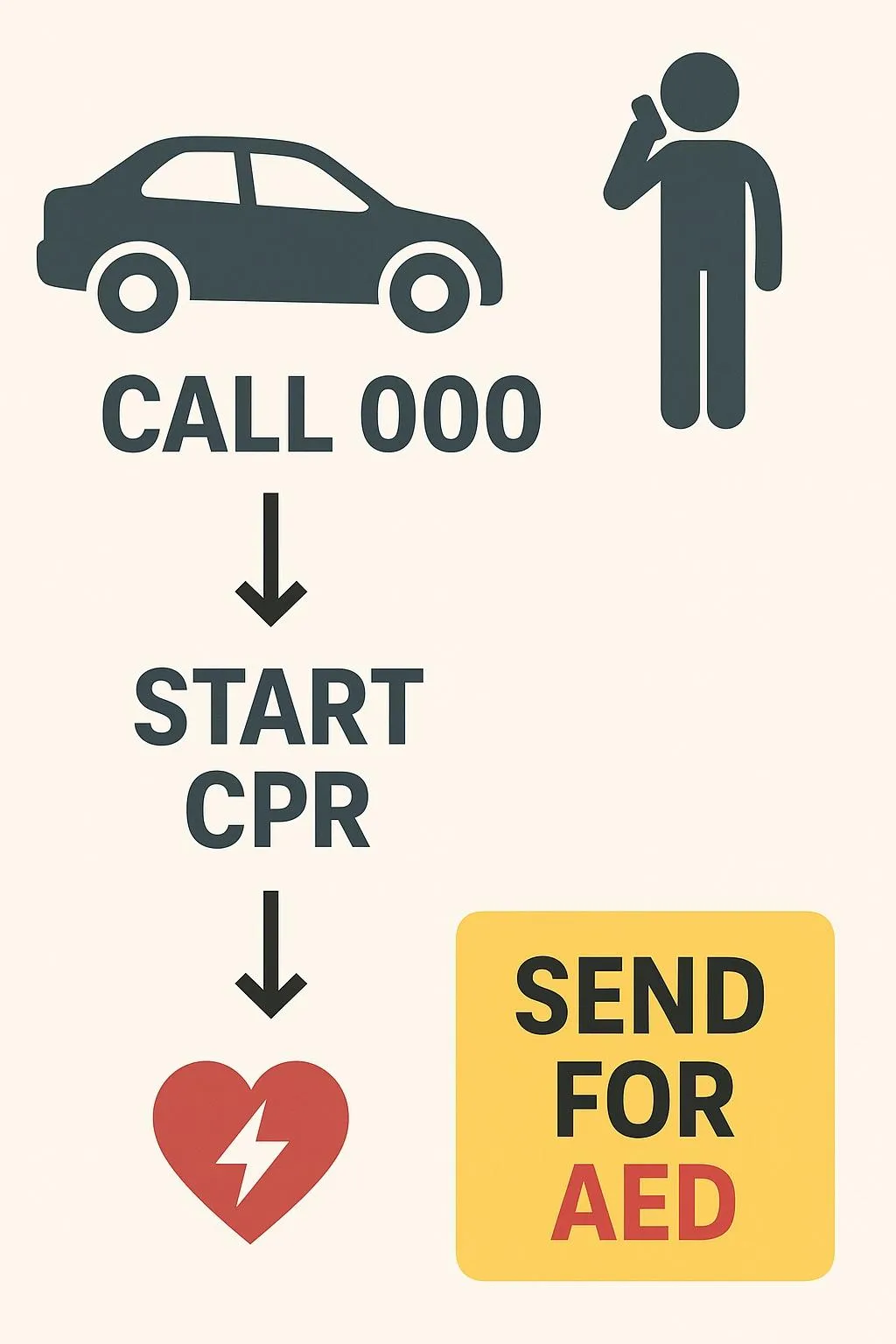
That’s why first aid training emphasises assigning roles. One person calls 000. Another starts CPR. And another is sent for the AED. Without this teamwork, the chance to save a life may be missed.
What You Can Do
Always ask: “Does anyone know where the nearest defibrillator is?”
Send someone early. Don’t wait to see if CPR works, get the AED on its way immediately.
Learn to use it. AEDs are simple to operate. They literally talk you through the steps.
Final Word
At a car crash, every second counts. Don’t let the defibrillator be an afterthought. Make it a top priority alongside calling 000 and starting CPR. It could be the difference between life and death.
👉 For more first aid knowledge and accredited training, visit REACHAU.com.au.