Choking in Adults: The Australian First Aid Response
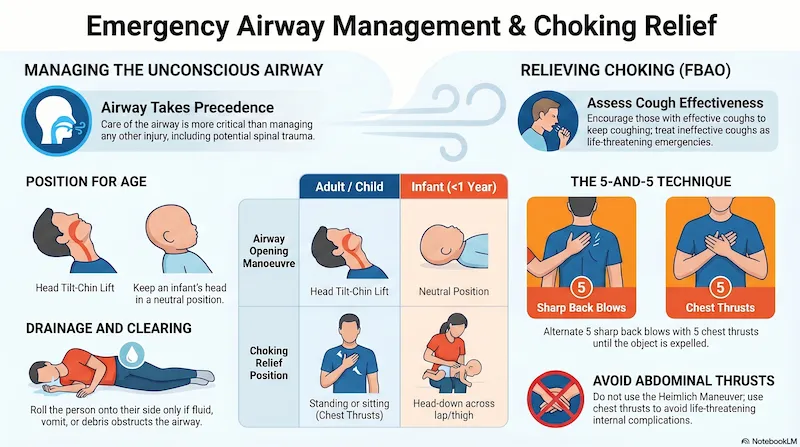
In Australia, the recommended first aid response for a choking adult is the 5-and-5 technique: up to 5 firm back blows between the shoulder blades, followed by 5 chest thrusts if the airway is still blocked. This differs from the Heimlich manoeuvre, which is not recommended in Australian guidelines due to the risk of internal injury. If the person loses consciousness, call 000 and begin CPR immediately.
First Aid Skills
How to Help a Choking Adult: The Australian First Aid Approach
Back blows. Chest thrusts. Not the Heimlich. Here is what Australian guidelines actually say, and why it matters.
Choking is one of the most frightening emergencies to witness.
It happens without warning, often at mealtimes or in workplaces, and it requires immediate action.
Without help, a complete airway obstruction can cause brain damage within minutes.
This article explains how to recognise choking in adults, what to do step by step, and why the Australian approach differs from what many people have seen in American television and film.
What you will learn in this article:
✓ How to tell the difference between partial and complete choking obstruction
✓ Why Australian guidelines use back blows, not the Heimlich manoeuvre
✓ The exact step-by-step response for a choking adult
✓ What to do in special circumstances including pregnancy and being alone
✓ When to start CPR and what happens if someone goes unresponsive
1 Recognising a Choking Adult
The first step is confirming that the person is actually choking and not experiencing a medical episode such as a heart attack or stroke.
A choking adult will typically:
✓ Clutch their throat with one or both hands (the universal choking sign)
✓ Be unable to speak or can only whisper
✓ Be unable to cough effectively
✓ Have a red or increasingly blue face
✓ Show obvious distress and panic
Understanding the difference between partial and complete obstruction changes how you respond.
Partial Obstruction
The airway is not fully blocked. The person can still cough, breathe, or speak even if it is difficult and noisy. Encourage them to keep coughing and do not interfere. Their body is still working to clear the obstruction.
Complete Obstruction
The airway is fully blocked. The person cannot cough, speak, or breathe at all. This is a medical emergency. You need to act immediately.
2 The Australian Approach: Why It Differs from What You Have Seen on TV
In Australia, the recommended first aid response for adult choking is back blows and chest thrusts. This differs from the Heimlich manoeuvre, which is widely shown in American media but is not the technique recommended by the Australian Resuscitation Council.
Why not the Heimlich?
Abdominal thrusts carry a genuine risk of internal injury, particularly in older adults and people who are pregnant. Australian guidelines recommend against them for this reason. Back blows and chest thrusts achieve the same goal without the same risk of harm.
What TV Shows
Stand behind the person, wrap your arms around them, and thrust inward and upward under the ribs. This is the Heimlich manoeuvre and it is not recommended in Australia.
What Australian Guidelines Say
Lean them forward. Deliver up to 5 firm back blows between the shoulder blades. If that does not work, move to 5 chest thrusts. Alternate until the object is dislodged.
3 Step by Step: What to Do for a Choking Adult
Step | Action |
|---|---|
1 | Stand or kneel beside the person. Lean them forward slightly if possible. |
2 | Deliver up to 5 firm back blows between the shoulder blades using the heel of your hand. Each blow should be forceful and deliberate. Check after each one to see if the object has been dislodged. |
3 | If back blows are not effective, move to 5 chest thrusts. Position yourself beside or in front of the person. Place one palm against the lower centre of their chest and push sharply inward and upward. This creates a "heave" that can help dislodge the object. |
4 | Alternate between 5 back blows and 5 chest thrusts. Check after each cycle. |
5 | If the person loses consciousness, lower them carefully to the ground, call 000, and begin CPR immediately. |
6 | If a LifeVac or DeChoker device is available, it can be added into treatment. Only use it if you have already practised with it, have two people available, and basic first aid has not worked. |
The core principle.
Do not wait to see if the person can clear it themselves once a complete obstruction is confirmed. Do not delay to find equipment. Start back blows immediately and keep going until the airway is clear or the person loses consciousness.
4 Choking in Special Circumstances
A few situations come up regularly in training, so it is worth addressing them directly.
Situation | What to Do |
|---|---|
Pregnant adult | The approach is the same as for any adult. Use back blows and chest thrusts. Do not avoid helping because of the pregnancy. The same technique applies. |
You are alone and choking | Call 000 immediately if possible. Try to perform abdominal thrusts on yourself by making a fist and thrusting inward and upward just above the navel. Alternatively, thrust your upper abdomen sharply against the back of a chair or hard edge. |
LifeVac or anti-choking device available | Suction-based devices like LifeVac use a mask and pump to create suction over the mouth and nose. They are additional tools, not replacements. Only use if you have practised with the device, have two people present, and standard first aid has not resolved the obstruction. |
5 When Choking Leads to Cardiac Arrest
If the person becomes unresponsive, stop back blows and chest thrusts immediately.
Immediate steps if the person loses consciousness:
✓ Lower them carefully to the ground
✓ Call 000 immediately
✓ Begin CPR with chest compressions
✓ Do not give rescue breaths if the airway is still blocked. Continue compressions until the object is expelled or paramedics arrive.
Chest compressions during CPR can sometimes generate enough force to dislodge the obstruction. Compression-only CPR is the right approach here. Keep going.
Learn how to perform CPR correctly in our HLTAID009 Provide CPR course, available across Perth and regional Western Australia.
Frequently Asked Questions
Why does Australia use back blows instead of the Heimlich manoeuvre?
The Australian Resuscitation Council recommends back blows and chest thrusts rather than abdominal thrusts (the Heimlich manoeuvre) due to the risk of internal injury, particularly in older adults and pregnant people. Abdominal thrusts can cause serious harm. Back blows and chest thrusts are considered effective and safer for most adults.
What should I do if back blows and chest thrusts are not working?
Continue alternating between 5 back blows and 5 chest thrusts, checking after each cycle. If the person loses consciousness, lower them to the ground carefully, call 000, and begin CPR. Chest compressions during CPR can sometimes generate enough force to dislodge the obstruction.
Can I use a LifeVac device instead of back blows?
LifeVac and similar anti-choking devices are additional tools, not replacements for standard first aid. They should only be used if you have already practised with the device, have two people available, and standard back blows and chest thrusts have not been effective. They do not replace trained first aid response.
What do I do if the person choking is pregnant?
The first aid approach for a choking pregnant adult is the same as for any other adult. Use back blows and chest thrusts as per Australian guidelines. Do not avoid helping because of the pregnancy. The same technique applies.
What should I do if the choking person loses consciousness?
Stop back blows and chest thrusts immediately. Lower them carefully to the ground, call 000, and begin CPR. Continue chest compressions without rescue breaths if the airway is still blocked. Continue until the object is expelled or paramedics arrive. Learn this properly in a nationally recognised First Aid course.
Training Makes the Difference
Most people have a rough idea of what to do for someone who is choking. Very few have actually practised it under pressure.
In a real choking emergency, your brain defaults to what it has done before. If you have never practised back blows, you will hesitate. That hesitation costs time.
First Aid training does not just teach you what to do. It trains your hands and your instincts so that when it matters, you act without freezing.
Training and Assessment is delivered by Britt at Regional Education and Career Help Australia on behalf of ABC First Aid RTO 3399.
The Question Worth Sitting With
If someone near you started choking right now, would you know exactly what to do? Would you hesitate? Training answers both of those questions before the emergency happens, not during it.
Learn to Act Fast. Before You Need To.
Our nationally recognised courses cover choking response, CPR, and emergency first aid for real-world situations. Delivered face-to-face across Western Australia including Perth, Rockingham, Mandurah, Byford, Kwinana, Albany, the Wheatbelt, and regional areas.
HLTAID009 Provide CPR | HLTAID011 Provide First Aid | HLTAID013 Remote and Isolated First Aid