Agricultural worker safety and emergency response training
🚜 Agricultural Worker Safety and Emergency Response Training (2026)
In 2026, the Australian farm is a high-tech hub of productivity, but it remains one of the country's most hazardous workplaces. With the introduction of the new Workplace Exposure Limits (WEL) in December 2026 and a renewed crackdown by SafeWork inspectors, "safety" is no longer just about avoiding a rollover, it’s about managing invisible risks and masterminding emergency responses in total isolation.
The 2026 "Compliance Peak"
Agricultural business owners are facing a landmark year. Regulators are moving away from "common sense" excuses and moving toward verifiable competency. Whether you are a large-scale broadacre operation or a boutique orchard, your emergency response plan is now a legal document that must be tested, not just filed.
Critical Training Shifts for 2026
1. Managing New Exposure Risks The big news for late 2026 is the tightened limits on grain dust, diesel exhaust, and herbicides. Training for workers now includes:
Respiratory Protection: Proper fit-testing for respirators to prevent long-term lung disease. PPE only works when used correctly. This section explores specific risk factors, workplace policies and where first aid sits along side these.
Chemical Emergency Response: Beyond basic rinsing, workers are being trained on the specific physiological impacts of modern, high-potency herbicides and how to stabilize a colleague during a toxic exposure event. This section explores workplace policies, legislation, and first aid.
2. Heavy Machinery & Power Take-Off (PTO) Trauma While machinery has become smarter, trauma incidents still occur. 2026 training focuses on:
Crush & Entrapment Medicine: How to manage a patient trapped in an auger or under a vehicle for the "prolonged wait."
The "Stop the Bleed" Initiative: With heavy equipment comes the risk of catastrophic limb injuries. Every worker in 2026 should be proficient in the use of mechanical tourniquets, they are now as common as a pair of work boots in a tractor cab, but what about when you don't have one? This section explores various types of bleeds and the first aid required.
3. Animal Handling & Awareness: Emergency response isn't just about accidents; it's about the whole scene. Training covers the immediate first aid response for livestock-inflicted trauma, such as crush injuries in cattle yards or horse-related falls.
Why Invest in Training Now?
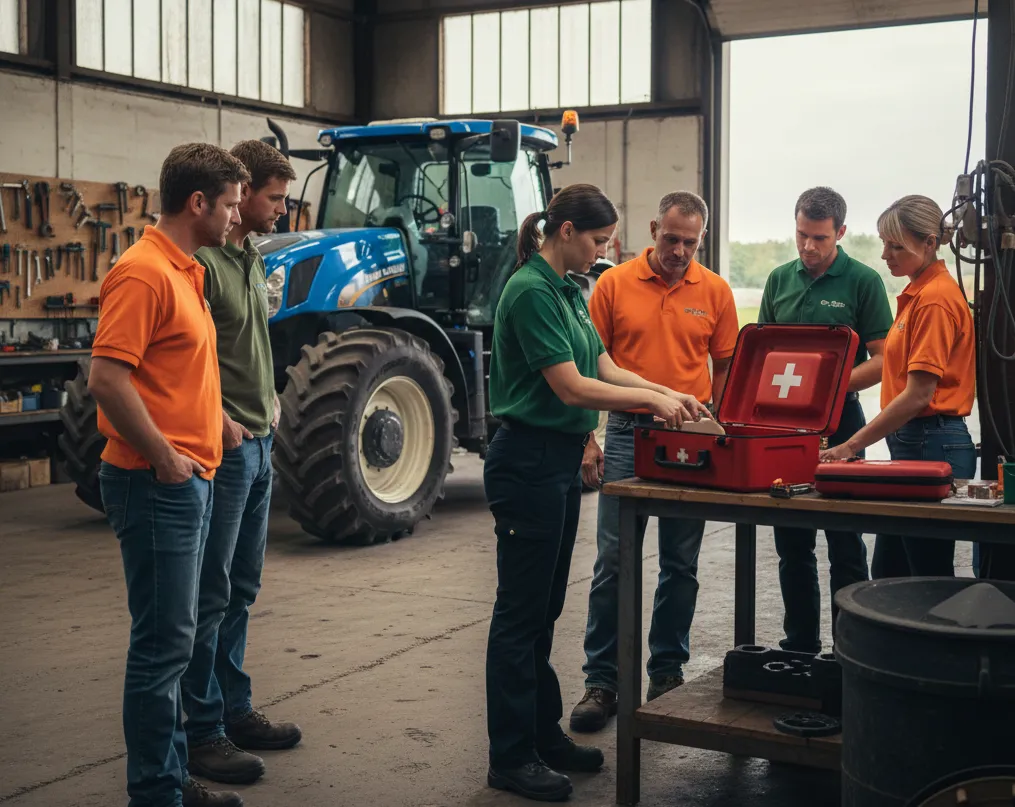
The cost of a WorkSafe fine in 2026 is high, but the cost of a lost life is immeasurable. Modern Agricultural Remote First Aid (HLTAID013) is designed to be practical. It doesn't happen in a sterile classroom; it happens in the shed, in the yard, and in the cab.
By training your team, you aren't just ticking a box for the 2026 audit; you are building a culture where "looking out for your mate" is backed by the technical skill to actually save them.
Contact Britt at Regional Education and Career Help Australia (REACHAU) to book a training for your staff.