HLTAID009 vs HLTAID011: Is CPR-Only Training Enough?
When the CPR refresher covers you, and when your workplace needs the full unit.
HLTAID011 Provide First Aid delivered over a full five hours face-to-face. The same nationally recognised qualification as the blended refresher, with more time to practise scenarios, ask questions, and build the kind of confidence that does not fade when the pressure is on. Ideal for first-time learners and anyone who has been away from first aid training for a long time.
There is no requirement to choose the full day format. The blended refresher delivers the same nationally recognised HLTAID011 qualification in a shorter session, and it suits people who have done first aid before and are maintaining currency.
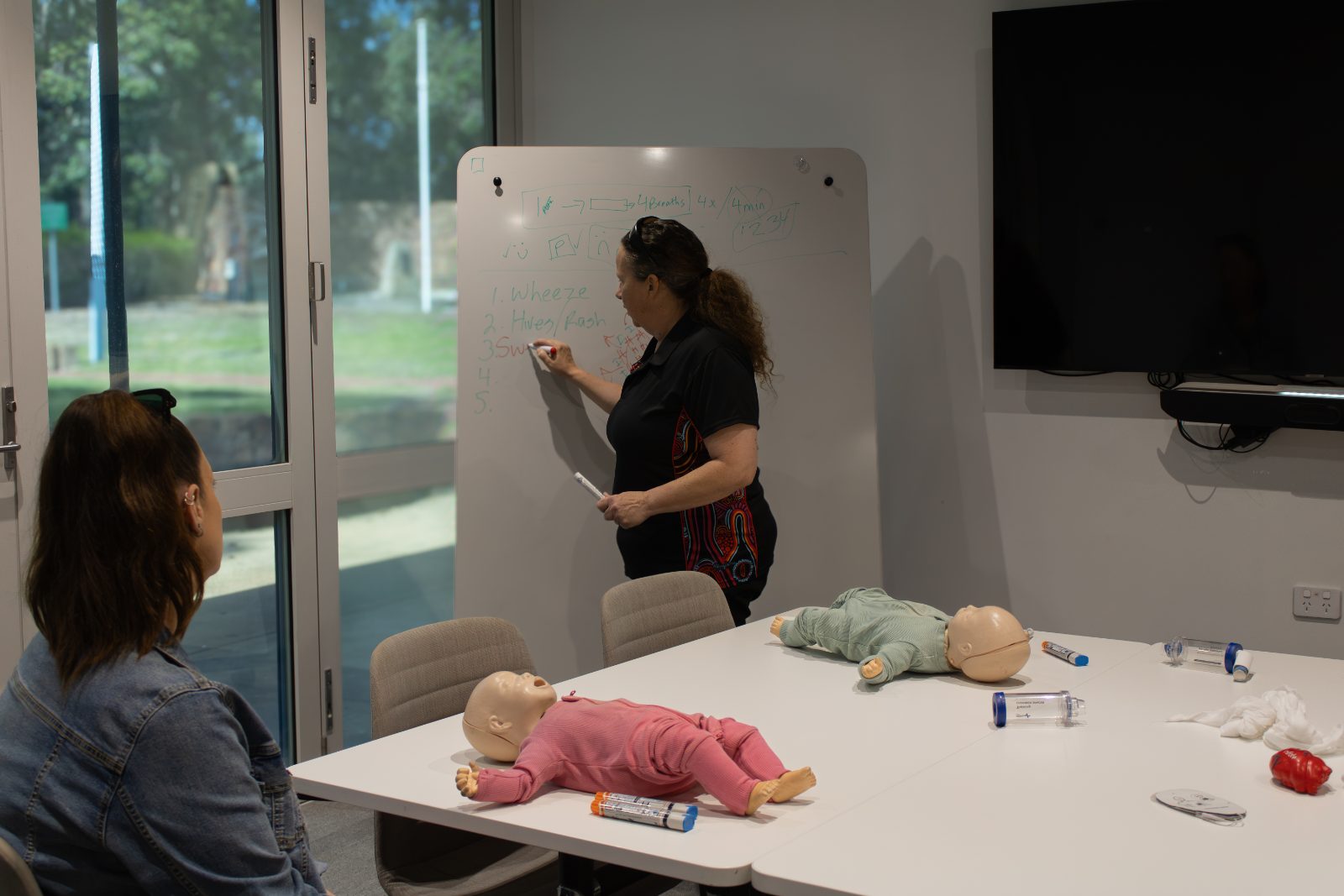
The full day format exists for a different reason. First aid is a physical skill. The more time you spend practising compressions, managing a scenario, working through an anaphylaxis response, or applying pressure to a bleeding wound, the more naturally those actions come under pressure. A longer session means more repetitions, more scenarios, more time to ask questions, and more time to work through the situations that feel uncertain.
If you have never done first aid before, or if it has been long enough that you feel you are starting fresh, this is the format that gives you the foundation those skills deserve.
"We do not just teach you how to pass an assessment. We teach you how to override the freeze response when a real emergency is in front of you."
Best for first-time learners and those returning after a long break. More scenarios, more repetitions, more time to practise and ask questions. No prior experience needed.
Short online theory completed beforehand, followed by a practical session. Best for people who hold a current or recently expired certificate and want to renew efficiently.
Both formats issue the same Statement of Attainment for HLTAID009, HLTAID010, and HLTAID011. The qualification and its validity are identical. The difference is time spent practising.
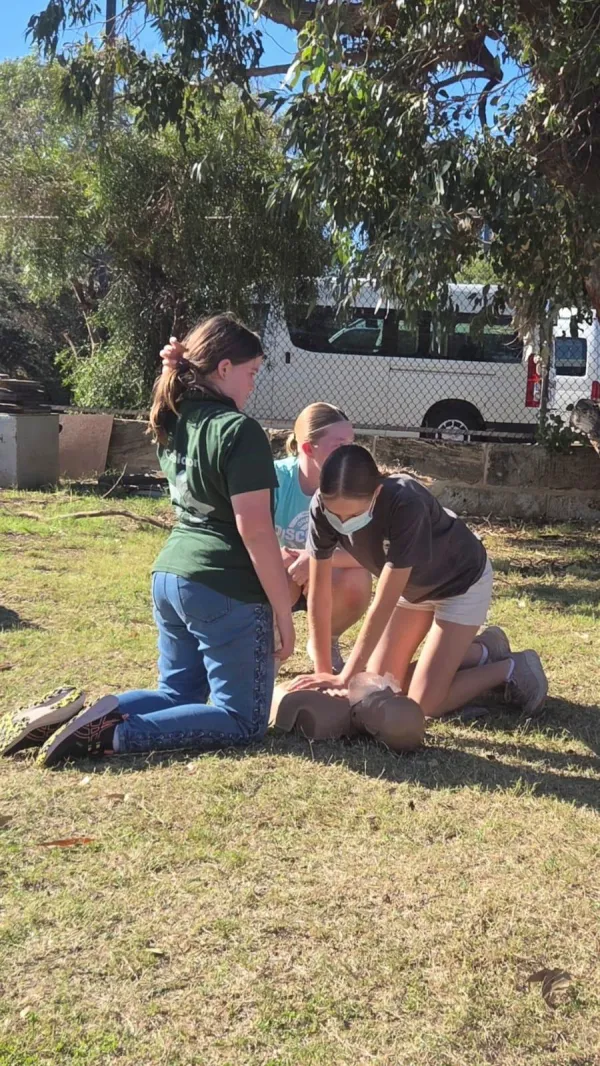
Skills build through repetition. A longer session means more chances to practise CPR, bleeding control, and anaphylaxis response until the actions start to feel natural rather than deliberate.
A compressed refresher moves quickly. The full day gives space to stop, ask about something that is unclear, and get a proper answer rather than moving on.
For someone new to first aid, the full day allows time to sit with each skill before moving on. Nothing is rushed. You leave having actually practised, not just observed.
Skills that have been practised more are accessed more easily when adrenaline is running. The full day is an investment in the kind of confidence that does not disappear in the moment.
A short online theory component and quiz is completed before attending. This prepares you for the practical day and is required for first-time participants.
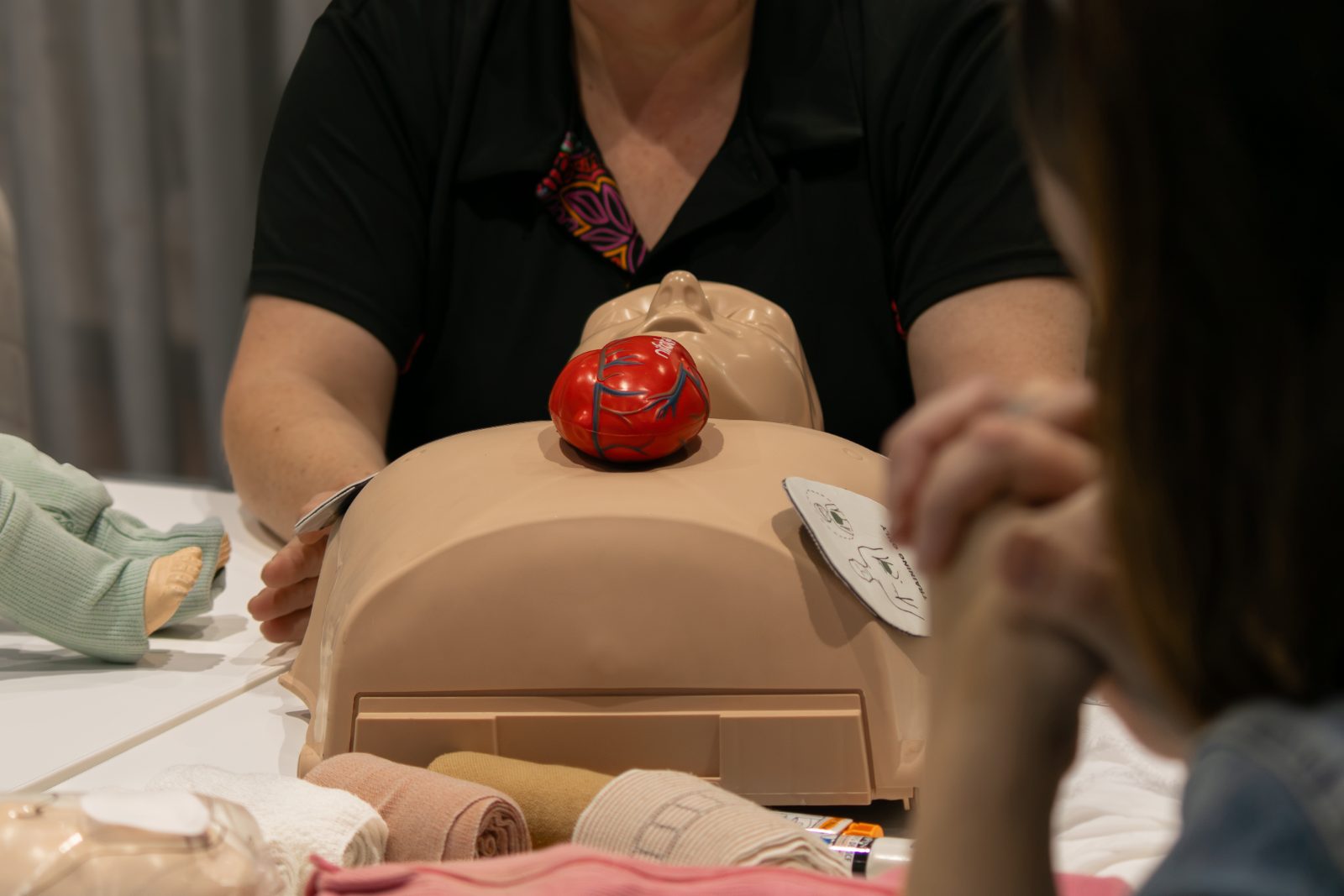
Five hours face-to-face. Starts with DRSABCD, CPR on adult and infant manikins, and AED operation. Hands on from the start.
You work through real emergency scenarios rather than just listening to instructions. Bleeding, anaphylaxis, burns, fractures, and more are practised, not just described.
Practical competency is assessed throughout the session. Assessment is built into the scenarios, not a separate exam at the end.
Statement of Attainment for HLTAID009, 010, and 011 issued We aim to issue your Statement of Attainment within 24 hours of verifying all completion requirements..
The blended refresher is efficient and it works well for people who are maintaining currency. But there is something I have observed consistently across years of training: first-time learners who go through a short session often leave with a certificate and a quiet uncertainty about whether they could actually do it if the moment arrived.
The full day removes that uncertainty. Five hours of hands-on practice gives people time to make mistakes in a safe environment, correct them, and practise again. The skill that feels awkward at 9am often feels manageable by 2pm. That shift in confidence is what this format is designed to create.
I focus particularly on the skills people most often freeze on in a real emergency: severe bleeding, anaphylaxis recognition, and the decision to start CPR. These get more time, more repetitions, and more discussion in the full day format.
If you are new to first aid or have been away from it for a long time, this is the session I would recommend. Not because the refresher is not good, but because more practice makes a real difference to what happens when you need to use these skills outside of a training room.
All three units are issued on your Statement of Attainment. This is the same qualification issued by the blended refresher format. Valid for 3 years across all Australian states and territories.
Anyone who has never completed a first aid course and wants a thorough introduction with enough time to practise before assessment.
People whose certificate has been expired for several years and who feel their skills need more than a quick refresh to feel solid again.
Anyone who values the opportunity to repeat scenarios and ask questions rather than moving through content at a compressed pace.
People who want genuine confidence in their ability to respond to an emergency involving a child or infant, not just a certificate.
Employees who are required to hold first aid certification and want to ensure they are genuinely prepared, not just compliant on paper.
Coaches, sports officials, event organisers, and community group leaders who want to be ready for emergencies in group settings.
Completing the short online pre-course component, with video resources and quiz questions, before your practical session is ideal. It means your full day is spent on hands-on practice, with time to practise every part of first aid, not just the skills that are assessed.
If completing it online is hard for you, contact Britt before booking. By arrangement, the quiz can be done during your session instead, which adds extra time.
These articles are directly connected to skills covered in this course. They are worth reading before your session.
A step-by-step guide to recognising life-threatening bleeding and the correct response. Covers direct pressure, layering dressings, embedded objects, and the transition to CPR if the casualty stops breathing. Directly relevant to the bleeding control content practised in this course.
Explains why anaphylaxis recognition failures are so common, why hesitation with an EpiPen costs lives, and why Western Australia's environment creates specific risks. Covers the eight key reasons to keep anaphylaxis training current.
Why fully online first aid certificates may not meet national training standards, how certificates have been cancelled after regulatory investigation, and what to check before booking any first aid course.
I thought the training course was very educational. After the session I walked out with new knowledge about first aid that could help during a situation where it is needed. The trainer was very knowledgeable and very clear when explaining first aid in the practical course.
Britt's personality and down to earth approach made for a relaxed and enjoyable learning environment.
Trainer explained difficult concepts in easy to understand terms and was very engaging when explaining the scenarios.
Trainer was relatable and knowledgeable. Responded to questions outside of hours immediately, which was a surprise and was appreciated. Britt really owned this training and was clearly passionate and engaged.
Is this the same qualification as the blended refresher?
Yes. Both formats issue the same Statement of Attainment for HLTAID009, HLTAID010, and HLTAID011. The certificate is identical and has the same validity. The difference is the amount of face-to-face time and the number of scenarios you work through.
Do I need any prior first aid experience?
No. The full day format is specifically designed for people who have never done first aid before. No prior knowledge or experience is required.
Do I need to complete anything before attending?
Yes. It is ideal to complete the short online pre-course component, with video resources and quiz questions, before the practical session. If that is hard for you, contact Britt before booking. By arrangement, the quiz can be done during your session instead, which adds extra time.
How long is the qualification valid?
Three years. The CPR component should be refreshed every 12 months in line with Australian Resuscitation Council guidelines.
Is there a physical requirement?
Assessment requires performing CPR on an adult manikin on the floor for at least two minutes. If you have a physical limitation that may affect this, contact Britt before booking to discuss your options.
Can you run a full day session at our workplace?
Yes. On-site full day delivery is available for workplaces, schools, sporting clubs, and community groups across Perth metro and regional Western Australia. Contact Britt to discuss your group size and requirements.
What if I have done first aid recently? Should I still choose the full day?
If you hold a current or recently expired certificate and your skills feel solid, the blended refresher is likely the better fit. The full day format is most valuable for people who feel they are starting fresh or who want significantly more practice time.
$170 per person. Nationally recognised. Personally delivered. Available across Western Australia.
What the full day covers, and why doing it in person makes the difference.
When the CPR refresher covers you, and when your workplace needs the full unit.
The seven steps every first aider follows, in the right order, under pressure.
Hesitation costs more than technique. Here is how training fixes it.