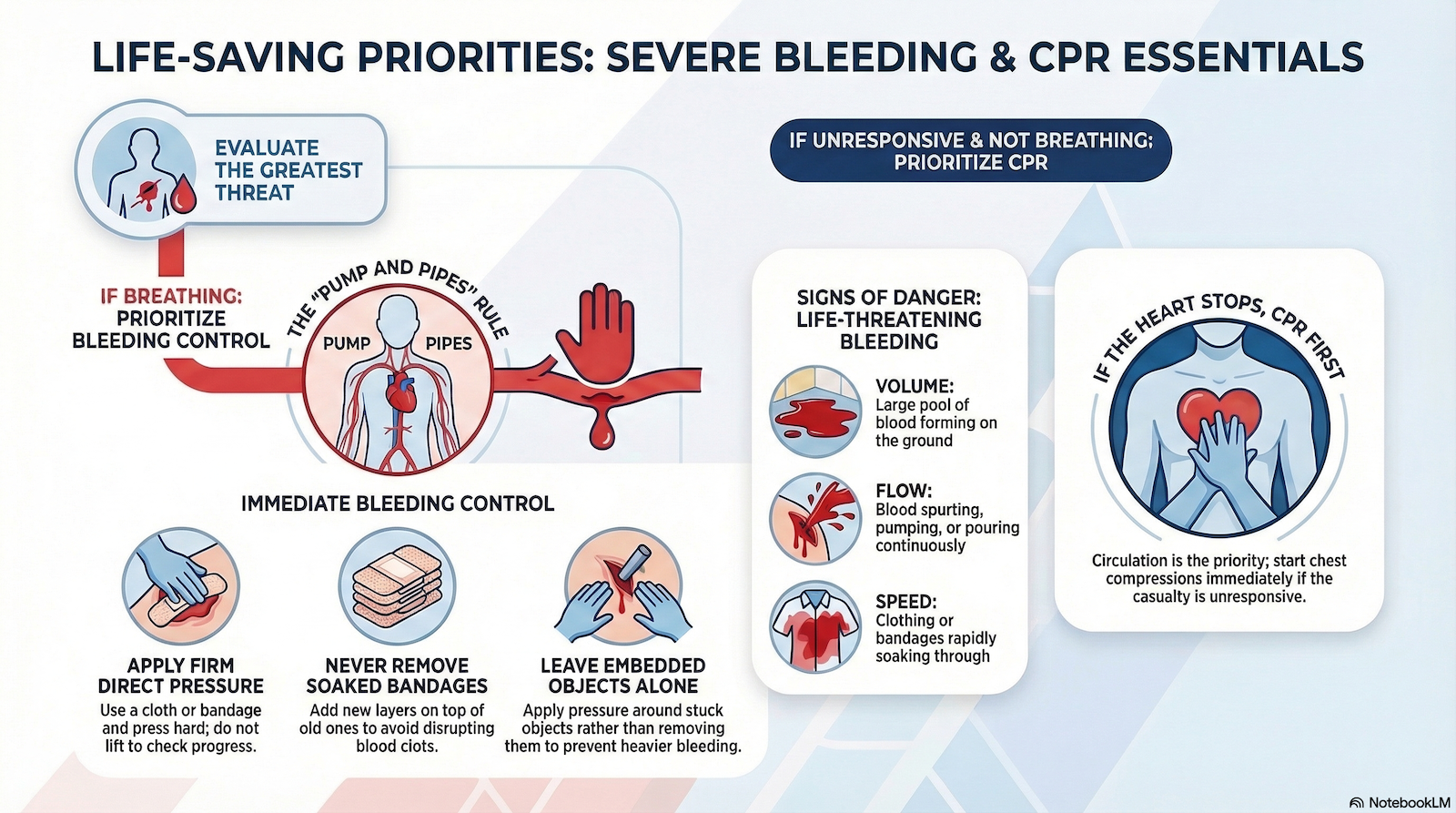
infographic steps to stop severe bleeding vs minor bleeding

Life Threatening Bleeding vs Minor Bleeding: How to Tell the Difference

March 06, 20267 min read

Life Threatening Bleeding vs Minor Bleeding: How to Tell the Difference

Life threatening bleeding is bleeding that cannot stop on its own and causes rapid blood loss. Warning signs include blood spurting or pumping from a wound, continuous heavy bleeding, dressings quickly soaking with blood, or a large pool of blood forming. When these signs appear, call 000 emergency services immediately and apply firm direct pressure to control the bleeding.


Why It Is Important to Recognise Severe Bleeding

Bleeding is one of the most common injuries people encounter in everyday life.

It may be a small kitchen cut, a scraped knee, or a deeper wound from a workplace accident, sporting injury, or fall.

Most bleeding is minor and can be managed with basic first aid.

However, some injuries cause life threatening bleeding, where blood loss can become dangerous within minutes.

The body relies on blood to carry oxygen and nutrients to vital organs such as the brain, heart, and lungs. When too much blood is lost, circulation begins to fail.

If severe bleeding is not controlled quickly, a person may develop shock, where the body no longer has enough blood volume to support essential organs.

Shock can eventually lead to cardiac arrest.

Recognising the difference between minor bleeding and severe bleeding allows you to act quickly and provide the right first aid response.


What Is Minor Bleeding?

Minor bleeding usually involves small cuts, scrapes, or shallow wounds affecting only the surface layers of the skin.

These injuries may bleed briefly but often stop once gentle pressure is applied.

Common examples include:

• small kitchen knife cuts
• paper cuts
• grazes from falls or sporting activities
• minor shaving cuts
• shallow scrapes from everyday accidents

Although minor bleeding can look messy, it rarely involves dangerous blood loss.

Basic first aid is usually enough to manage the injury.


What Is Life Threatening Bleeding?

Life threatening bleeding occurs when a wound damages a major blood vessel or causes heavy blood loss that the body cannot control on its own.

In these situations, blood loss can become dangerous very quickly.

Immediate first aid is required to slow bleeding and protect circulation until emergency medical care arrives.


Signs of Life Threatening Bleeding

Severe bleeding often looks very different from minor injuries.

Watch for these warning signs.

Blood Spurting or Pumping From a Wound

When a major artery is damaged, blood may spurt or pump from the wound in rhythm with the heartbeat.

This type of bleeding can cause rapid blood loss and requires immediate pressure.


Blood Flowing Continuously

Heavy bleeding that pours steadily from a wound is another sign of a serious injury.

If blood continues flowing despite pressure or dressings, treat the injury as a medical emergency.


Dressings or Clothing Quickly Soaking With Blood

If bandages or clothing become saturated with blood within seconds or minutes, the injury may involve life threatening bleeding.

Continuous blood loss requires urgent first aid.


Large Pools of Blood

A visible pool of blood forming around the casualty is a strong indicator of severe bleeding.

Even if the exact wound is not visible, significant blood loss may already be occurring.


Partial or Complete Amputation

Injuries involving the loss of part of a limb or finger often cause severe bleeding.

These situations require immediate first aid and emergency services.


First Aid for Minor Bleeding

Most minor cuts and scrapes can be managed with simple first aid.

Clean the Wound

Rinse the wound gently with clean water to remove dirt or debris.


Apply Pressure to the Wound site

Use a clean cloth or dressing to apply gentle pressure until bleeding stops.


Cover the Wound

Once bleeding stops, cover the injury with a clean bandage or dressing.


Monitor for Infection

Watch for signs of infection such as redness, swelling, increasing pain, or discharge from the wound.


First Aid for Life Threatening Bleeding

Severe bleeding requires immediate action.

The goal is to slow blood loss until professional medical care arrives.


Call Emergency Services Immediately

Call 000 as soon as possible if life threatening bleeding is suspected.

If you are alone, place the phone on speaker and begin first aid while speaking with the emergency operator.


Apply Firm Direct Pressure

Place a dressing, cloth, or clean material directly over the wound and press firmly.

Suitable materials may include:

• bandages
• towels
• clothing
• dressings from a first aid kit

If nothing else is available, use your hand.

Firm pressure compresses damaged blood vessels and slows blood loss.


Add More Layers if Blood Soaks Through

If blood soaks through the first dressing, do not remove it.

Place additional layers on top and continue applying pressure.

Removing the first dressing can disturb clotting and restart heavy bleeding.


Leave Objects in the Wound

If an object is embedded in the wound, do not remove it.

Objects may help slow bleeding by blocking damaged blood vessels.

Apply pressure around the object and stabilise it until emergency services arrive.


Help the Person Remain Still

Movement can increase bleeding.

Encourage the person to stay as still as possible and reassure them that help is coming.


When Bleeding Becomes a Medical Emergency

Bleeding becomes a medical emergency when it:

• cannot be controlled with pressure
• causes rapid blood loss
• results from major trauma
• involves partial amputation
• leads to signs of shock

Signs of shock may include:

• pale or clammy skin
• rapid breathing
• dizziness or confusion
• weakness or collapse

Continue applying pressure and wait for emergency services.


What If the Person Stops Breathing?

In severe trauma situations, heavy blood loss can eventually lead to cardiac arrest.

If the person becomes unresponsive and stops breathing normally, begin CPR immediately.

Push hard and fast in the centre of the chest and continue until help arrives.

If an Automated External Defibrillator (AED) is available, turn it on and follow the voice prompts.


Why First Aid Training Matters

Reading about first aid is helpful, but emergencies are stressful and unpredictable.

Training helps people develop:

• confidence
• practical skills
• faster decision making
• the ability to stay calm under pressure

People who have practised first aid skills are far more likely to step forward and help when someone is injured.

Those first few minutes before emergency services arrive can make a life saving difference.


Frequently Asked Questions

How can you tell if bleeding is serious?

Bleeding may be life threatening if blood is spurting, pouring continuously, soaking dressings quickly, or forming a large pool on the ground.


What is the first thing you should do for severe bleeding?

Call 000 and apply firm direct pressure to the wound immediately.


Should you remove a bandage if it becomes soaked with blood?

No. The original dressing should remain in place because removing it can restart heavy bleeding. Place additional dressings on top and continue applying pressure.


Can minor bleeding become serious?

Most minor bleeding stops quickly with pressure. However, if bleeding does not slow or becomes heavier, treat the situation as a medical emergency.


Could You Recognise Severe Bleeding in an Emergency?

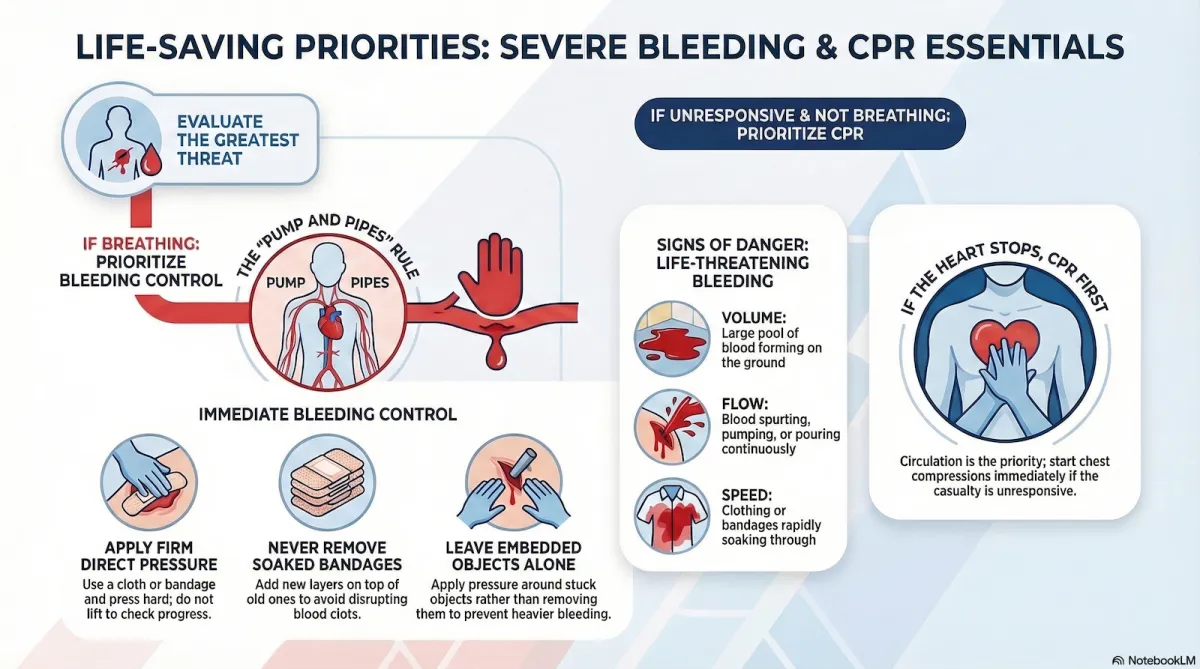
stop the bleed infographic

Serious injuries can happen anywhere.

At home.
At work.
At sporting events.
On the road.

Knowing how to recognise life threatening bleeding and respond quickly could help save a life.

First aid skills give people the confidence to step forward and help during those critical first minutes.


Learn Practical First Aid Skills With Britt at REACHAU

Regional Education and Career Help Australia (REACHAU) delivers practical first aid training designed for real life situations across Western Australia.

Courses teach participants how to:

recognise life threatening bleeding
• apply effective bleeding control techniques
perform CPR
use an AED
• respond to medical emergencies

Visit reachau.com.au to explore upcoming first aid courses and training locations.

Learning first aid today could help you save a life tomorrow.


Britt Brennan is on a mission to redefine First Aid training through the lens of empowerment and "quiet capability." As the founder of REACHAU, she leverages her Bachelor of Health Science and Diploma of Mental Health to deliver training that is as much about psychological readiness as it is about physical skill.

Britt’s unique approach is shaped by her ancestral roots in regional WA and her diverse Canadian-Jamaican-Australian heritage. She specialises in trauma-informed strategies that stick, ensuring her students leave with unforgettable muscle memory and the confidence to take action when it matters most.

Britt Brennan

Britt Brennan is on a mission to redefine First Aid training through the lens of empowerment and "quiet capability." As the founder of REACHAU, she leverages her Bachelor of Health Science and Diploma of Mental Health to deliver training that is as much about psychological readiness as it is about physical skill. Britt’s unique approach is shaped by her ancestral roots in regional WA and her diverse Canadian-Jamaican-Australian heritage. She specialises in trauma-informed strategies that stick, ensuring her students leave with unforgettable muscle memory and the confidence to take action when it matters most.

LinkedIn logo icon
Instagram logo icon
Youtube logo icon
Back to Blog