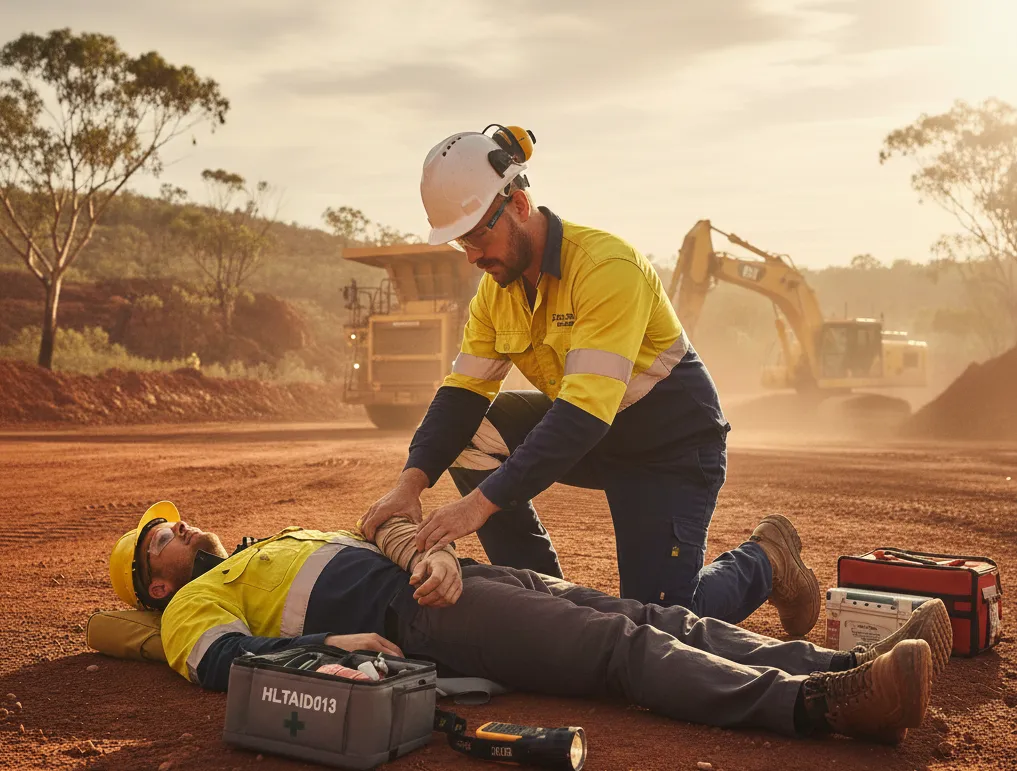
HLTAID013 Remote First Aid for Mining and Resources
Remote First Aid Training for Mining and Resources Workers
Quick Answer
Remote first aid training prepares workers to manage medical emergencies when professional help may be hours away. In the mining and resources sector this training focuses on trauma management, environmental illness, communication in remote areas, and monitoring casualties until evacuation. In Australia the nationally recognised course for this training is HLTAID013 Provide First Aid in Remote or Isolated Site.
Why Remote First Aid Matters in the Mining and Resources Sector
Mining and resources operations often take place in some of the most isolated environments in Australia.
From the Pilbara and Kimberley in Western Australia to remote exploration sites across the country, workers may be hundreds of kilometres from the nearest hospital.
In these environments, the time between an incident and professional medical care can be significantly longer than in urban workplaces.
This means workers may need to manage injuries and medical emergencies for extended periods before evacuation is possible.
Remote first aid training helps workers stabilise casualties, monitor their condition, and prevent injuries from becoming life threatening while waiting for medical assistance.
The Changing Risk Landscape in Remote Worksites
The resources sector continues to evolve with new technology and operating environments.
Modern sites may include:
• electrified vehicle fleets
• high-capacity battery systems
• autonomous haulage equipment
• remote drill operations
• extreme environmental conditions
While these technologies improve efficiency, they also introduce new hazards.
Workers may encounter:
• high voltage electrical injuries
• crush injuries from heavy machinery
• chemical exposure
• severe heat illness
• isolated work environments
In these situations, trained workers may be the only immediate responders available.
What Remote First Aid Training Teaches
Remote first aid courses are designed to prepare workers for emergencies where evacuation may take hours.
The nationally recognised Australian course for this training is HLTAID013 Provide First Aid in Remote or Isolated Site.
Training focuses on several key skill areas and includes HLTAID011 Provide First Aid and HLTAID009 Provide Cardio Pulmonary Resuscitation (CPR)
Extended Patient Care
In many remote workplaces help is not minutes away.
Workers may need to monitor and care for an injured person for extended periods while waiting for evacuation.
Training includes:
• monitoring breathing and pulse
• recognising signs of deterioration
• managing airway and breathing problems
• providing ongoing care until medical help arrives
Learning how to monitor vital signs helps workers recognise when a casualty’s condition is worsening.
Managing Major Trauma
Heavy machinery and industrial environments can lead to serious injuries.
Remote first aid training prepares workers to manage:
• severe bleeding
• crush injuries
• fractures
• burns
• head injuries
Modern first aid protocols may include the use of tourniquets and haemostatic dressings to control life threatening bleeding.
These tools are now commonly included in advanced workplace first aid kits.
Communication in Remote Locations
One of the biggest challenges in remote areas is communication.
Standard mobile phone coverage may not be available.
Training may include procedures for:
• using satellite communication devices
• site radio protocols
• coordinating emergency evacuation
• communicating clearly with emergency services
Effective communication can significantly reduce delays during medical emergencies.
Environmental Emergencies
Remote worksites often expose workers to extreme environmental conditions.
Heat illness is one of the most common risks in Australian mining regions.
Training covers:
• recognising heat exhaustion and heatstroke
• dehydration management
• cooling techniques
• preventing environmental illness
Understanding environmental risks is essential for protecting worker health.
Why Remote First Aid Skills Improve Employability
For many workers entering the FIFO (Fly-In Fly-Out) or DIDO (Drive-In Drive-Out) workforce, first aid certification is often required.
While HLTAID011 Provide First Aid is commonly requested, remote operations increasingly prefer workers who also hold HLTAID013 Remote Area First Aid.
Employers value these skills because trained workers can:
• stabilise injured colleagues
• support emergency response teams
• reduce risk on remote worksites
Having remote first aid training can make job applicants more competitive in the resources sector.
What Good Remote First Aid Training Should Include
When organising training for a mining or resources workforce, look for courses that include realistic remote scenarios.
Important training topics include:
Multiple Casualty Incidents
Vehicle rollovers, blast incidents, or machinery accidents may involve more than one injured person.
Workers must understand how to prioritise care using triage principles.
Snakebite Management
Remote areas of Australia contain some of the most venomous snakes in the world.
Training should include the pressure immobilisation technique, the recommended first aid treatment for Australian snakebite.
Psychological First Aid
Remote work environments can place significant pressure on workers.
Training may include recognising signs of stress, anxiety, or psychological distress in team members.
Supporting mental wellbeing is an important part of workplace safety.
Why Practical Training Matters
Reading about first aid is helpful, but emergencies are stressful and unpredictable.
Practical training helps workers develop:
• confidence
• hands-on skills
• faster decision making
• the ability to remain calm during incidents
When workers practise realistic scenarios, they are far more likely to respond effectively in real emergencies.
Remote First Aid Training with REACHAU
Regional Education and Career Help Australia (REACHAU) provides practical first aid training designed for real Australian conditions.
Training focuses on helping participants develop the confidence and skills needed to respond to emergencies in remote environments.
Courses include:
Visit reachau.com.au to explore upcoming training courses and locations.
Frequently Asked Questions
What is remote first aid training?
Remote first aid training prepares workers to manage medical emergencies in isolated locations where professional help may take longer to arrive.
What course covers remote first aid in Australia?
The nationally recognised course isHLTAID013 Provide First Aid in Remote or Isolated Site.
Who needs remote first aid training?
Remote first aid training is useful for workers in industries such as mining, construction, agriculture, tourism, and outdoor operations.
How is remote first aid different from standard first aid?
Remote first aid training focuses on extended patient care, environmental emergencies, and managing casualties until evacuation is possible.
Be Ready for Real Remote Emergencies
Working in remote environments means help is not always minutes away.
In the mining and resources sector, the actions taken by the first person on scene can make the difference between a controlled incident and a life threatening situation.
Remote first aid training helps workers build the confidence and practical skills needed to manage emergencies until evacuation or professional medical care arrives.
At REACHAU, our training focuses on real-world scenarios workers face across Western Australia, including remote worksites, industrial environments, and isolated operations.
Participants learn how to:
• manage severe bleeding and trauma
• monitor casualties over extended periods
• respond to environmental emergencies such as heat illness
• apply pressure immobilisation for snakebite
• perform CPR and use an AED
Training is practical, hands-on, and designed to build confidence in high-pressure situations.
Book Remote First Aid Training
If your team works in remote or isolated environments, make sure they have the training needed to respond confidently when emergencies occur.
Visit reachau.com.au
• view upcoming course dates
• organise onsite group training
• learn more about HLTAID013 Remote First Aid training
Building real first aid capability today could help save a life tomorrow.