How to Stop Severe Bleeding: First Aid Steps Everyone Should Know
A practical first aid guide that could save a life.
By Britt Brennan, REACHAU | Updated 16 October 2026
Severe bleeding is one of the most urgent medical emergencies a person can face.
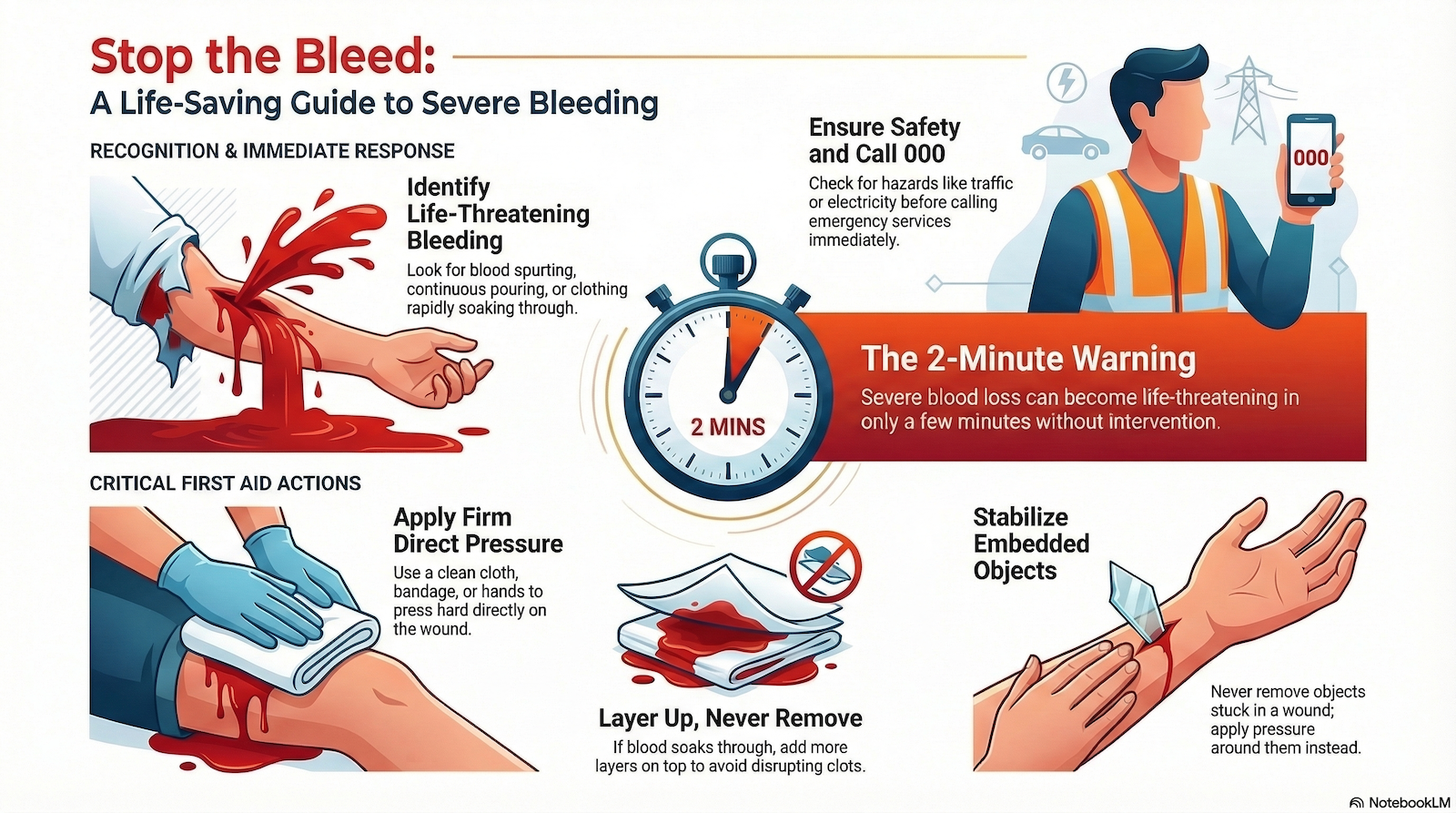
In serious injuries, blood loss can become life threatening in only a few minutes. A deep cut, workplace accident, vehicle collision or machinery injury can cause rapid blood loss that needs immediate action.
The first few minutes before emergency services arrive are critical. What people nearby do can make a major difference to survival.
The good news is that you do not need medical training to help. Anyone can learn simple bleeding control techniques that slow blood loss and keep a person alive until paramedics arrive.
Quick answer
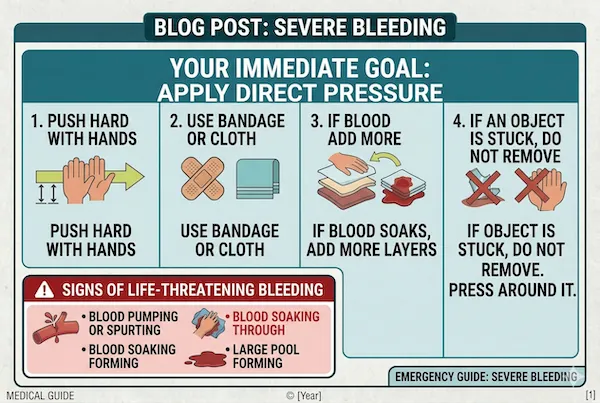
How do you stop severe bleeding? Call 000. Apply firm, direct pressure to the wound with a dressing, cloth or clothing, or your hand if nothing else is available. Keep the pressure on. If blood soaks through, add more layers on top without removing the first dressing. Keep pressing until paramedics arrive. If the person becomes unresponsive and is not breathing normally, start CPR.
1Why Severe Bleeding Is So Dangerous
Blood carries oxygen and nutrients to vital organs such as the brain, heart and lungs.
When large amounts of blood are lost, the body struggles to maintain circulation. Blood pressure begins to drop and organs receive less oxygen.
If bleeding is not controlled, the person can go into shock. This happens when the body no longer has enough circulating blood to support essential organs. Without treatment, shock can lead to cardiac arrest.
This is why severe bleeding is a time critical emergency. Controlling it quickly helps preserve circulation and gives the person the best chance of recovery.
2How to Recognise Life Threatening Bleeding
Not all bleeding is an emergency. Small cuts and minor injuries can often be managed with simple first aid. Life threatening bleeding looks very different.
Signs of severe bleeding
- Blood spurting or pumping from a wound
- Blood pouring continuously from an injury
- Clothing or bandages rapidly soaking with blood
- A large pool of blood forming on the ground
- Loss of part of a limb
- Bleeding that does not slow with basic pressure
If you see these signs, treat it as a medical emergency and call 000 immediately.
3Step 1: Make Sure the Scene Is Safe
Before helping someone who is injured, take a moment to check the environment. Ask yourself:
- Is there moving traffic nearby?
- Is machinery still operating?
- Are there electrical hazards?
- Is there fire, smoke or chemicals present?
If the scene is unsafe, do not approach. Call 000 and wait for emergency services. If the area is safe, approach quickly and calmly. If you have gloves, put them on. If you do not, do not let that stop you from helping.
4Step 2: Call 000
Severe bleeding needs emergency medical care. Call 000 as soon as possible or ask someone nearby to call.
If you are alone:
- Put your phone on speaker
- Stay on the line with the operator
- Start first aid while they guide you
Call-takers can give instructions and help you respond effectively until paramedics arrive.
5Step 3: Apply Firm Direct Pressure
Direct pressure is the most effective way to control bleeding. Place a dressing, cloth or clean material directly over the wound and press firmly. Suitable materials include a bandage, a towel, clothing or a dressing from a first aid kit. If nothing else is available, use your hand.
Pressure helps compress damaged blood vessels and slows blood loss. Keep steady pressure on the wound without lifting the dressing to check it.
6Step 4: Add More Layers if Blood Soaks Through
In severe bleeding, blood may soak through the first dressing. If this happens, do not remove the original dressing. Place more bandages or cloth on top and keep applying pressure.
Removing the first dressing can disrupt clotting and restart heavy bleeding. Continuous pressure is one of the most important things a first aider can do.
7Step 5: Do Not Remove Objects Stuck in a Wound
In some injuries an object stays embedded in the wound, such as glass, metal fragments, machinery parts, tools or debris. It may be tempting to pull it out, but that can cause much heavier bleeding.
Instead:
- Leave the object in place
- Apply pressure around the object, not on it
- Stabilise the area if possible
Emergency medical teams will remove the object safely.
8Step 6: Help the Person Stay Still
Movement can increase bleeding. Encourage the person to stay as still as possible. If they are conscious, speak calmly and reassure them that help is on the way.
If the injury involves an arm or leg, gently support the limb and keep it still while you maintain pressure on the wound.
9Step 7: Watch for Signs of Shock
Severe blood loss can lead to shock. Signs may include:
- Pale or clammy skin
- Weakness or dizziness
- Rapid breathing
- Confusion
- Feeling faint or collapsing
If the person starts showing these signs, keep controlling the bleeding and wait for emergency services. Keeping the person calm, still and warm can help reduce the effects of shock.
10When Pressure Is Not Enough: Tourniquets
Firm direct pressure controls most bleeding. For life threatening bleeding from an arm or leg that pressure alone cannot control, a purpose-made tourniquet may be needed. A tourniquet is a firm band applied to the limb above the wound to stop blood flow.
- Only use a tourniquet if direct pressure is not controlling life threatening bleeding from a limb.
- Use a purpose-made tourniquet if you have one and have been shown how to use it. Do not improvise with thin cord or wire.
- Apply it above the wound, on the limb between the wound and the body, and tighten until the bleeding stops.
- Note the time you applied it and tell the paramedics.
- Do not loosen or remove it. Leave that to the ambulance crew.
Tourniquet use is covered hands-on in first aid courses, because it is a skill you need to practise before you ever need it.
11What If the Person Stops Breathing?
In some severe trauma situations, a person may become unresponsive and stop breathing normally. This may mean cardiac arrest. If this happens:
- Call 000 if you have not already.
- Start CPR straight away: 30 compressions, hard and fast in the centre of the chest, then 2 breaths.
- Use an AED if one becomes available.
- If there are enough people, one person keeps pressure on the bleeding while another does compressions.
CPR circulates oxygenated blood to the brain and vital organs until emergency services arrive. For the full sequence, see the DRSABCD action plan.
12A Simple Way to Remember What Matters Most
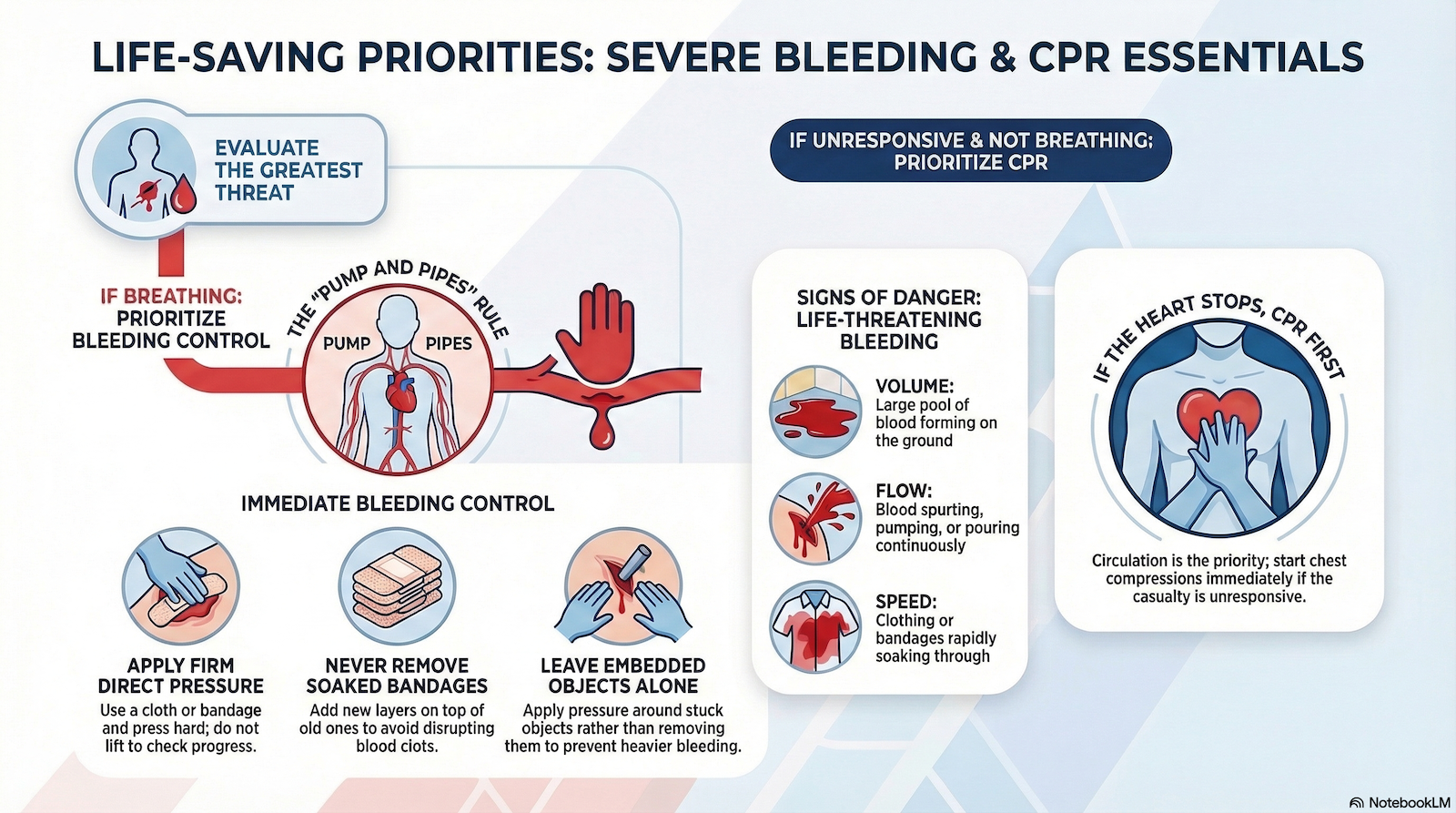
First aid instructors often explain bleeding with a simple idea: think of the body as a pump and pipes system.
- The heart is the pump.
- The blood vessels are the pipes.
If the pump is working but a pipe is broken, blood escapes under pressure. The priority is to stop the leak. Firm pressure slows blood loss and protects circulation.
13Why First Aid Training Makes a Difference
Reading about first aid is helpful. But emergencies are stressful and unpredictable, and in those moments people often hesitate because they are unsure what to do.
Training helps build confidence, muscle memory, faster decision making and the ability to stay calm. In a course you practise bleeding control and respond to realistic scenarios, which makes it far more likely you will step forward when it matters.
Bleeding control is taught in HLTAID011 Provide First Aid, alongside CPR from HLTAID009 Provide CPR. Higher-risk workplaces may need HLTAID014 Provide Advanced First Aid. Our guide to the biggest first aid mistake explains why hesitation costs more than imperfect technique.
Severe bleeding can happen at workplaces, construction sites, roads and highways, sporting events, homes and public spaces. In many cases the people nearby are the first ones able to help.
Severe Bleeding First Aid FAQ
How long does it take for severe bleeding to become life threatening?
Life threatening bleeding can become fatal within minutes depending on the location and severity of the injury. Rapid blood loss can lead to shock and cardiac arrest if it is not controlled quickly.
What is the most important first aid treatment for heavy bleeding?
Firm direct pressure on the wound. Pressure slows blood loss and helps damaged blood vessels begin clotting.
Should you remove a dressing if blood soaks through?
No. Leave the first dressing in place. Removing it can disrupt clotting and restart heavy bleeding. Add more layers on top and keep applying pressure.
What should you do if something is stuck in the wound?
Do not remove the object. Apply pressure around the wound and stabilise the object if possible. Emergency services will remove it safely.
When is a tourniquet used?
Only for life threatening bleeding from an arm or leg that firm direct pressure cannot control, using a purpose-made tourniquet if you have been shown how. Note the time and do not remove it.
What if someone has severe bleeding and stops breathing?
If the person becomes unresponsive and stops breathing normally, start CPR immediately and continue until help arrives.
REACHAU first aid training focuses on understanding what to do, why it matters and how to act when someone needs help.
View upcoming first aid sessionsTraining and Assessment is delivered by Britt at Regional Education and Career Help Australia on behalf of ABC First Aid RTO 3399.
This article is general first aid information and does not replace a first aid course or medical advice. In an emergency, call 000.