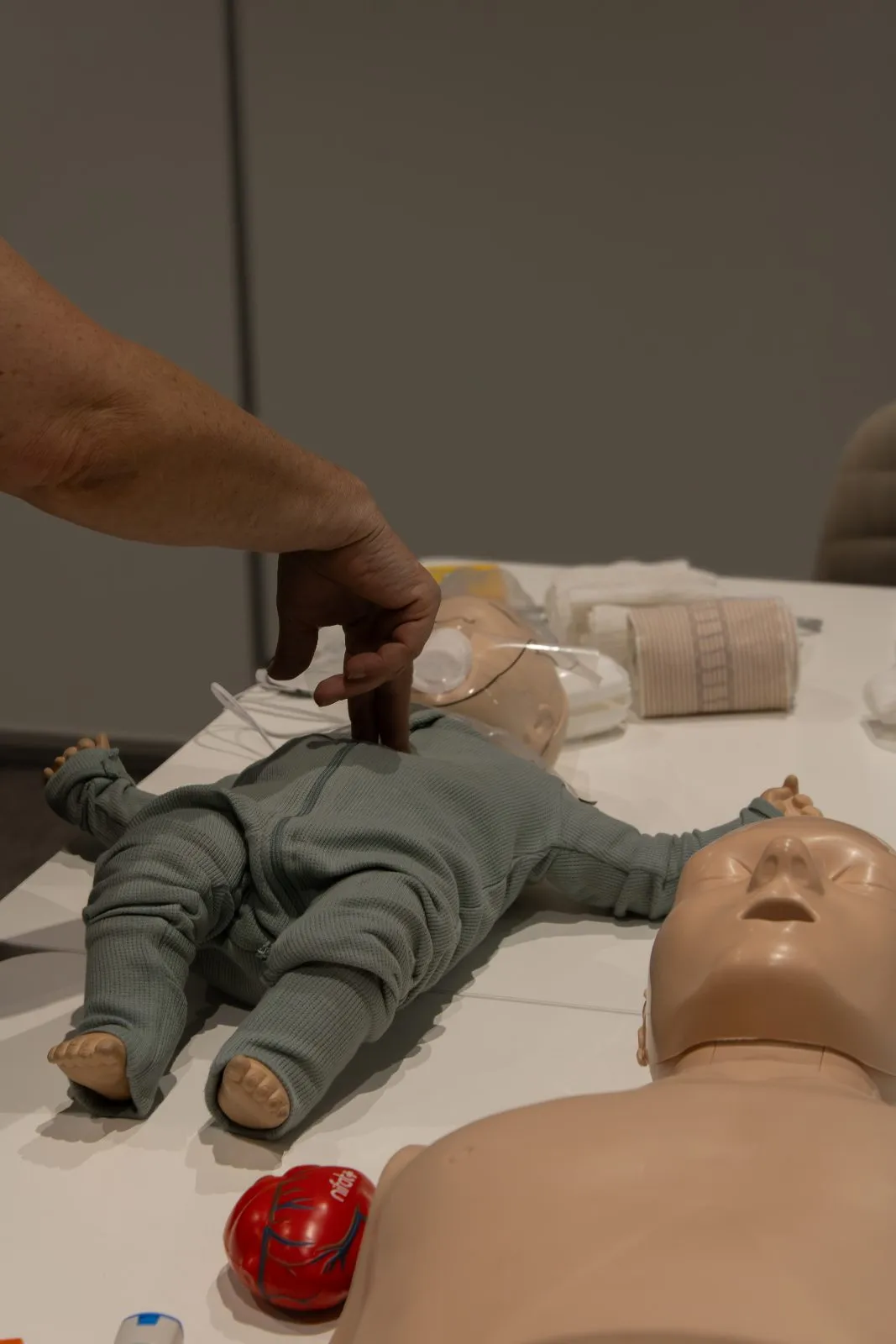
Childcare First Aid: Connecting Plans, People and Practice
Childcare First Aid: Can Your Whole Team Put the Plan into Practice?
Help your education and care team connect first aid training with supervision, individual action plans, accessible equipment and clear emergency roles.
By Britt Brennan, REACHAU | 29 October 2026

An educator is helping a child who has become suddenly unwell. Another person needs to call for help. The other children still need supervision.
First aid in education and care is a team response. It depends on practical skills, clear roles, accessible equipment and information that staff can use when it matters.
The useful question is: can those pieces work together during your actual day?
Check coverage across the day
ACECQA explains the first aid, anaphylaxis and emergency asthma training requirements for services under the National Regulations. For centre-based services, the required qualified people must be in attendance and immediately available in an emergency. Family day care has specific requirements for each educator and educator assistant.[1]
Check what applies to your service, including breaks, opening and closing times, staff absences and excursions. School requirements should be checked against the rules and policies applicable to that school; do not assume every education setting operates under the same framework.
Training supports these arrangements. Your roster and procedures need to support them too.
Prevention and response belong together
The WA inquest into the death of TPL (a child) examined an infant drowning involving a seat used in water. The official summary records that the seat was not intended for that use and reinforces the importance of vigilance around children and water.[2]
The lesson for educators is to review supervision and equipment use alongside emergency skills. CPR training does not remove the need to prevent an incident. Prevention planning does not remove the need to practise a response.
Check equipment instructions and the actual supervision arrangements for your activities. Make handovers explicit so responsibility is understood.
Make individual plans usable
A child's medical management plan needs to be accessible to the staff who may need it, with privacy protected. Relevant staff should know how to find it and the associated medication promptly.
Work through how that happens with relief staff, in an outdoor area and on an excursion. Check storage and access against the child's plan, medication instructions and service requirements.
For anaphylaxis, staff need to recognise that sudden breathing difficulty may need an anaphylaxis response, including when there is no rash. ASCIA advises adrenaline first, followed by asthma reliever, for someone with known asthma and relevant allergy who may have been exposed to the allergen and develops sudden breathing difficulty. Follow the action plan and call 000.[3]
Practise with the appropriate trainer device. A general discussion about allergies cannot show someone how their particular equipment works.
Practise the supporting roles
Use a safe, announced staff exercise without frightening children or creating a real emergency call.
One person can describe the initial response. Another can demonstrate how they would locate the plan and equipment. Someone else can explain how emergency services would enter and how supervision of the other children would continue.
Include communication with the child's family and the records required afterwards. Keep clinical care and emergency contact as immediate priorities.
Ask: “What changes if our usual first aider is on a break?” That question often makes the exercise more useful.
Ask for practice that reflects your setting
Bring your questions about infant and child CPR, choking, asthma, anaphylaxis and team communication to training. Tell Britt what your day looks like and where your team feels uncertain.
Explore REACHAU education and care first aid training. Check the current course, ACECQA approval information and your role's requirements before booking.
For a focused explanation of common response mistakes, read our anaphylaxis first aid guide.
HLTAID012 Provide First Aid in an Education and Care Setting covers infant and child emergencies, asthma and anaphylaxis. Ask about on-site training for your team.
See upcoming datesAbout HLTAID012Training and Assessment is delivered by Britt at Regional Education and Career Help Australia on behalf of ABC First Aid RTO 3399.
Sources
- ACECQA, First aid qualifications and training: www.acecqa.gov.au
- Coroners Court of Western Australia, Inquest into the Death of TPL (a child subject to a suppression order), delivered 11 April 2016: www.coronerscourt.wa.gov.au
- ASCIA, Asthma and anaphylaxis: allergy.org.au
This article provides general information and is not legal or individual medical advice. Court findings are summarised from the published inquest documents. In an emergency, call 000.