Why I Teach This Course Differently
HLTAID012 is the qualification that the National Quality Framework requires for educators, childcare workers, and nominated supervisors. It covers infant and child CPR, anaphylaxis management, asthma management, emergency action plans, and a full range of paediatric first aid emergencies.
Every provider teaches the same unit. What changes is the weight you put on the parts that matter most. For me, that means the anaphylaxis and asthma recognition content carries more depth than you will find in most sessions. Not because I decided to add more, but because I have read the coronial findings. I have sat with the stories of what happens when someone gets that decision wrong. Those stories are now part of how I teach.
If you leave this session understanding one thing above all others, I want it to be this: if asthma treatment is not working and there is any possibility of anaphylaxis, you administer adrenaline. You do not wait. You act. The same principle underpins HLTAID014 Advanced First Aid.
"The only failure is giving up."
How I Run This Session
My sessions bring together participants from multiple certification levels at the same time. You might be completing HLTAID012. Someone else in the room might be doing HLTAID011, HLTAID013, or HLTAID014. That is intentional.
Real emergencies do not happen in isolated training rooms with one person and one casualty. They happen in workplaces where people have different levels of training and someone has to take the lead. By running mixed sessions, I create an environment that reflects that reality. HLTAID012 participants will be assessed on their response in a realistic multi-person scenario, not a sterile one-on-one drill.
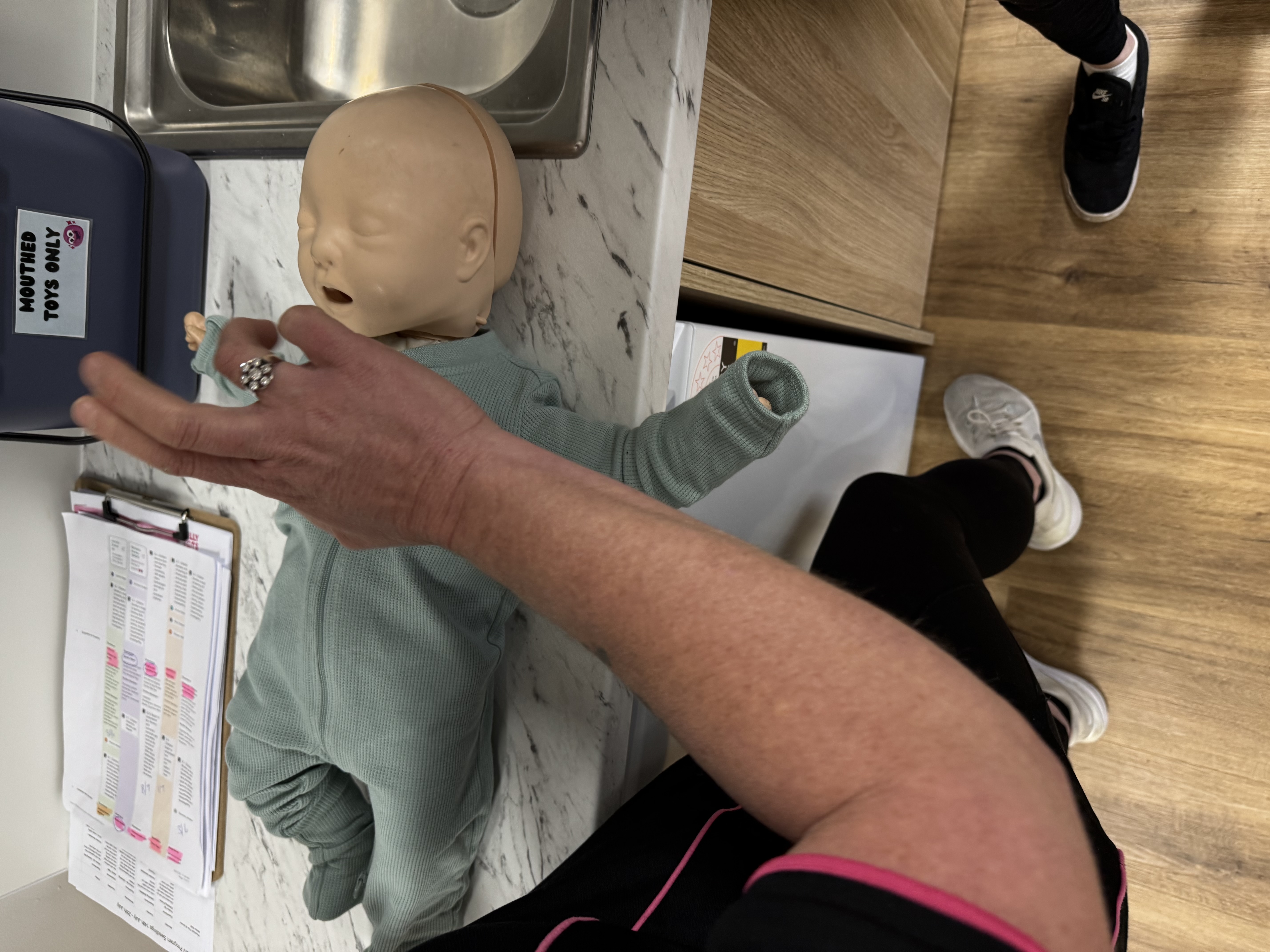
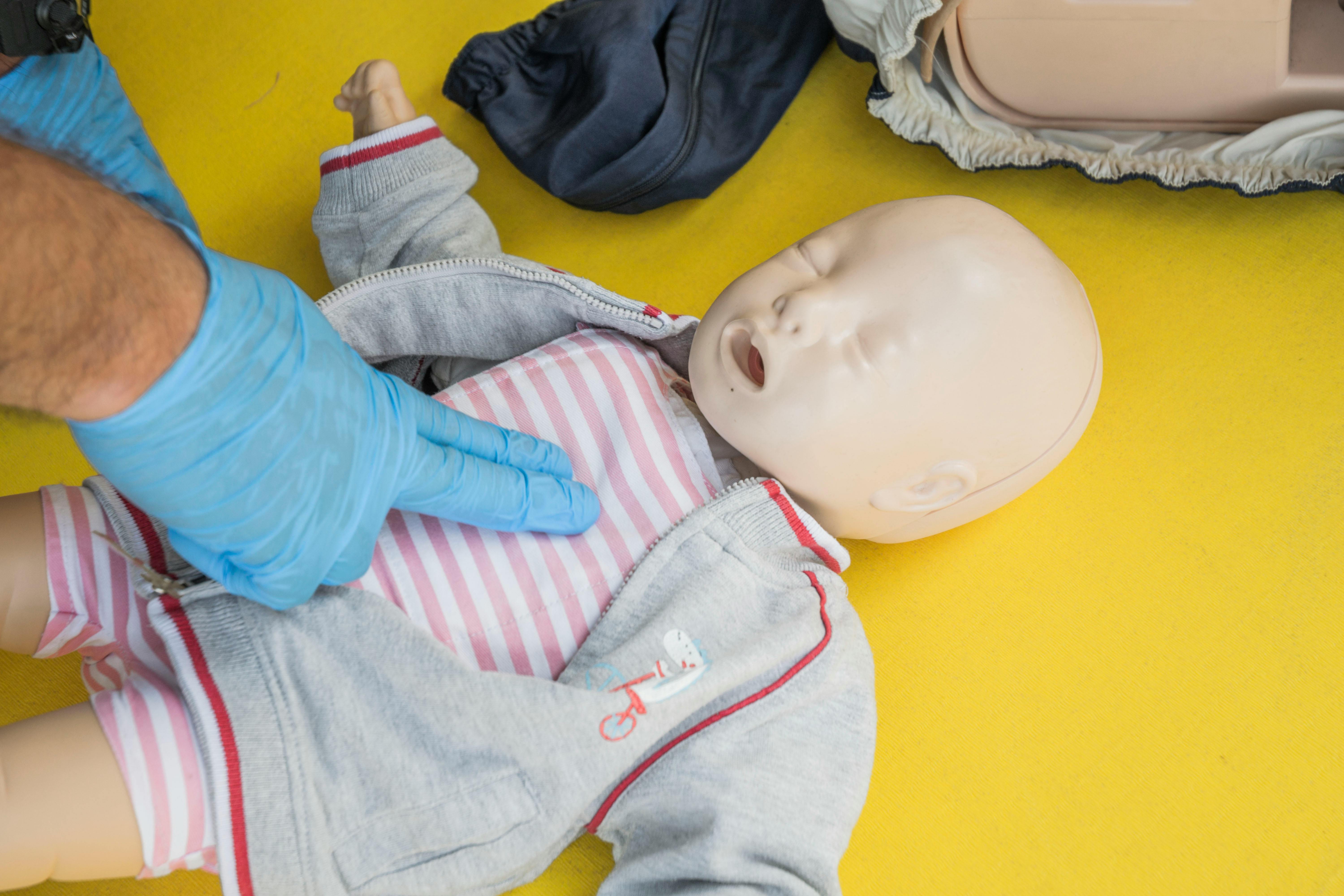
The practical component is hands-on throughout. CPR is performed on adult and infant manikins on the floor. Anaphylaxis scenarios involve real decision-making under time pressure. Asthma versus anaphylaxis recognition is covered with the detail it deserves, not as a footnote.
You will leave knowing what to do. Not just the steps, but why each step matters.
Units of Competency Included
All four units are issued on your Statement of Attainment upon successful completion. HLTAID012 also satisfies the anaphylaxis and asthma management requirements of the National Quality Framework.
National Quality Framework (NQF) Compliance
Under the Education and Care Services National Law and National Regulations, approved services must ensure trained First Aiders are on site and immediately available at all times children are present. HLTAID012 is the qualification recognised by ACECQA as meeting the first aid, anaphylaxis management, and emergency asthma management requirements in a single qualification.
Paediatric First Aid Training for Educators
This is the content that makes HLTAID012 different from standard workplace first aid like HLTAID011. The paediatric focus means the scenarios, manikins, and skill assessment all reflect the real emergencies you face working with infants and children, not adults in an industrial setting.
Hands-on CPR practice on infant and child manikins. Covers compression depth, rate, and rescue breaths for different age groups. Assessed to Australian Resuscitation Council guidelines.
EpiPen and ANAPEN administration, adrenaline autoinjector technique, recognition of anaphylaxis vs asthma, when to act without waiting. Emergency action plan documentation covered.
Reliever inhaler and spacer technique, 4x4x4 protocol, recognising severe asthma in children, and the critical anaphylaxis/asthma differential that this course covers in detail.
Recognition, safe positioning, timing, when to call 000. Common in childcare settings and handled with confidence after this training.
Age-appropriate techniques for partial and complete airway obstruction. Backblows, chest thrusts, and abdominal thrusts correctly applied by age group.
Standard first aid response for common childhood injuries, with paediatric considerations for bleeding, scalds, and falls with possible head or spinal involvement.
How to read and follow individual care plans, asthma action plans, and anaphylaxis action plans in your service. The legal obligations under the National Quality Framework.
Full emergency response sequence, calling 000, managing bystanders, and continuing care until the ambulance arrives. Practiced in realistic multi-person scenarios.
Conditions and Emergencies Covered
The Story of Jack Irvine
I tell this story in every session I run. Not to frighten anyone. But because I believe that if you understand what happened to Jack, you will never hesitate in the moment that matters.
Jack Irvine was 15 years old. He had a known severe tree nut allergy and asthma. In 2012 he attended a go-karting youth camp in Melbourne run by the Victorian Karting Association. His mother Julie had warned the camp organisers in writing about his allergy before the day. That information was on file.
On the day of the incident, a staff shortage meant the camp ordered lunch from Subway. Jack ate a cookie. He thought it was white chocolate chip. It was macadamia and white chocolate chip.
When his symptoms appeared, his father Robert was there. Robert watched his son walk over to him and say the words that Jack's father would carry for the rest of his life.
"Dad, I think you better get me an ambulance. My asthma's playing up."
Robert watched Jack's lips go black. He watched him gasping for air. And like almost everyone would in that moment, he still thought it was asthma. Jack collapsed in his father's arms. Robert tried to resuscitate his own son.
"He looked up at me and said, 'dad, I'm dying'. And I gave him the greatest hug in the world and I said, 'buddy, I won't let you die'."
It was not until the ambulance arrived that the reaction was identified as anaphylaxis. Jack died in hospital six days later.
The Victorian Coroners Court handed down findings in April 2016. The coroner found the Victorian Karting Association failed in how they handled the allergy information, ordered the food, and managed first aid. The death was preventable. The family pursued legal action against Subway, the franchisee, and the Victorian Karting Association. Julie Irvine later said: "It is still hard to know that a simple biscuit has taken my son's life."
Jack's story is not unique. It is the most visible one in Australia. But the coronial register kept by Allergy and Anaphylaxis Australia holds many others. Each one ends in a finding that the death was preventable. Each one contains a chain of failures that could have been interrupted at any point by someone who knew what to look for and what to do.
Anaphylaxis and asthma look the same in the early stages. When someone has both a known allergy and asthma and they show breathing difficulty, the instinct is to reach for the inhaler. That instinct is understandable. Jack's own father had it. But if asthma treatment is not working and there is any possibility of anaphylaxis, you administer adrenaline. That is the decision this training prepares you to make. Not after the ambulance arrives. In time.
Why This Fundraising Page Exists
Jack's story is the one I tell in every class. But he is not the only one.
Allergy and Anaphylaxis Australia maintains a record of coronial investigations into anaphylaxis deaths across Australia. I have read them. Each one is a real person, a real family, and a chain of events that ended in a death that should not have happened. Reading those findings changed how I teach. Not just the anaphylaxis and asthma content. All of it. The way I explain recognition, the weight I place on emergency action plans, the way I frame the decision to use an EpiPen. The families who allowed their stories to be shared did so because they believed it would help prevent the next one. I owe it to them to make sure those lessons reach every person who comes through my sessions.
This fundraising page is in honour of each of those stories. Jack, and every other name in that list. If you have the fortitude, I recommend reading them. They are not easy. But there is more to learn from each one than from any textbook.
All donations go directly to Allergy and Anaphylaxis Australia.
What Participants Say
I thought the training course was very educational. After the session I walked out with new knowledge about first aid that could help during a situation where it is needed. The trainer was very knowledgeable and very clear when explaining first aid in the practical course.
Short but covered all that was required, didn't drag on. Easy to understand the trainer.
Trainer was relatable and knowledgeable. This made it easy to work in tune with them. Responded to questions outside of hours immediately, which was a surprise and was appreciated. Britt really owned this training and was clearly passionate and engaged.
Britt's personality and down to earth approach made for a relaxed and enjoyable learning environment.
Trainer explained difficult concepts in easy to understand terms and was very engaging when explaining the scenarios.
Common Questions
Does HLTAID012 cover anaphylaxis and asthma training?
Yes. HLTAID012 satisfies the first aid, anaphylaxis management, and emergency asthma management requirements of the National Quality Framework in a single qualification. You do not need to book separate courses.
What is the difference between HLTAID011 and HLTAID012?
HLTAID011 is the standard workplace First Aid. HLTAID012 includes everything in 011 and adds what is specifically required in education settings: infant and child CPR, paediatric physiological differences, and NQF documentation requirements.
What is the difference between HLTAID012 and HLTAID014?
HLTAID012 is designed for educators and childcare workers, covering paediatric-specific skills and meeting ACECQA requirements. HLTAID014 is the advanced qualification for safety officers and team leaders who need to triage multiple casualties and coordinate other first aiders. They serve different roles and workplaces.
How often does HLTAID012 need to be renewed?
Every 3 years. The CPR component should be refreshed every 12 months in line with Australian Resuscitation Council guidelines.
Can you deliver this on-site at our service?
Yes. On-site delivery is available for childcare centres, family day care networks, schools, and education services across Western Australia. Contact Britt to discuss your requirements and group size.
Is this training available in regional WA?
Yes. REACHAU was built specifically to serve regional, remote, and underserved communities. Participants come from Byford, Armadale, Serpentine, Jarrahdale, the Wheatbelt, and the South West. REACHAU also delivers to Albany, Esperance, and the Coastal WA corridor. If you are in a community that is hard to reach, that is exactly where we want to be.
Does HLTAID012 teach infant CPR?
Yes. HLTAID012 includes hands-on infant CPR and child CPR on age-appropriate manikins. Compression depth, rate, and rescue breathing are assessed separately for infants and children in line with Australian Resuscitation Council guidelines.
What is the price of the HLTAID012 course?
Course pricing is on the booking page. Use the Book Now button to find upcoming sessions and current pricing. Group and on-site bookings are available. Contact Britt directly for a quote.
Book HLTAID012 with Britt
Nationally recognised. Personally delivered. Available across Western Australia.
Serving Communities Across Western Australia
REACHAU delivers HLTAID012 childcare first aid training across Perth's south-east corridor and regional Western Australia. Current participants come from Byford, Armadale, Serpentine, Jarrahdale, Mundijong, Rockingham, Mandurah, the Wheatbelt, the South West, and remote WA communities. If your service is in a location that larger providers do not reach, that is exactly the gap REACHAU exists to fill.