
Upcoming Public Session in Esperance
All courses on 1 September start at 9:00 am at Esperance Town Centre. Select Esperance from the suburb dropdown in the booking system to find all sessions.
Open to the public. Jobseekers can ask their employment services provider to enrol them in a session.
The First Link in the Chain
Esperance is where remote first aid stops being a concept and starts being a daily reality. The grain belt stretching east toward Salmon Gums and beyond, the port terminal, the commercial fishing fleet, and the seasonal tourism economy around Cape Le Grand and Lucky Bay all create situations where emergency services are not just delayed. They can be hours away.
Throughout 2025 and 2026, reliance on the RFDS and RAC Rescue helicopter for farm and road incidents in the Goldfields-Esperance region has been a consistent pattern. The local volunteer crew leaves work to respond. The RFDS flies from Kalgoorlie or Perth. When the clock starts on a serious injury, the first aider on the ground is not a backup. They are the primary intervention.
Broadacre Farming and Grain
One of WA's most productive grain regions. PTO and auger injuries, chemical exposure, silo incidents, and machinery entrapment on properties that can be 30 or more minutes from town. HLTAID013 closes the gap between incident and help arriving.
Port of Esperance
A major terminal for iron ore, grain, and fuel. Strict 2026 Southern Ports safety compliance requires designated first aiders across all shifts. HLTAID011 for workers, HLTAID014 for safety supervisors.
Commercial Fishing and Marine
A significant commercial fleet and recreational fishing community. Marine venom, overboard incidents, and injuries far from shore require specific response and PLB awareness for the rugged southern coastline.
Tourism at Lucky Bay and Cape Le Grand
Esperance's beaches draw visitors to locations with zero mobile coverage. Tourism and hospitality operators have a duty of care to ensure staff can manage coastal emergencies until professional help arrives.
Personal Locator Beacons: The First Aid Tool the 6450 Needs
At Cape Le Grand National Park and many locations along the Esperance coastline and across remote farming properties east of town, there is zero mobile coverage. When something goes wrong in these areas, 000 is not an option. A Personal Locator Beacon (PLB) is the only way to summon help.
HLTAID013 Remote First Aid includes practical guidance on PLB operation, serviceability checks before entering remote areas, and what to communicate to emergency services when a satellite beacon is your only option. For anyone working, farming, fishing, or recreating beyond reliable mobile coverage around Esperance, carrying a registered PLB and knowing how to use it is not optional. It is the difference between a rescue and a fatality.
PLBs must be registered with AMSA. Registration is free and takes minutes at beacons.gov.au. Check your PLB battery and registration status before every trip into remote or coastal areas without mobile coverage.
Which First Aid Course Does Esperance Need?
| Who You Are | Recommended Course | The Esperance Reason |
|---|---|---|
| Broadacre farmers and farm workers | HLTAID013 |
First aid for the silo, the shed, and the back paddock. Properties east of Esperance can be more than an hour from emergency services. Extended casualty management and RFDS handover skills are what HLTAID013 adds on top of standard first aid. |
| Port of Esperance workers | HLTAID011 HLTAID014 |
Meet 2026 Southern Ports safety compliance. HLTAID011 for all designated first aiders. HLTAID014 for safety supervisors coordinating responses at the terminal and loading zones. |
| Tourism and hospitality operators | HLTAID011 HLTAID012 |
Keep Lucky Bay and Cape Le Grand safe for every visitor. Heatstroke, dehydration, drowning, and coastal emergencies at locations with no mobile coverage. HLTAID012 for childcare and family accommodation staff. |
| Commercial fishers and surfers | HLTAID009 HLTAID011 |
Life-saving skills for the rugged southern coastline. Marine venom, hypothermia in cooler southern waters, catastrophic bleeding, and overboard incidents where the nearest help is a long drive away. |
| Mining and logistics contractors | HLTAID011 HLTAID014 |
Esperance is the gateway for lithium and nickel transport from the Goldfields. Road trauma on the Coolgardie-Esperance Highway and site injuries where volunteer response adds significant time to the clock. |
"In Esperance, you are often managing a casualty while the RFDS is still in the air. The 20 minutes before help arrives are the most critical. That is what REACHAU trains for."
Esperance is a known shark habitat and its most visited beaches, Cape Le Grand, Lucky Bay, Twilight Beach, are among the most remote in WA. A serious marine injury or propeller incident at any of these locations puts you more than 50 kilometres from the nearest emergency department and well beyond mobile coverage. The skills in this section are not theoretical for the 6450 postcode. They are the practical reality of living and working on this coastline.
Catastrophic bleeding, defined as blood loss that is life-threatening within five minutes, requires a completely different response from normal wound management. The goal is not to clean the wound or wait for an ambulance. The goal is to stop the blood loss immediately, by whatever means are available.
Tourniquet application and catastrophic bleed control are covered in every HLTAID011 and HLTAID013 session. For those who spend significant time on or near Esperance's coastline or in the broader Goldfields-Esperance region, these skills are among the most practical in the entire first aid curriculum. Read more on stopping severe bleeding and telling life-threatening bleeding from minor bleeding on the REACHAU blog.
Courses Available in Esperance WA
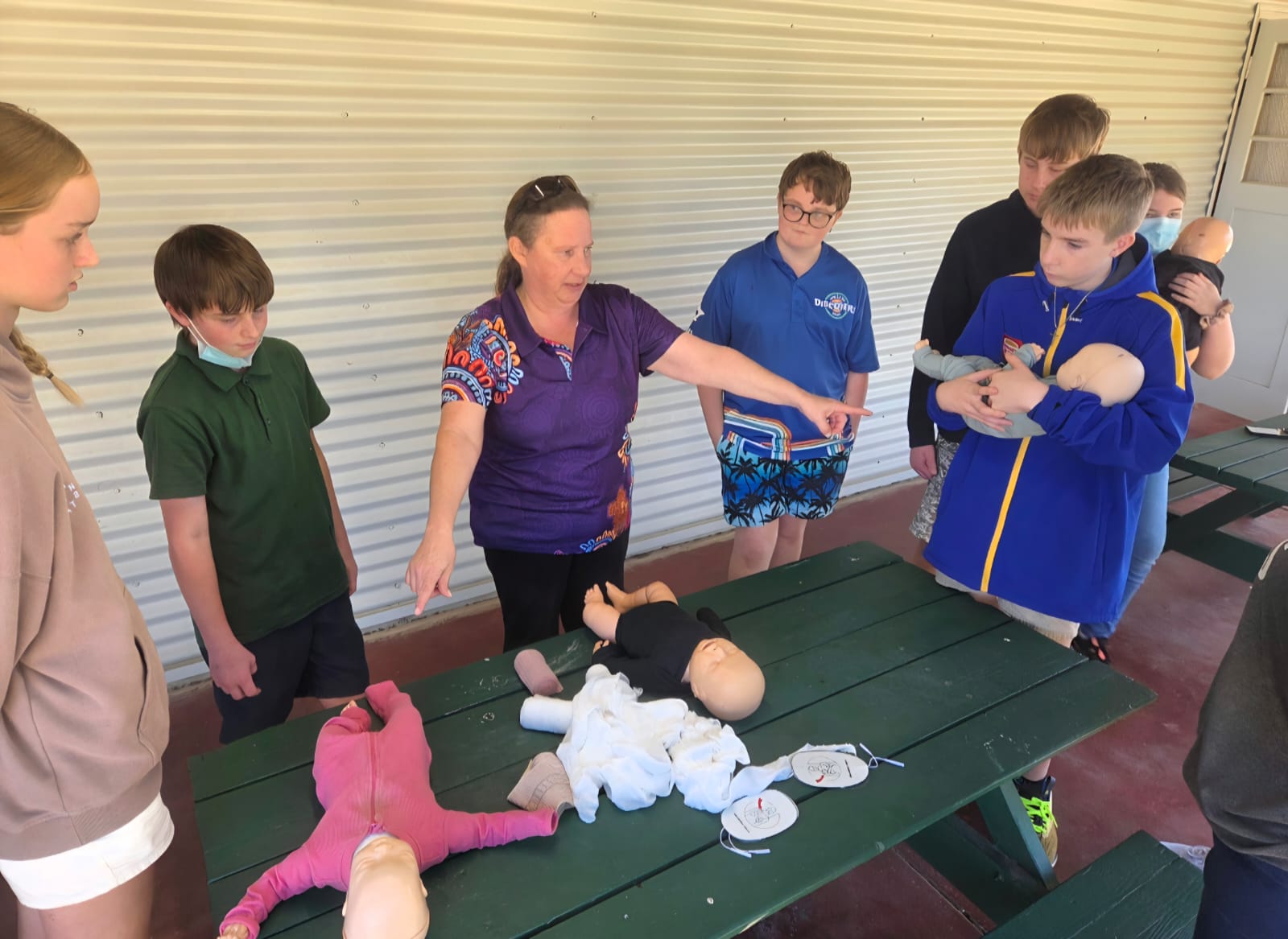
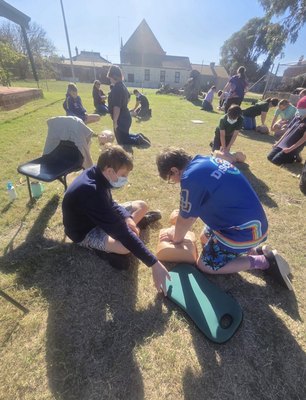
Public sessions run at Esperance Town Centre. Select Esperance from the suburb dropdown in the booking system. On-site delivery is available across the Shire of Esperance including remote farming properties, the port, and tourism operations throughout the region.
Approximately 1.5 to 2 hours. Required annually. Adult and infant CPR, AED operation, rescue breaths. The minimum for hospitality, retail, and community members keeping their compliance current.
$70 · 1 September, 9:00 amThe workplace standard for port workers, transport operators, fishing crews, and hospitality staff. Covers CPR, AED, catastrophic bleeding, tourniquet use, shock, anaphylaxis, snake bite, burns, and marine venom.
$100 · 1 September, 9:00 amSame qualification with more scenario time, including content matched to Esperance's remote coastal and agricultural environments.
ACECQA approved. Required for all educators and childcare workers. Infant and child CPR, anaphylaxis, EpiPen use, asthma, and febrile convulsions.
$130 · 1 September, 9:00 amThe recommended qualification for Esperance grain farmers, remote property workers, and anyone operating more than 30 minutes from emergency services. Extends HLTAID011 with extended casualty monitoring, vital signs, PLB and satellite communication protocols, and aeromedical evacuation preparation. See the agricultural worker safety guide for more.
$280 · 1 September, 9:00 amFor port safety supervisors, mine site team leaders, and anyone coordinating a multi-casualty response. Triage, scene management, and structured handover to the RFDS or paramedics arriving at a remote or industrial site.
$250 · 1 September, 9:00 amTraining Venue in Esperance
First Aid Training Across the Goldfields-Esperance Region
REACHAU serves Esperance and surrounding communities across the region, including on-site delivery to farms and remote properties throughout the Shire. See our coastal WA first aid and regional delivery pages for how training is brought to you wherever you are.
Training Built for the Reality of the 6450
Regional training needs to match regional risks. A session for Esperance grain farmers looks different from a session for Lucky Bay tourism operators, even though the certificate issued is the same nationally recognised qualification in both cases. The scenarios, the emphasis on extended casualty management, PLB protocols, and RFDS communication are matched to the environments where people in Esperance actually work and live.
REACHAU visits Esperance on a scheduled basis. The 1 September session is confirmed and open to the public. Additional dates will be added as sessions fill. For group bookings and on-site delivery at farms or other remote locations, contact Britt well ahead of when you need the training to allow adequate time for travel scheduling.
From the REACHAU Blog
Reading relevant to the Esperance agricultural and coastal community, straight from the REACHAU knowledge hub.
How on-site delivery works for farms, ports, and remote properties across regional Western Australia, including the Goldfields-Esperance region.
Essential reading for Esperance grain farmers. Covers 2026 machinery safety standards, trauma care for isolated farm incidents, and why HLTAID013 is the right qualification for workers more than 30 minutes from emergency services.
Directly relevant to Esperance's coastal and farming communities. Covers tourniquet application, wound packing, and the decisions made in the first minutes of a catastrophic bleeding emergency when help is a long way away.
Relevant for anyone on Esperance's rock pools and beaches. Recognising a blue-ringed octopus bite and the correct first aid response while waiting for help.
Common Questions About First Aid in Esperance
Where do sessions run in Esperance and how do I find them in the booking system?
Sessions are held at the Esperance Town Centre. Select Esperance from the suburb dropdown in the booking system to find all available sessions. The next session is Tuesday 1 September 2026, with all courses starting at 9:00 am. Contact Britt for upcoming dates as they are added.
Is the 1 September session open to everyone?
Yes. The session is open to the public and anyone can book directly through the online booking system. Jobseekers can also ask their employment services provider to arrange their enrolment.
What is HLTAID013 and do I need it as an Esperance farmer?
HLTAID013 Provide First Aid in Remote or Isolated Sites extends HLTAID011 with skills for managing a casualty for hours rather than minutes. This includes extended vital signs monitoring, PLB and satellite communication protocols, improvised equipment use, and preparation for RFDS arrival. For broadacre farmers, transport workers, and anyone operating on properties more than 30 minutes from emergency services in the Esperance region, HLTAID013 is the appropriate qualification. HLTAID011 meets the legal compliance threshold but does not prepare you for the actual wait time you may face at a remote incident site.
What should I know about PLBs for Cape Le Grand and remote coastal areas near Esperance?
A Personal Locator Beacon is a satellite emergency distress device that works where mobile coverage does not. At Cape Le Grand National Park and across much of the Esperance coastline and surrounding farmland, it is your only way to summon help in an emergency. PLBs must be registered for free with AMSA at beacons.gov.au. HLTAID013 includes practical guidance on PLB operation and pre-departure checks. Anyone who works, fishes, or recreates in areas without reliable mobile coverage should carry a registered PLB.
What first aid does the Port of Esperance require?
HLTAID011 Provide First Aid is the minimum standard for designated first aiders at the port under 2026 Southern Ports safety compliance requirements. For safety supervisors responsible for coordinating responses across the terminal and loading areas, HLTAID014 Advanced First Aid adds triage, multi-casualty scene management, and structured handover to emergency services. Contact Britt to arrange group delivery at the port facility to avoid operational disruption.
Can you deliver on-site training to farms and remote properties in the Shire of Esperance?
Yes. REACHAU delivers on-site to farms, agricultural operations, and remote properties across the Shire of Esperance. For HLTAID013, participants complete online pre-course theory before the practical session. Contact Britt well ahead of your required training date to allow time for travel coordination and scheduling. A quote is provided based on group size and property location.
Is the training nationally recognised?
Yes. Training and assessment is delivered by Britt at Regional Education and Career Help Australia on behalf of ABC First Aid RTO 3399. All qualifications are nationally recognised across all Australian states and territories.
See the full REACHAU FAQ page for more questions about courses, bookings, and compliance.
Other Locations in the Great Southern and South West
Book First Aid in Esperance
Nationally recognised. Delivered at Esperance Town Centre or on-site across the Shire. Built for the self-reliance the 6450 demands.