First Aid Refresher: What to Practise and Ask | REACHAU
Your First Aid Refresher Is a Chance to Ask the Questions You Have Been Sitting On
Due for a first aid or CPR refresher? Bring your questions, practise the decisions that matter and build confidence in the skills you may need to use.
By Britt Brennan, REACHAU | 18 October 2026
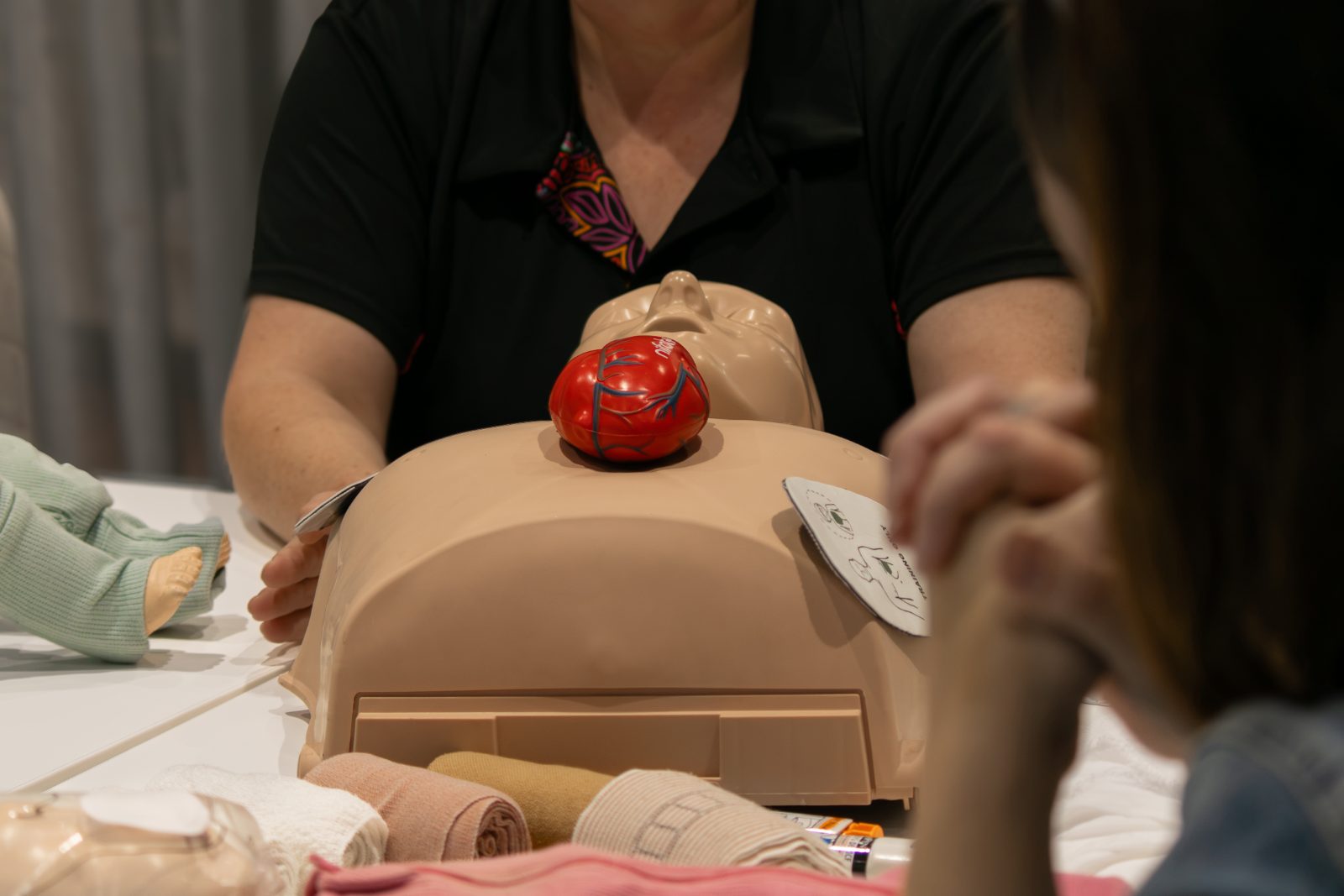
“I did this last time, but I am not sure I would remember it.”
That is a useful thing to say in a first aid class. It tells your trainer where to start.
A refresher gives you time to revisit the decisions, practise the skills and understand anything that did not quite stick. You do not need to arrive pretending you remember every step.
Start with the decision you find hardest
Sometimes the difficult part is deciding whether to act.
Would you recognise abnormal breathing? Would you know when to use an AED? Are you worried that you might cause an injury while trying to help?
Bring those questions with you. Understanding the reason for an action makes it easier to connect the steps when a situation looks different from the example in a workbook.
Practise recognising when CPR is needed
Current ANZCOR guidance directs bystanders to begin CPR when a person is unresponsive and not breathing normally. Occasional gasps are not normal breathing. Bystanders should not delay CPR to search for a pulse.[1]
In training, practise that decision as well as the physical skill. Ask your trainer to explain what you are looking for and what to do when you are uncertain. In a real emergency, call 000 and follow the call taker's instructions.
Not sure which refresher you need?
Answer six quick questions and see whether you need CPR only, the first aid refresher or the full day.
Check what I need to renewSay which parts feel awkward
Tell your trainer if you are unsure about hand position, rescue breaths, using an AED or changing over with another rescuer. Ask to work through the step again.
If you have a physical limitation or an access need, discuss it before booking so you understand the course's practical assessment requirements and what support may be available.
If a previous emergency is on your mind, you can tell the trainer privately. You do not have to describe it to the whole group to ask a question about it.
Check the training your role needs
CPR training and broader first aid training serve different purposes. Use our HLTAID009 and HLTAID011 comparison if you need help choosing.
WorkSafe WA recommends annual CPR refresher training and renewal of general first aid training every three years. Your role or workplace may require additional or more frequent training.[2] Check the requirements that apply to you rather than treating those intervals as a universal certificate expiry rule.
Bring three things to your next session
Bring the details of your previous training, any requirements supplied by your employer and one question you want answered properly.
It might be: “What does abnormal breathing look like?” Or: “What should I do if I am the only person there?”
A question that helps you act is worth asking, even if you think you should already know the answer.
Explore CPR and first aid training with REACHAU. Britt's teaching focuses on understanding why the actions matter and giving you the opportunity to practise them.
Public CPR and first aid sessions run across Perth and regional WA. Bring your questions, we will make time for them.
See upcoming datesRenewal guideTraining and Assessment is delivered by Britt at Regional Education and Career Help Australia on behalf of ABC First Aid RTO 3399.
Sources
- ANZCOR, Guideline 8, Cardiopulmonary Resuscitation, and linked basic life support guidance: www.anzcor.org
- WorkSafe WA, Training a first aider: www.worksafe.wa.gov.au
This article provides general information and is not legal or individual medical advice. In an emergency, call 000.