How Snake Venom Spreads: Blood vs Lymphatic System
How Snake Venom Spreads Through the Body: Blood vs Lymphatic System
Why Australian snakebite first aid is about keeping still and slowing the lymph.
By Britt Brennan, REACHAU | Updated 16 October 2026
Suspected snakebite? Call 000 now. Keep the person calm and still, apply a pressure immobilisation bandage and splint the limb. Do not wash the bite, cut it, suck it, apply a tourniquet or apply ice. See the pressure immobilisation steps.
Why people are confused about how venom spreads
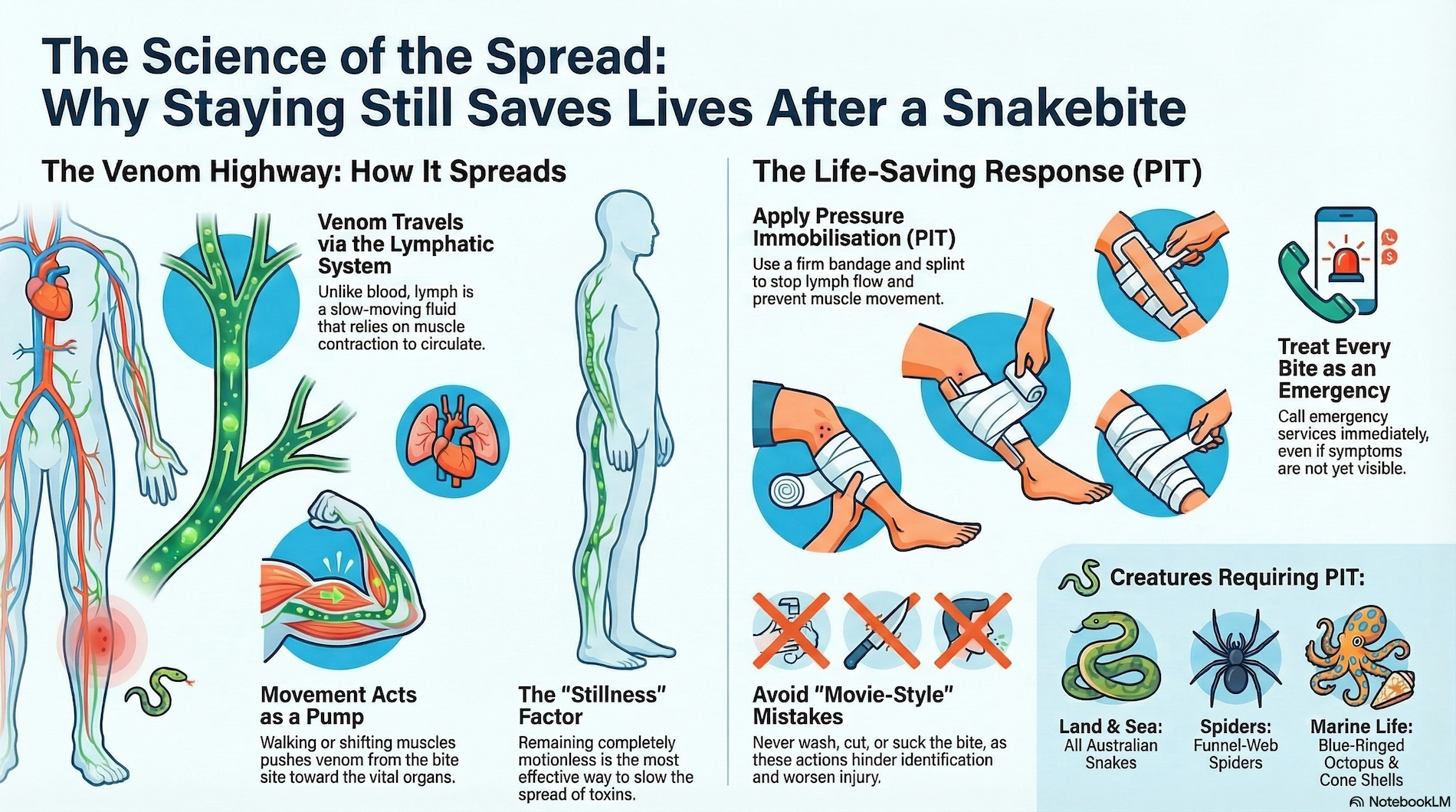
A common assumption is that snake venom immediately enters the bloodstream and races around the body. That is usually not what happens. When a snake injects venom into tissue, much of it is taken up by the lymphatic system first. This is a network of vessels that collects fluid from body tissues and slowly returns it to the bloodstream.
Because lymph moves slowly, venom can take time to reach the circulation. The speed of spread depends heavily on movement and muscle activity. This is why staying still after a snakebite is so important.
Blood or lymph?
The lymphatic system acts like a drainage network. Venom injected into muscle or tissue is often carried along these lymph vessels and eventually reaches the bloodstream, where it can begin affecting organs and body systems. The key point is simple: movement speeds up lymph flow, so movement can speed up the spread of venom.
How movement affects the spread of venom
The lymphatic system does not have a pump like the heart. Lymph moves when muscles contract and relax. Walking, moving the bitten limb or even unnecessary shifting can push venom through the lymph vessels more quickly. That is why Australian first aid advice emphasises:
- Keeping the person calm
- Keeping the limb still
- Avoiding walking if possible
The goal is to slow the spread of venom until medical assistance arrives.
Why pressure immobilisation slows the spread
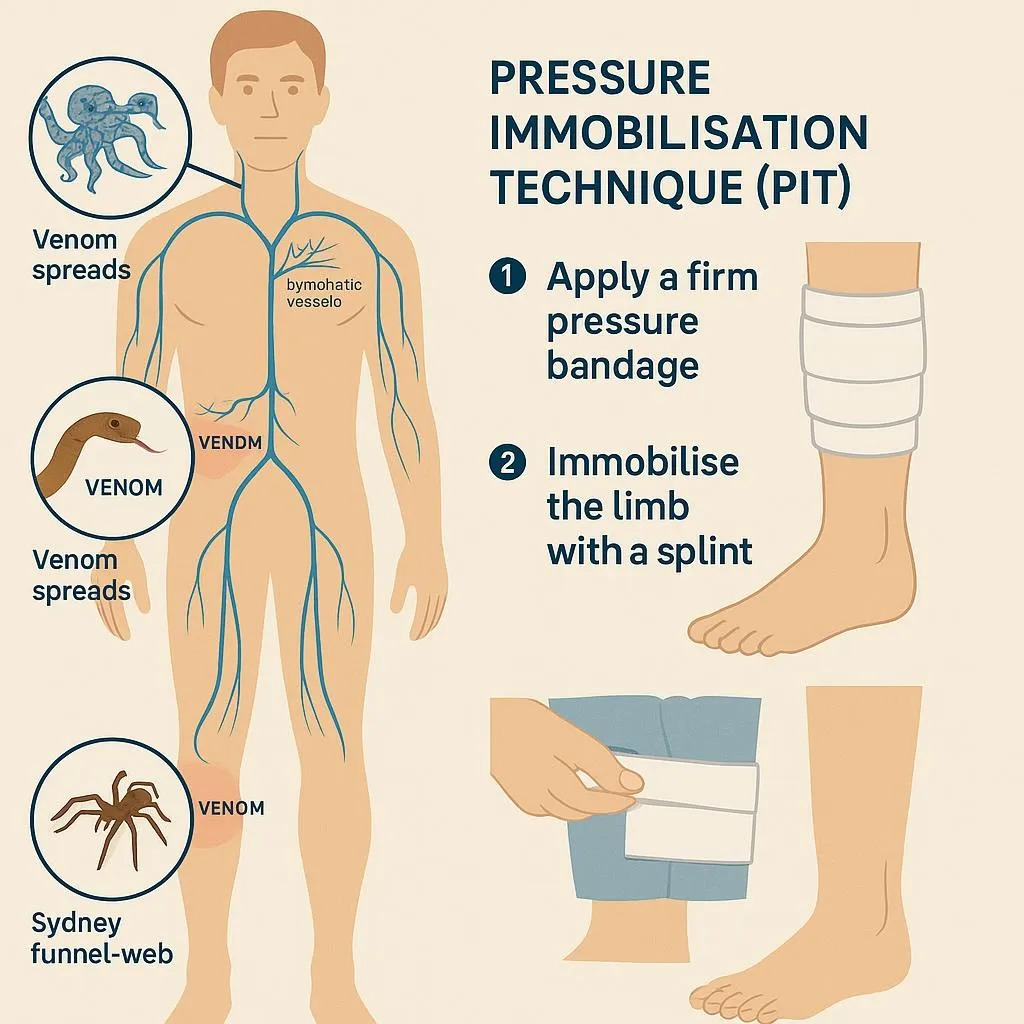
The pressure immobilisation technique (PIT) works because it slows the movement of lymph. A firm bandage is applied over the bite area and along the limb from the fingers or toes upward, and the limb is then immobilised with a splint. The pressure helps compress the lymph vessels, and the splint prevents the muscle contractions that would normally pump lymph along.
Together, these actions slow the movement of venom away from the bite site. That delay can be critical, giving time for emergency services to arrive and hospital treatment to begin.
Pressure immobilisation is recommended in Australian first aid guidelines for:
- Snake bites
- Funnel-web spider bites
- Blue-ringed octopus bites
- Cone shell stings
These venoms can affect the nervous system, so slowing their spread is critical. Pressure immobilisation is not used for every bite or sting in Australia, so follow current first aid guidance for the specific animal.
Common mistakes after a snakebite
Many traditional or movie-style treatments can make things worse. Avoid:
- Washing the bite area, because venom traces on the skin may help identify the snake involved
- Cutting the wound
- Trying to suck out venom
- Applying a tourniquet
- Applying ice
When to call emergency services
All suspected snakebites in Australia should be treated as a medical emergency. Call 000 immediately. Even if symptoms are not obvious, venom effects can develop later. Apply first aid while you wait for professional medical care.
Frequently asked questions
Does snake venom travel through blood or lymph?
In many cases snake venom is mostly carried by the lymphatic system rather than entering the bloodstream directly. Movement increases lymph flow and can speed up the spread of venom.
Why should you keep someone still after a snakebite?
Muscle movement pumps lymph through the body. Because venom often travels through lymph vessels first, movement can accelerate its spread.
Why should you not wash a snakebite?
Venom traces left on the skin may help identify the snake species involved, so do not wash or wipe the bite site.
How quickly does snake venom spread?
It varies with the snake species, the amount of venom injected and how much the person moves. Staying still and applying pressure immobilisation helps slow the spread.
Understanding why first aid works helps people act more confidently. Related courses: HLTAID011 Provide First Aid, HLTAID012 Education and Care, HLTAID013 Remote or Isolated Site and HLTAID014 Advanced First Aid.
REACHAU first aid training focuses on understanding what to do, why it matters and how to act when someone needs help.
View upcoming first aid sessionsTraining and Assessment is delivered by Britt at Regional Education and Career Help Australia on behalf of ABC First Aid RTO 3399.
This article provides general first aid education and is not individual medical advice. In an emergency, call 000. Follow current ANZCOR guidance for envenoming.