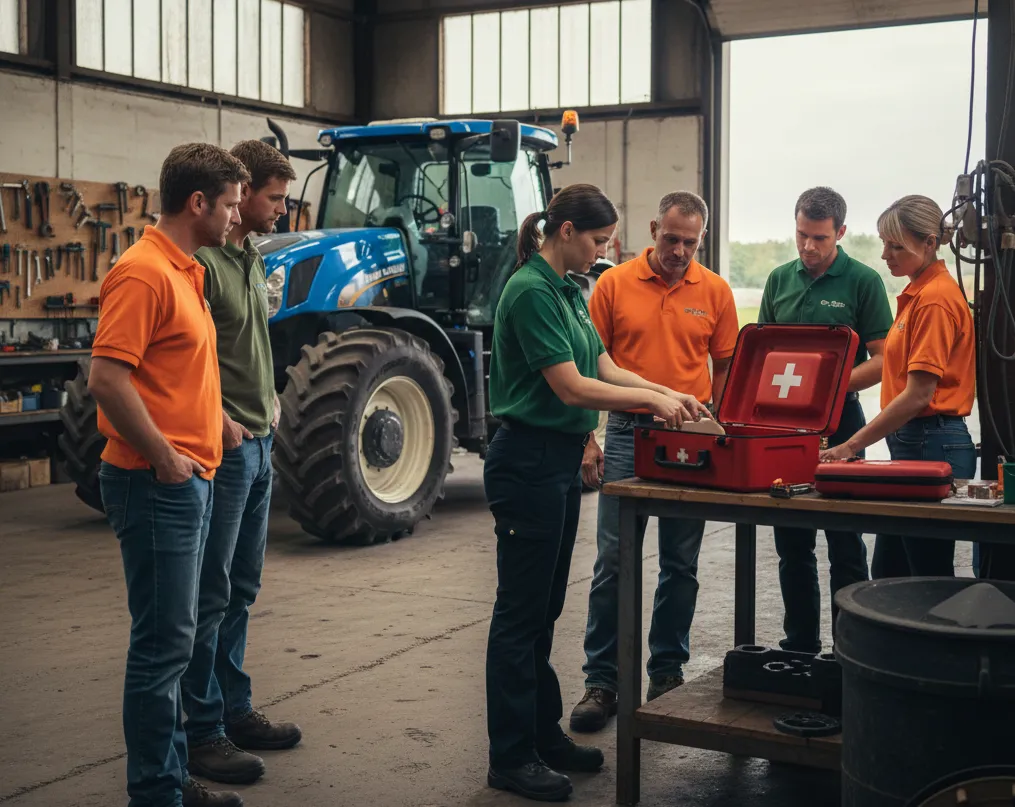
Agricultural worker safety and emergency response training
Agricultural Worker Safety and Emergency Response Training
Farms are busy, remote and hazardous. When something goes wrong, help can be a long way off, so your team needs to know what to do.
By Britt Brennan, REACHAU | Updated 16 October 2026

Emergency on the farm? Call 000, give your exact location and follow the call taker's instructions. Control severe bleeding with firm pressure and keep the person warm and still until help arrives.
Australian farms are productive and increasingly high-tech, but agriculture remains one of the country's most hazardous industries. Safety is not only about avoiding a rollover. It is also about managing hazards you cannot always see, and knowing what to do when help is a long way off.
Exposure standards and workplace safety rules change over time and differ by state. Check the current requirements with WorkSafe WA, or your state regulator, and Safe Work Australia. Make sure your emergency response plan is tested with your team and not just filed away.
Chemical and dust exposure
Grain dust, diesel exhaust and herbicides and other chemicals are everyday hazards on many farms. Training for workers should cover:
- Respiratory protection. Protective equipment only works when it is fitted and used correctly. First aid sits alongside your risk controls, workplace policies and the safety data sheets for the products you use.
- Chemical emergency response. Know how to get the person away from the source safely, what to rinse and for how long, and who to call. Check the safety data sheet and call the Poisons Information Centre on 13 11 26, or 000 if the person is unwell or collapses.
Machinery, crush and entrapment injuries
Machinery has become smarter, but serious injuries still happen around augers, power take-off (PTO) shafts, vehicles and implements. Your team should know how to:
- Make the scene safe and shut down machinery before approaching.
- Call 000 early and stay on the line. The call taker will guide you on what to do.
- Care for a person who is trapped while you wait, including keeping them warm, calm and monitored.
- Control severe bleeding with direct pressure, and use a tourniquet when pressure fails on an arm or leg.
Severe bleeding when you do not have a tourniquet
Not every ute or tractor cab has a tourniquet. Firm, continuous direct pressure is still the first action. Add more material on top if blood soaks through and keep pressing. Learn more in severe bleeding: first aid steps before help arrives and how to tell life-threatening bleeding from minor bleeding.
Animal handling incidents
Emergency response is about the whole scene. Training covers the immediate first aid response for livestock-related injuries, such as crush injuries in cattle yards or falls from horses, including keeping yourself safe around frightened animals. For more on horse-related injuries, see first aid in horse stables.
Why train for remote first aid
Remote first aid is designed to be practical. It does not happen in a sterile classroom. It happens in the shed, in the yard and in the cab. HLTAID013 Provide First Aid in Remote or Isolated Site focuses on managing a casualty for longer while you wait for help, communicating your location and working with limited equipment.
By training your team you are not just ticking a box. You are building a culture where looking out for your mate is backed by the skill to actually help. See also remote first aid explained.
Frequently asked questions
What first aid training suits farm workers?
HLTAID013 Provide First Aid in Remote or Isolated Site is built for work where help is a long way off. It focuses on managing a casualty for longer, communicating your location and working with limited equipment.
What should I do first after a machinery or crush injury?
Make the scene safe and shut down the machinery before you approach. Call 000 early, stay on the line and follow the call taker's instructions. Keep the person warm, calm and monitored while you wait.
What if I do not have a tourniquet?
Firm, continuous direct pressure is still the first action. Add more material on top if blood soaks through and keep pressing.
Who do I call after a chemical exposure?
Check the safety data sheet and call the Poisons Information Centre on 13 11 26. Call 000 if the person is unwell or collapses.
What do I tell 000 when I am on a remote property?
Give your exact location, stay on the line and follow the call taker's instructions. Make sure your emergency response plan includes how your team will describe the location and meet the ambulance.
REACHAU first aid training focuses on understanding what to do, why it matters and how to act when someone needs help.
View upcoming first aid sessionsTraining and Assessment is delivered by Britt at Regional Education and Career Help Australia on behalf of ABC First Aid RTO 3399.
This article is general information and does not replace WHS advice, safety data sheets, a first aid course or legal advice. In an emergency, call 000.