DRSABCD: The Action Plan That Could Save a Life
Seven simple steps that turn panic into a plan. What each letter means, exactly what to do, and how to use DRSABCD for adults, children and babies.
When someone collapses in front of you, your brain can go blank. Your heart races, your hands shake and a hundred questions hit at once. Is it safe? Are they breathing? Who do I call? What do I do first?
That is exactly why Australian first aid uses DRSABCD. It is a simple, ordered action plan that tells you what to do next, one step at a time, so you never have to work it out from scratch under pressure.
This guide breaks down every step of DRSABCD in plain English, based on ANZCOR guidelines, with practical tips from real WA training rooms and real emergencies.
Quick answer
What does DRSABCD stand for? DRSABCD is the Australian basic life support action plan: Danger, Response, Send for help, Airway, Breathing, CPR and Defibrillation. Check for danger, check for a response, call 000, open the airway, check for normal breathing, start CPR if they are not breathing normally, and attach an AED as soon as possible.
| Letter | Step | What you do |
|---|---|---|
| D | Danger | Check for danger to yourself, bystanders and the casualty. Only approach when it is safe. |
| R | Response | Talk and touch. Are they responsive? Can they open their eyes, answer or squeeze your hand? |
| S | Send for help | Call 000, or 112 from a mobile with no coverage. Send someone for an AED. |
| A | Airway | Open the mouth and check for anything blocking the airway. Clear it if needed. Open the airway with head tilt and chin lift. |
| B | Breathing | Look, listen and feel for normal breathing for up to 10 seconds. |
| C | CPR | If they are not breathing normally, start CPR: 30 compressions to 2 breaths. |
| D | Defibrillation | Turn on an AED as soon as it arrives and follow the voice prompts. |
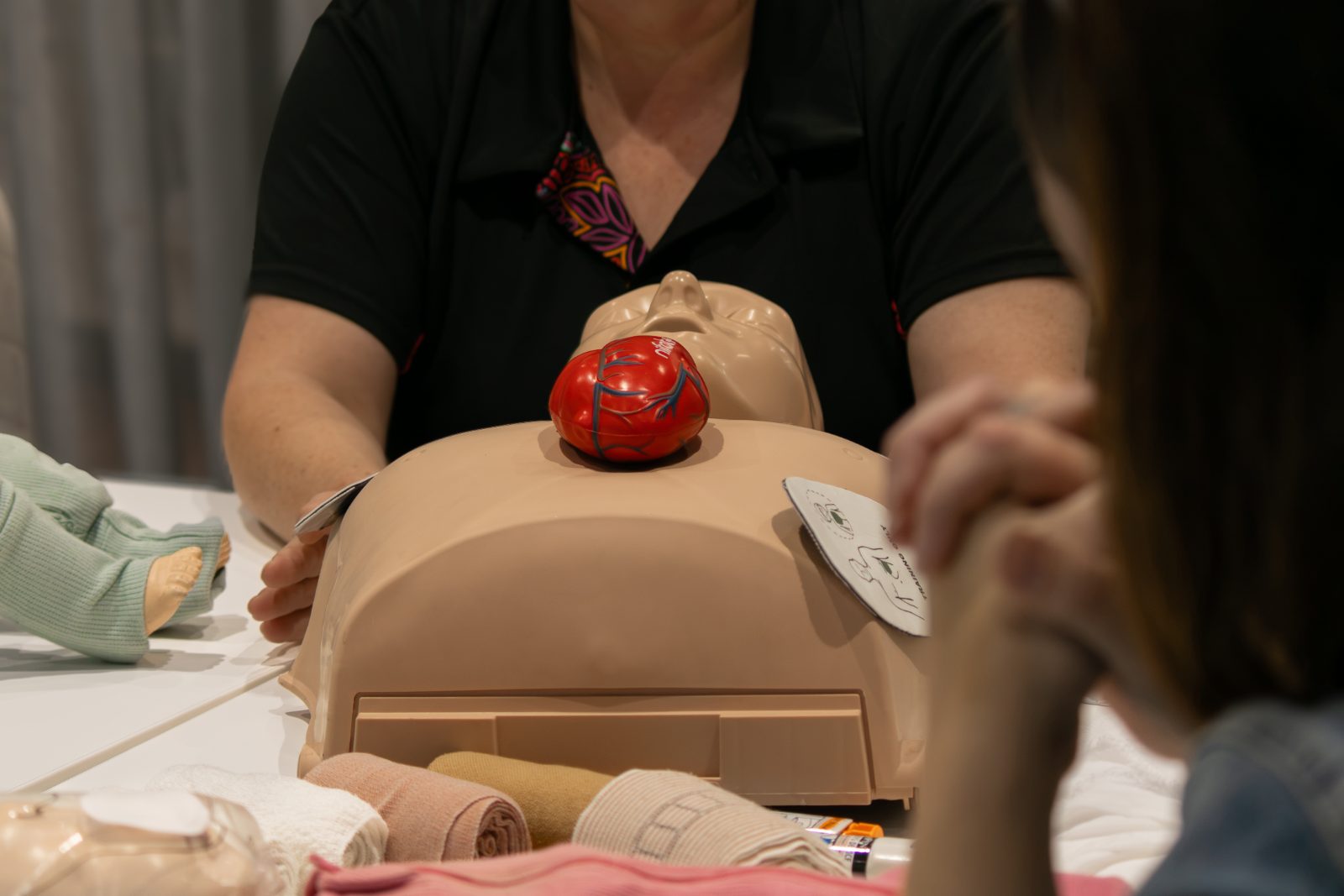
1. Why DRSABCD Works
In an emergency, the biggest danger is often not doing the wrong thing. It is freezing. DRSABCD fixes that by giving you a sequence that always tells you what comes next.
It works because:
- It protects you first. You cannot help anyone if you become a second casualty.
- It gets help moving early. Calling 000 in the first minute starts the ambulance and gives you a call-taker to guide you.
- It focuses on what kills fastest. A blocked airway and a stopped heart are the most urgent threats, so they come first.
- It gives you clear decision points. Responsive or not? Breathing normally or not? Each answer tells you the next step.
- It is the same everywhere in Australia. Whether you trained in Perth, Geraldton or Kalgoorlie, every first aider and paramedic speaks the same language.
DRSABCD is the foundation of every nationally recognised first aid course, from HLTAID009 Provide CPR to HLTAID014 Provide Advanced First Aid.
2. D is for Danger
Before you rush in, stop for a moment and look. Is it safe for you to approach? The first rule of first aid is simple: do not become a second casualty.
Check for danger to:
- Yourself
- Bystanders
- The casualty
Common dangers in WA include:
- Traffic on roads, highways and in car parks
- Electricity, including fallen powerlines. Stay at least eight metres away and call 000.
- Fire, smoke and fuel
- Water, including surf, rivers, dams and pools
- Machinery, vehicles and moving equipment on worksites and farms
- Chemicals, gas and confined spaces
- Snakes, dogs, livestock and other animals
- Unstable structures, falling objects and uneven ground
- Sharps, needles and body fluids
- Aggressive or unpredictable people
If there is danger, make it safe if you can without risk, for example turning off a machine, switching off power at the switchboard, or putting on hazard lights and a warning triangle. If you cannot make it safe, keep your distance and call 000.
Put on gloves if you have them. They take seconds and protect you from blood and body fluids.
Your safety is part of the plan.
Stepping back to check for danger is not hesitation. It is the first step of good first aid. Emergency services would much rather treat one casualty than two.
3. R is for Response
Once it is safe, check whether the person responds. ANZCOR describes this as "talk and touch".
Kneel beside them, place your hands firmly on their shoulders and speak loudly and clearly. Many first aiders use the memory aid COWS:
- Can you hear me?
- Open your eyes.
- What is your name?
- Squeeze my hand.
Give a firm squeeze of the shoulders as you speak. Do not shake them, especially if they may have a neck injury.
If they respond
- Leave them in the position you found them, unless that position is dangerous.
- Check for injuries and ask what happened.
- Call for help if needed.
- Reassure them and stay with them.
- Keep checking their response and breathing until help arrives.
If they do not respond
An unresponsive person is in danger. Their airway can become blocked by their own tongue, vomit or fluids. Move straight on to Send for help, then Airway.
4. S is for Send for Help
If the person is unresponsive, call for help straight away. The earlier an ambulance is on its way, the better the outcome.
- Call 000. Ask for an ambulance.
- Use 112 from a mobile phone if your own network has no coverage. It can connect through any available network.
- People who are deaf or have a hearing or speech impairment can contact emergency services through the 106 text emergency service or the National Relay Service.
- Put the phone on speaker so your hands are free and the call-taker can guide you.
- Send someone for an AED. Point at a specific person and tell them exactly what to do.
What to tell the call-taker
- Your exact location, including landmarks, building entrances and GPS coordinates if you are remote
- What happened and how many people are hurt
- Whether the person is responsive and breathing normally
- What you are doing
The Emergency+ app is worth installing on every phone. It shows your GPS location on screen so you can read it out. That is especially useful on farms, stations, beaches and rural roads.
Tip: point and name
Do not shout "Someone call an ambulance!" to a crowd. Everyone assumes someone else will. Point at one person: "You in the blue shirt, call 000 and put it on speaker." Point at another: "You, get the defibrillator from reception."
5. A is for Airway
An unresponsive person cannot protect their own airway. The tongue can fall back and block the throat, and vomit, blood or food can be breathed in.
Check the mouth
Open the mouth and look inside. If you see anything that could block the airway, such as vomit, blood, food or loose teeth, roll the person onto their side into the recovery position, open the mouth with the face turned slightly downwards, and clear it with your fingers.
Open the airway
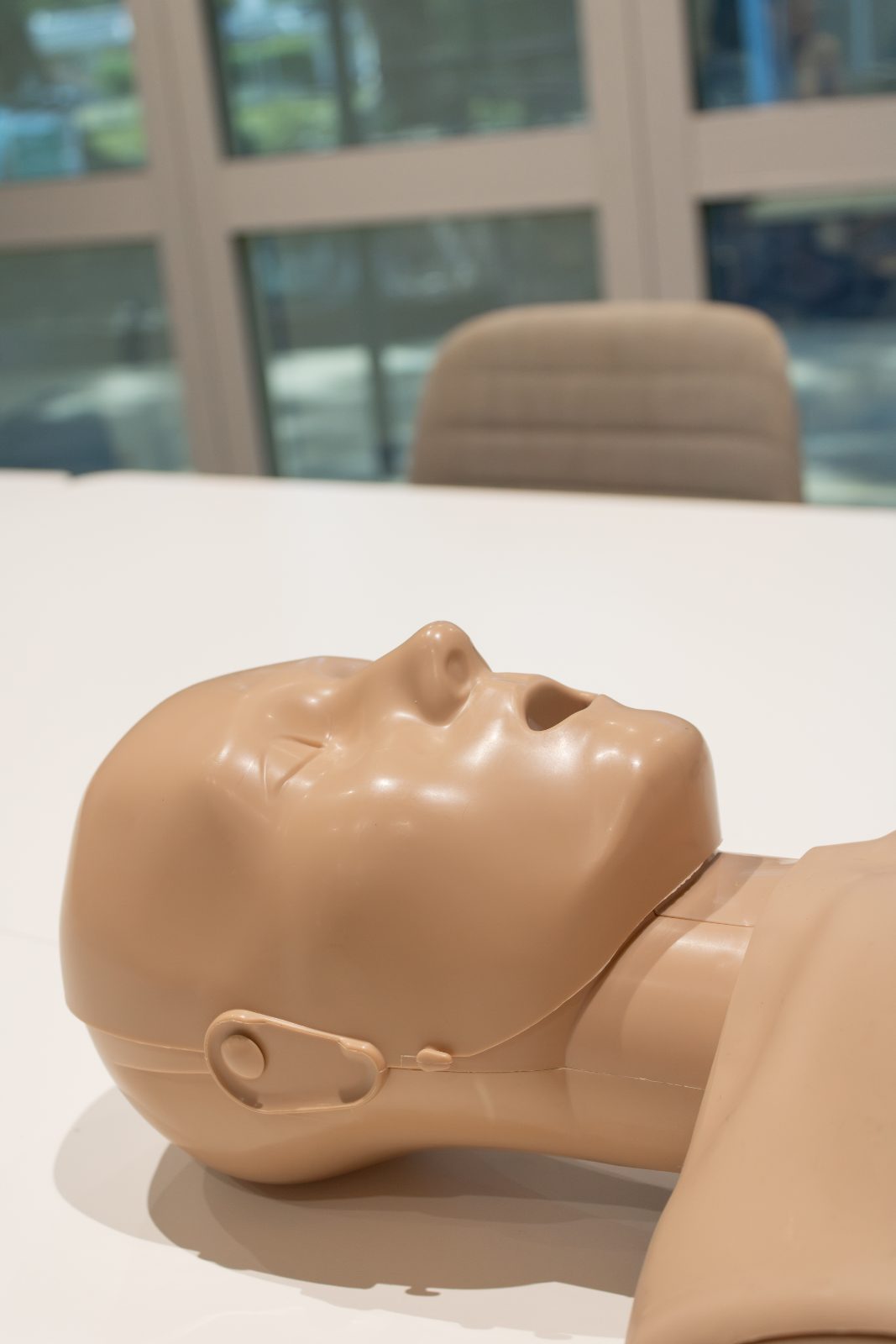
For adults and children, use head tilt and chin lift:
- Place one hand on the forehead.
- Place the fingertips of your other hand under the bony point of the chin.
- Gently tilt the head back and lift the chin.
For infants under one year, keep the head in a neutral position with just a little chin support. Tilting a baby's head too far back can block their airway.
What about neck injuries?
If you suspect a neck or spinal injury, be gentle and support the head. But remember: an open airway takes priority over a possible spinal injury. A person who cannot breathe will not survive, whatever other injuries they have.
6. B is for Breathing
With the airway open, check whether the person is breathing normally. Take no more than 10 seconds.
- Look for the chest rising and falling.
- Listen for air coming out of the mouth and nose.
- Feel for breath on your cheek and chest movement under your hand.
Watch out for agonal breathing
In the first minutes after the heart stops, many people make occasional gasps, snorts or gurgling sounds. This is called agonal breathing. It is not normal breathing. If you are unsure, treat it as not breathing normally and start CPR.
If they are breathing normally
Place them in the recovery position, keep checking their breathing, and stay with them until help arrives.
If they are not breathing normally
Start CPR straight away.
7. The Recovery Position, Step by Step
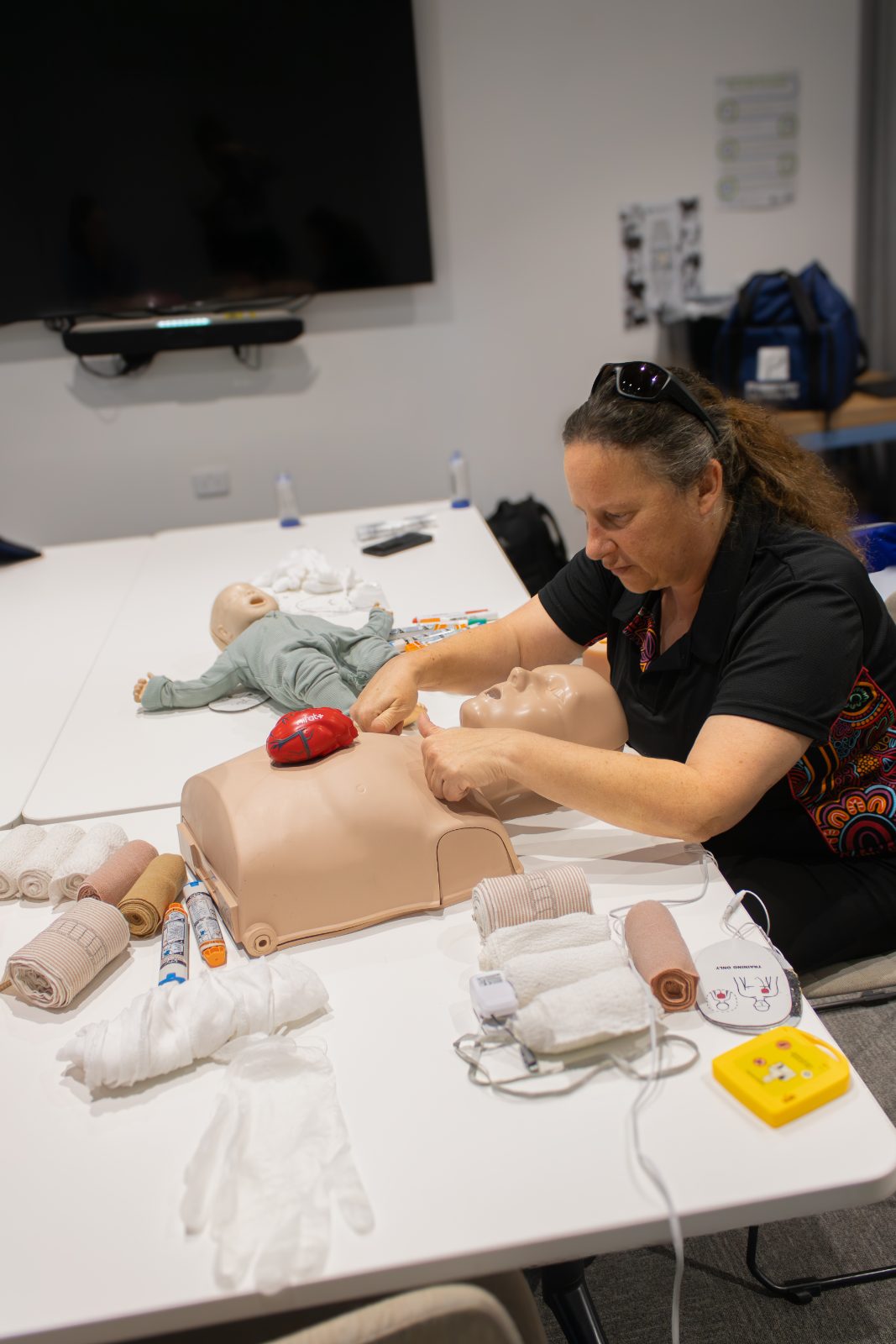
The recovery position keeps the airway open and lets fluids drain from the mouth, so the person does not choke. Use it for anyone who is unresponsive but breathing normally.
- Kneel beside the person. Place their arm closest to you at a right angle to their body, elbow bent.
- Bring their other arm across their chest and hold the back of their hand against the cheek closest to you.
- With your other hand, bend their far knee up so the foot is flat on the ground.
- Keeping their hand on their cheek, pull on the bent knee to roll them towards you onto their side.
- Adjust the top leg so the hip and knee are at right angles, which stops them rolling onto their face.
- Tilt the head back slightly and turn the face a little downwards to keep the airway open and let fluids drain.
- Keep checking their breathing until help arrives.
For a baby, hold them face down along your forearm with their head supported and slightly lower than their body, or in a similar supported side position.
8. C is for CPR
If the person is unresponsive and not breathing normally, start CPR immediately. CPR keeps oxygen-rich blood moving to the brain and heart until a defibrillator or paramedics can take over.
Adults
- Place the heel of one hand on the lower half of the breastbone, in the centre of the chest, and your other hand on top.
- Keep your arms straight and shoulders above your hands.
- Press down about one third of the depth of the chest.
- Give compressions at 100 to 120 a minute, letting the chest rise fully each time.
- After 30 compressions, give 2 breaths: open the airway, pinch the nose, seal your mouth over theirs and breathe in until the chest rises.
- Continue 30 compressions and 2 breaths without stopping.
Children
Use the heel of one or two hands, depending on the child's size. Same ratio, same depth of about one third of the chest.
Infants
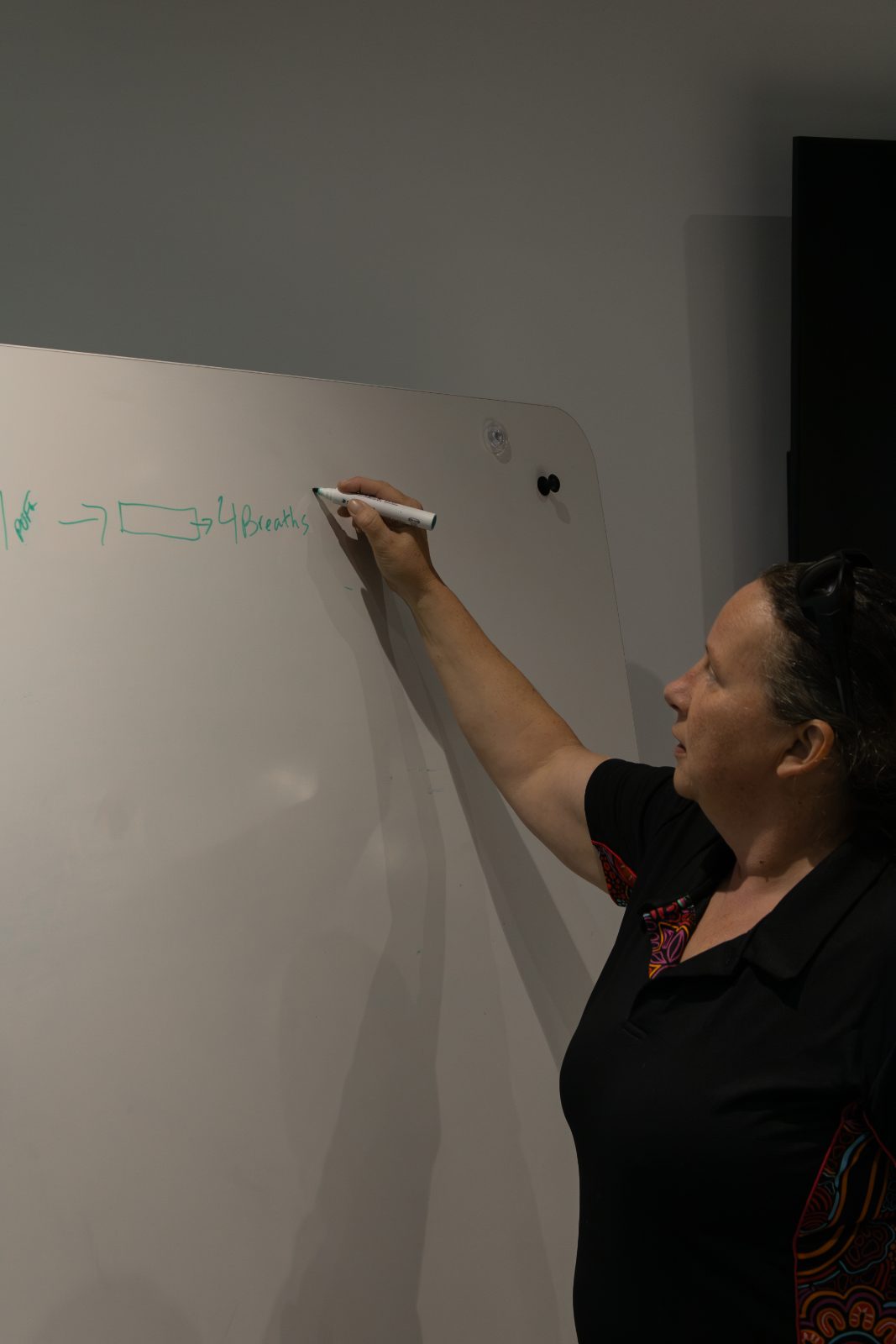
Use two fingers on the lower half of the breastbone. Cover the baby's mouth and nose with your mouth and give gentle puffs, just enough to make the chest rise.
If you cannot or will not give breaths, do continuous chest compressions. Compression-only CPR is far better than no CPR.
When to stop
Keep going until:
- The person starts breathing normally or shows signs of life
- A paramedic or health professional takes over
- An AED tells you to stop compressions while it analyses
- It becomes unsafe, or you are physically unable to continue
Swap with another rescuer every two minutes if you can. CPR is exhausting, and quality drops quickly. For more detail, see our guide to CPR and AEDs: 10 critical questions answered.
9. D is for Defibrillation
An automated external defibrillator, or AED, can restart a heart that is in a shockable rhythm. It is the only thing that can do this outside hospital. The sooner it is used, the better the chance of survival.
- Turn it on and follow the voice prompts.
- Expose the chest and wipe it dry if needed.
- Attach the pads as shown in the pictures on the pads.
- Keep doing CPR while someone else attaches the pads, if there are two of you.
- Stand clear when the AED analyses, and make sure no one is touching the person.
- Shock if advised, then go straight back to compressions.
- Follow the prompts until paramedics arrive. Leave the pads on.
AEDs are designed for untrained members of the public. They will not shock someone who does not need it. In WA, the St John 2024 cardiac arrest report found that patients who received a first shock from a community AED were 2.6 times more likely to survive. Our article on why you should not forget the defibrillator at a car crash shows why the AED matters even outside the obvious situations.
10. DRSABCD for Adults, Children and Babies
The steps are the same for every age. A few details change with body size.
| Step | Adult | Child (1 year to puberty) | Infant (under 1 year) |
|---|---|---|---|
| Response | Talk and touch, squeeze shoulders | Talk and touch, squeeze shoulders | Talk and touch gently, do not shake |
| Airway | Head tilt and chin lift | Head tilt and chin lift | Neutral head position with chin support |
| Compressions | Two hands, lower half of breastbone | One or two hands | Two fingers |
| Depth | One third of chest depth | One third of chest depth | One third of chest depth |
| Ratio | 30:2 | 30:2 | 30:2 |
| Breaths | Mouth to mouth, pinch nose | Mouth to mouth, pinch nose | Cover mouth and nose, gentle puffs |
| AED | Adult pads | Child pads or mode if available, otherwise adult pads | Child pads if available, otherwise adult pads front and back |
If you work with young children, HLTAID012 Provide First Aid in an Education and Care Setting covers infant and child DRSABCD in detail.
11. Common DRSABCD Mistakes
- Skipping Danger. Rushing onto a road or into a live electrical scene creates a second casualty.
- Delaying the 000 call. Call early. You can always cancel if things improve.
- Checking breathing for too long. Ten seconds is the maximum. Longer checks delay CPR.
- Mistaking gasping for breathing. Agonal breathing is not normal breathing. Start CPR.
- Leaving an unresponsive, breathing person on their back. Put them in the recovery position to protect the airway.
- Compressions that are too shallow or slow. Push hard and fast.
- Waiting to use the AED. Turn it on as soon as it arrives.
- Stopping CPR too soon. Keep going until help takes over or the person recovers.
Two of these come up in almost every course we run. The first is the breathing check. People kneel there for 20 or 30 seconds, staring at a chest, hoping to see movement, because starting CPR feels like a bigger decision than it is. It is not. If you are not certain the person is breathing normally, treat them as though they are not and start compressions. An unnecessary set of compressions on someone who turns out to be breathing is a far smaller problem than a minute of lost time on someone who is not.
The second is the AED. People collect it, then hold it while CPR continues because they are waiting for permission or for someone more senior. Turn it on the moment it is in your hands. The machine talks you through the rest, it will not shock a heart that does not need it, and every minute without a shock drops the chance of survival by roughly ten percent.
A third one worth naming is crowd management. At a real incident you will usually have people around you, phones out, opinions flying. Give jobs, not instructions to the room. "You in the blue shirt, call 000 and put it on speaker." "You, get the defib from reception." Named jobs get done. Announcements to a crowd do not.
12. Walking Through DRSABCD in a Real Scenario
It is late afternoon at a warehouse in Canning Vale. A forklift driver, Dave, is found lying on the floor near the loading dock. A co-worker, Mel, who completed HLTAID011 last year, runs over.
- Danger: Mel stops and looks around. A forklift is idling nearby. She turns off the key, checks there is no spill or falling stock, and waves another worker away from the dock edge.
- Response: She kneels, squeezes Dave's shoulders and says loudly, "Dave, can you hear me? Open your eyes." Nothing.
- Send for help: She points at a colleague: "Call 000 now, put it on speaker. Tell them a man is unresponsive." She points at another: "Get the defib from the office."
- Airway: She opens his mouth. It is clear. She tilts his head back and lifts his chin.
- Breathing: She looks, listens and feels. There is one slow gasp, then nothing. Not normal breathing.
- CPR: She starts compressions, counting out loud, and gives breaths with the face mask from the first aid kit.
- Defibrillation: The AED arrives. Her colleague turns it on and attaches the pads while Mel keeps compressing. The AED advises a shock. Everyone stands clear. Shock delivered. Mel goes straight back to compressions.
Paramedics arrive six minutes later and take over. Dave survives. Later, Mel says she did not have to think. She just followed the letters.
13. Doing DRSABCD On Your Own
Most first aid training shows two or three rescuers working together. Real life is often one person in a quiet house, a car park or a paddock. The sequence does not change, but the order of a few small decisions does.
If you are alone with an adult who is not responding and not breathing normally, put your phone on speaker, dial 000, and start compressions while you talk. The call-taker can coach you through CPR and will not hang up. Do not go looking for a defibrillator on your own if that means leaving the person for more than a few seconds, unless you know exactly where one is and it is very close.
With an infant or a young child, ANZCOR guidance is slightly different. Cardiac arrest in children is most often caused by a breathing problem, so one minute of CPR before you leave to get help can matter. If you have a phone, you never need to leave. Call 000 on speaker and keep going.
Two practical habits make single rescuer CPR far easier:
- Know where your nearest AED is before you ever need it. The St John WA app and the Australian Register of AEDs both map public defibrillators. Check the ones near your home, your work and your gym.
- Shout for a bystander early. Even an untrained stranger can hold a phone, open a gate, flag down the ambulance or take over compressions when you tire. Give them one clear job each, and point at them when you do it.
CPR on your own is tiring. Compressions drop off in quality after about two minutes, and most people do not notice it happening. Count out loud, keep your shoulders over your hands, and let your body weight do the work rather than your arms.
14. DRSABCD in Different Settings
The seven letters never change. What changes is the danger check and how quickly help can reach you. These are the settings we see most often in Western Australia.
Workplaces and worksites
Danger usually means machinery, vehicles, electricity or chemicals. Isolate the hazard before you touch anyone, and know who your site emergency contact is. If the person has been electrocuted, do not touch them until the power is confirmed off. Under the WA code of practice for first aid in the workplace, your workplace should have trained first aiders, a stocked kit and, increasingly, an AED.
Homes
Danger is usually simpler, but access is the problem. Unlock the front door, turn the porch light on and send someone to the kerb to wave the ambulance in. Move furniture out of the way so paramedics can get a stretcher to the person.
Beaches, rivers and pools
Get the person out of the water before starting CPR. Drowning is a breathing problem first, so ANZCOR recommends five initial rescue breaths before compressions when a person has been rescued from water. Do not waste time trying to drain water from the lungs. Dry the chest before AED pads go on.
Roadsides and remote WA
Danger is traffic, fuel and unstable vehicles. Park to protect the scene, use hazard lights, and keep bystanders off the road. If you are outside mobile coverage, remember that 112 works on any available network and 106 is the text based service for people who are deaf or have a speech impairment. A satellite messenger or UHF radio is worth carrying if you travel the Coral Coast, the Goldfields or the Pilbara, where an ambulance may be hours away and DRSABCD may need to run far longer than in town.
15. What Happens After the Letters
DRSABCD gets you to the point where help arrives. What you do in the next few minutes still matters.
- Hand over clearly. Tell paramedics what you found, what you did, how long CPR ran and how many shocks the AED delivered. The AED stores this, so leave the pads on and hand the unit over.
- Keep the scene as it is if the incident is likely to be investigated, such as a workplace injury or a crash.
- Report it. Serious workplace incidents must be notified to WorkSafe WA, and your employer has obligations around the incident register.
- Restock the kit and the AED. Used pads, gloves, dressings and face shields need replacing straight away, not next month.
- Check on yourself. Helping at a cardiac arrest is confronting, even when it goes well. Talk to someone you trust, and use your workplace EAP if you have one.
You are also protected when you help. Western Australia's Civil Liability Act gives good Samaritan protection to people who act in good faith to assist in an emergency, which covers doing CPR on a stranger. Broken ribs during effective compressions are common and are not a reason to stop. The far greater risk is doing nothing.
16. Teaching DRSABCD at Home
You do not need to be a trained first aider to know the basics of DRSABCD. Teaching your family, including older children, can make a huge difference.
- Young children can learn to check for danger, shout for an adult and call 000. Teach them your home address and practise what they would say.
- Older children and teenagers can learn the full sequence, including CPR on a pillow or cushion to practise the rhythm.
- Adults in the household should know where the first aid kit is and where the nearest public AED is.
- Grandparents and carers who look after children should know infant and child DRSABCD.
Put a DRSABCD poster on the fridge or in the laundry. When everyone knows the plan, no one has to stand frozen.
17. Why You Need to Practise DRSABCD
Reading DRSABCD is a great start. Doing it is different. Under stress, your body falls back on what it has practised, not what it has read.
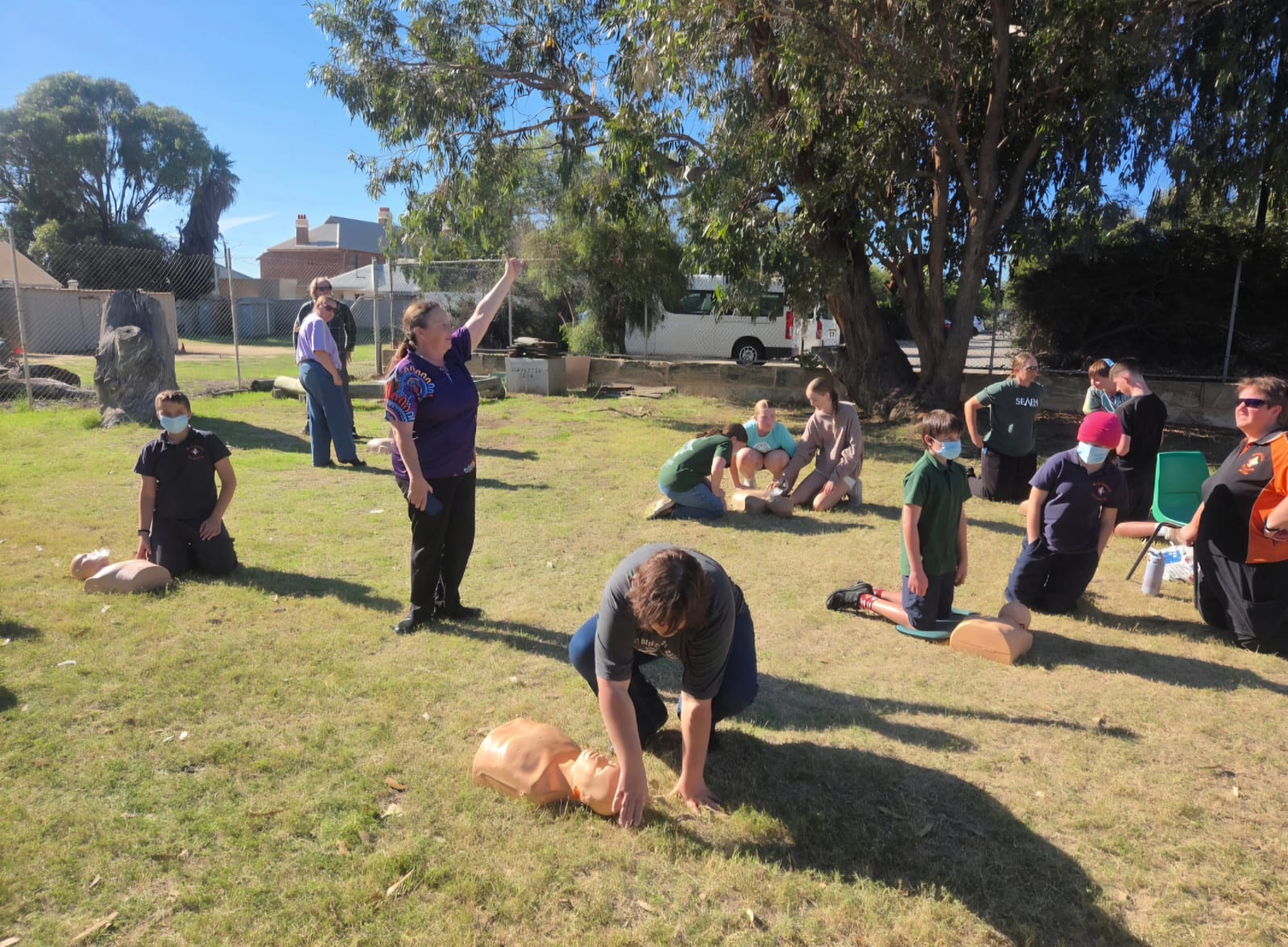
In a REACHAU course, you practise DRSABCD again and again, on adult and infant manikins, in realistic scenarios, until the sequence becomes automatic. You learn what a real airway check feels like, what agonal breathing sounds like, how hard compressions really need to be and how to use an AED from start to finish.
- HLTAID009 Provide CPR covers DRSABCD, CPR and AED use, and is the yearly refresher for first aiders.
- HLTAID011 Provide First Aid builds on DRSABCD with the full range of injuries and illnesses.
- HLTAID012 focuses on children and education and care settings.
Seven letters. One plan. Every time.
DRSABCD will not make you a paramedic. It will make you the calm person who knows what to do next, and that is often what saves a life.
Frequently Asked Questions About DRSABCD
What does DRSABCD stand for?
DRSABCD stands for Danger, Response, Send for help, Airway, Breathing, CPR and Defibrillation. It is the Australian basic life support action plan used in all nationally recognised first aid courses.
What is the correct order of DRSABCD?
Check for danger first, then response, then send for help, open the airway, check breathing, start CPR if the person is not breathing normally, and use a defibrillator as soon as one is available.
How long should you check for breathing?
No more than 10 seconds. Look for chest movement, listen for breath and feel for air. If breathing is not normal, start CPR.
What does COWS mean in first aid?
COWS is a memory aid for checking response: Can you hear me? Open your eyes. What is your name? Squeeze my hand. Combine it with a firm squeeze of the shoulders.
When do you put someone in the recovery position?
When they are unresponsive but breathing normally. The recovery position keeps the airway open and lets fluids drain from the mouth.
Is DRSABCD the same for babies?
The steps are the same, but for infants you keep the head in a neutral position, use two fingers for compressions and give gentle breaths over the mouth and nose.
Does airway come before a spinal injury?
Yes. Handle the head and neck gently, but an open airway always takes priority over a possible spinal injury.
What if I am not sure the person is breathing normally?
Treat it as not breathing normally and start CPR. Gasping or occasional breaths after collapse are signs of cardiac arrest, not normal breathing.
Can I call 112 instead of 000?
Yes. 112 works from mobile phones and can connect through any available network if your own has no coverage. 000 is the main emergency number in Australia.
What do I do if I am the only person there?
Put your phone on speaker, call 000 and start CPR while you talk. The call-taker will coach you and will not hang up. Do not leave an adult to look for a defibrillator unless you know one is very close.
Is DRSABCD different for drowning?
Get the person out of the water first. Because drowning is a breathing problem, ANZCOR recommends five initial rescue breaths before starting compressions. Do not try to drain water from the lungs, and dry the chest before applying AED pads.
Am I legally protected if I do CPR on a stranger?
Yes. Western Australia's Civil Liability Act provides good Samaritan protection for people who act in good faith to help in an emergency. Broken ribs during effective compressions are common and are not a reason to stop.
Where can I learn DRSABCD in WA?
DRSABCD is taught in all nationally recognised first aid courses. REACHAU delivers HLTAID009, HLTAID011 and HLTAID012 across Perth and regional WA.
Practise DRSABCD, CPR and AED use in a practical, confidence-building course with REACHAU. Nationally recognised training across Perth and regional WA.
View First Aid CoursesGet in TouchTraining and Assessment is delivered by Britt at Regional Education and Career Help Australia on behalf of ABC First Aid RTO 3399.

Written by Britt Brennan
Empowerment-Focused First Aid Trainer and Employment Coach, and founder of REACHAU. Britt teaches DRSABCD to workplaces, schools and communities across Western Australia.
This article is general first aid information based on ANZCOR guidelines current at the time of writing. It does not replace a first aid course or medical advice. In an emergency, call 000.