Pressure Immobilisation: Why It Works for Snakebite
Pressure Immobilisation Technique: Why It Works for Snakebite and Venomous Bites
A firm bandage, a splint and keeping still can buy time until medical help arrives.
By Britt Brennan, REACHAU | Updated 16 October 2026
Suspected snakebite? Call 000 now. Keep the person calm and still. Do not wash the bite, cut it, suck it, apply a tourniquet or apply ice.
What is the pressure immobilisation technique?
PIT is a first aid method used in Australia to manage certain venomous bites and stings. It has two key parts:
- A firm pressure bandage over the bite area and along the limb
- A splint to stop the limb moving
Together, these steps help slow the movement of venom through the body. PIT does not remove venom. It works by slowing its spread.
Why it works
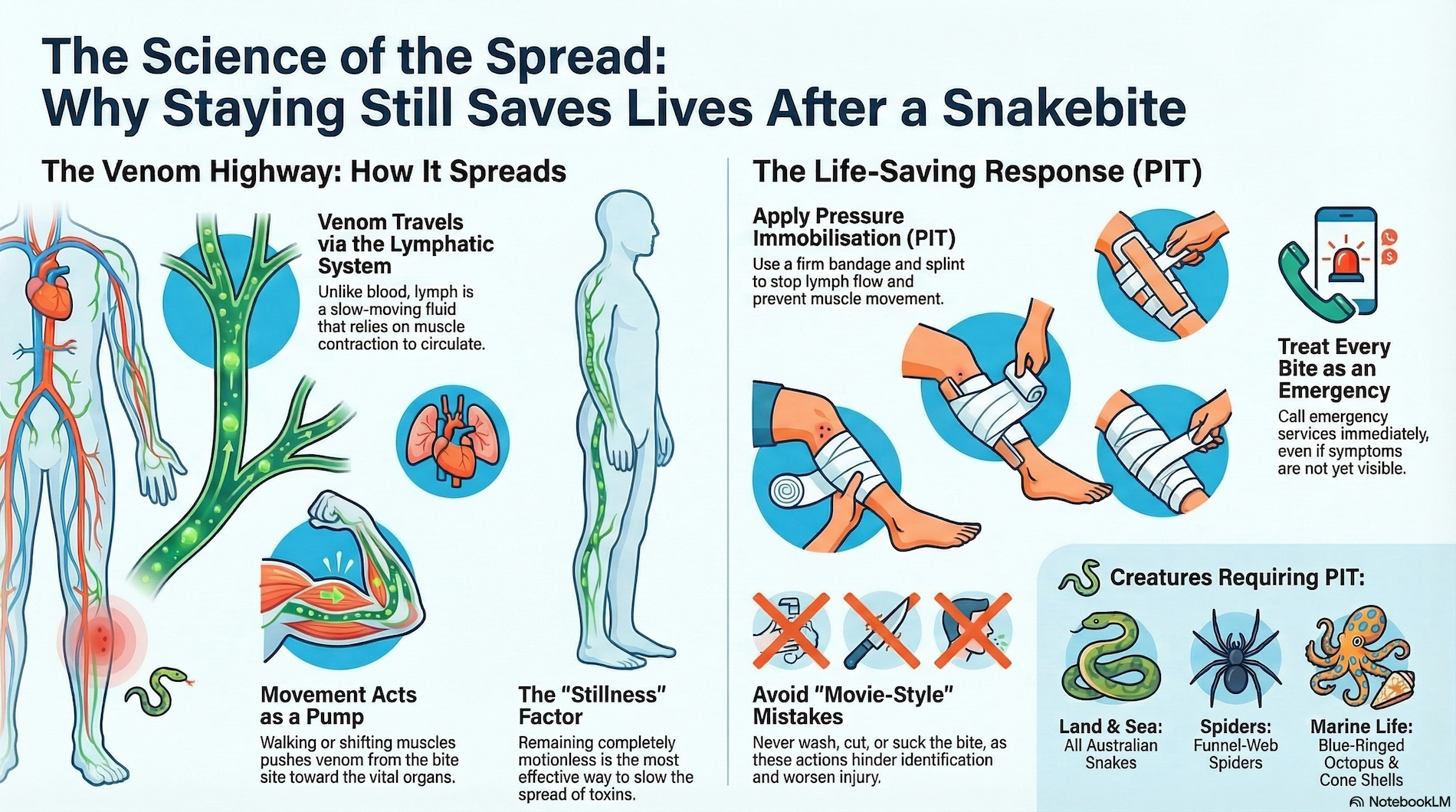
Many venoms, including those from Australian snakes and some marine animals, spread through the lymphatic system rather than going straight into the bloodstream. Lymph moves fluid slowly through vessels in body tissues. Unlike blood, which is pumped by the heart, lymph relies heavily on muscle activity and movement.
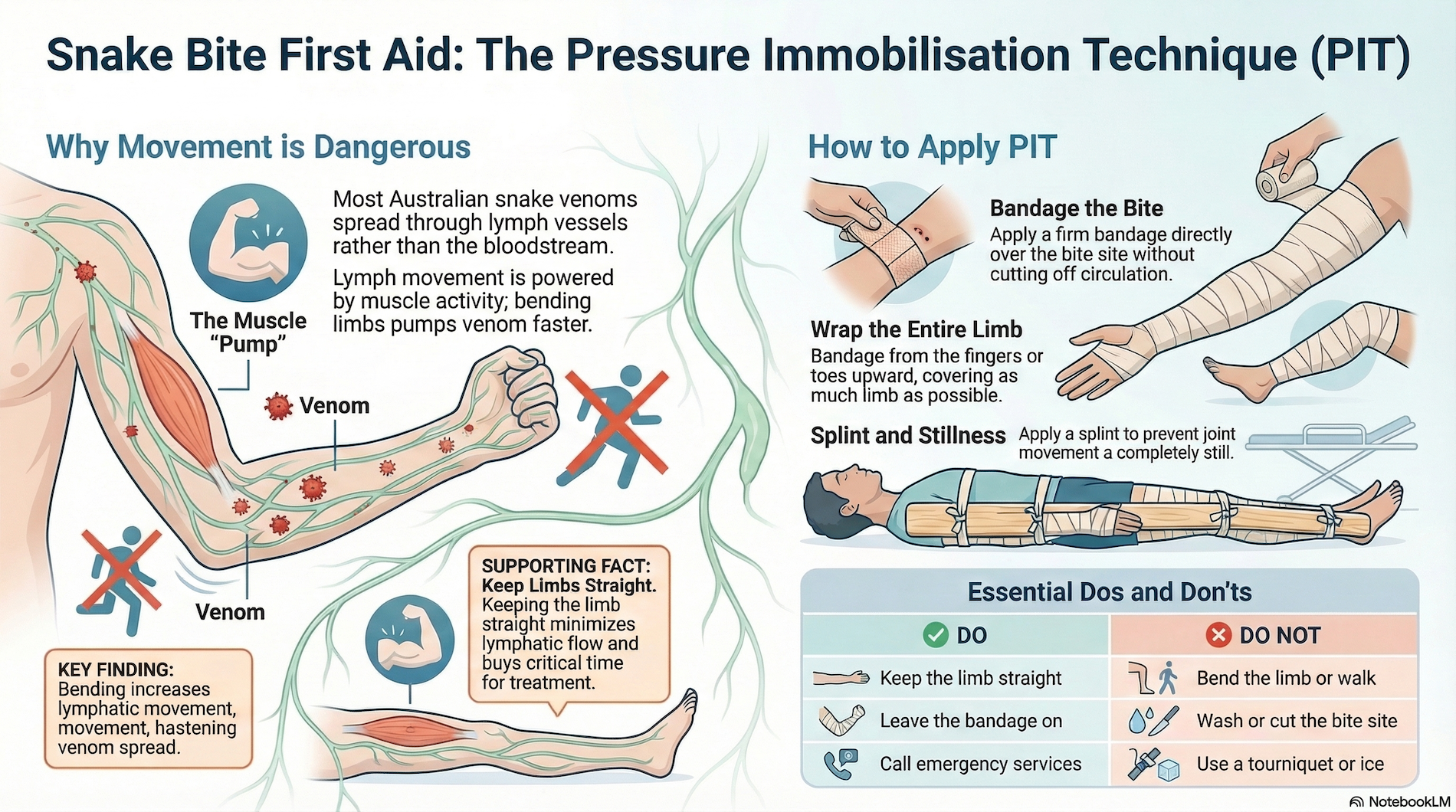
When someone moves the affected limb, muscle contractions push lymph along and can speed up the spread of venom. A bandage compresses the lymph vessels and slows this movement. A splint stops the muscle activity that would pump venom through. Together they can significantly delay venom circulation until medical care is available.
When PIT is used
PIT is recommended for bites and stings where venom affects the nervous system and spreads through lymphatic pathways. Examples include:
- Snake bites
- Funnel-web spider bites
- Blue-ringed octopus bites
- Cone shell stings
These venoms can cause serious symptoms if they spread quickly through the body. Slowing the spread is the goal of first aid.
When PIT should NOT be used
PIT is not used for every bite or sting. Some bites and stings cause significant local tissue damage rather than spreading venom through the lymphatic system, and tightly bandaging the limb could make the injury worse. That is why it matters to identify the type of bite or sting and follow current first aid guidelines. First aid training helps people learn when to use PIT and when another response is more appropriate.
How to apply the pressure immobilisation technique
If a venomous bite or sting that needs PIT is suspected:
- Keep the person calm and still.
- Call 000.
- Apply a firm bandage directly over the bite area.
- Continue bandaging up the entire limb, from the fingers or toes upward.
- Immobilise the limb with a splint if possible.
- Keep the person as still as possible until medical help arrives.
The bandage should be firm but not so tight that it cuts off circulation. The goal is pressure on the tissues, not a tourniquet.
Why the person must stay still
Movement can significantly increase the speed at which venom spreads through the lymphatic system. Walking, moving the limb or unnecessary activity can pump venom through the body more quickly. Keeping the person still and the limb immobilised helps slow venom movement and gives emergency services time to arrive and hospital treatment to begin.
Common first aid mistakes after a snakebite
Some traditional or movie-style treatments increase the risk of harm. Avoid:
- Washing the bite area
- Cutting the wound
- Trying to suck out venom
- Applying a tourniquet
- Applying ice
Washing can remove traces of venom that hospitals may use to identify the species involved.
Frequently asked questions
What does the pressure immobilisation technique do?
It slows the spread of venom through the lymphatic system by compressing lymph vessels and preventing movement of the affected limb.
How tight should the bandage be?
Firm, similar to a bandage used for a sprained ankle. It should not stop blood flow.
Should the bandage be removed once applied?
No. It should stay in place until medical professionals remove it in a controlled environment.
Why is pressure immobilisation used in Australia?
Many Australian venomous animals produce venoms that spread through lymphatic pathways. Slowing lymph movement helps delay venom circulation.
Understanding why first aid works helps people respond more confidently. Related courses: HLTAID011 Provide First Aid, HLTAID012 Education and Care, HLTAID013 Remote or Isolated Site and HLTAID014 Advanced First Aid.
REACHAU first aid training focuses on understanding what to do, why it matters and how to act when someone needs help.
View upcoming first aid sessionsTraining and Assessment is delivered by Britt at Regional Education and Career Help Australia on behalf of ABC First Aid RTO 3399.
This article provides general first aid education and is not individual medical advice. In an emergency, call 000. Follow current ANZCOR guidance for envenoming.