The Biggest First Aid Mistake Is Not What You Think
It is not bad technique or the wrong bandage. It is hesitation. Here is why people freeze, what it costs, and how to become the person who acts.
Most people assume the greatest risk in a first aid emergency is doing the wrong thing. In reality, across Australian workplaces, homes and public spaces, the greatest risk is doing nothing at all.
Delay is the single most harmful first aid mistake. Not incorrect technique. Not lack of equipment. Hesitation and inaction cause more harm than almost anything else.
This article explains why delay happens, what it costs in real WA numbers, and the simple mental and practical tools that turn a frozen bystander into a confident first responder.
Quick answer
What is the biggest first aid mistake? Doing nothing, or waiting too long to act. In emergencies such as cardiac arrest, severe bleeding, choking and anaphylaxis, every minute without help reduces the chance of survival. Calling 000, starting CPR, applying pressure or giving adrenaline quickly matters far more than doing everything perfectly.

1. Why Doing Nothing Is the Real Danger
Think about what people worry about before a first aid course. "What if I break their ribs?" "What if I do it wrong?" "What if I make it worse?" Those are natural questions. They come from a good place. People want to help without causing harm.
But here is the truth that changes everything: in a life-threatening emergency, the person is already in the worst possible situation. Someone in cardiac arrest is clinically dead. Someone with a severed artery is losing blood by the second. Someone whose airway is swelling shut from anaphylaxis will not get better on their own.
In those moments, imperfect action beats perfect inaction every single time. A slightly wonky bandage that stops the bleeding is a success. CPR that is a little slow is infinitely better than no CPR. An adrenaline device given a bit late is far better than one that stays in the bag.
You cannot make cardiac arrest worse.
Without CPR, a person in cardiac arrest will die. Anything you do, even if it is not perfect, gives them a chance they did not have before you stepped in.
2. What the WA Numbers Tell Us
Western Australia has some of the best data in the world on what happens when someone's heart stops outside hospital, thanks to St John WA's annual Out-of-Hospital Cardiac Arrest Report. The 2024 report shows exactly why bystanders matter.
| St John WA 2024 finding | What it means |
|---|---|
| 3,205 out-of-hospital cardiac arrests attended | That is almost nine a day across WA. |
| 81.1% received bystander CPR (where not witnessed by paramedics and resuscitation was attempted) | WA bystanders are stepping up, and that is something to be proud of. |
| Only 14.8% had a community AED applied before the ambulance arrived | Defibrillators are still being left on the wall. |
| Bystander CPR more than doubled the chance of 30-day survival | Your hands on the chest are the difference. |
| A first shock from a community AED made survival 2.6 times more likely (five-year average) | Getting the AED early is one of the most powerful things you can do. |
| 30-day survival was 12.4% in metro Perth and 5.2% in regional WA | Outside Perth, help takes longer, so the first responder's role is even bigger. |
Two lessons jump out. First, people in WA are willing to help, and it works. Second, there is still a big gap between doing CPR and grabbing the AED. That gap is often hesitation: not knowing where the AED is, feeling unsure how to use it, or waiting for someone else to go and get it.
For a deeper look at defibrillators, read our guides to CPR and AEDs: 10 critical questions answered and why you should not forget the defibrillator at a car crash.
3. The Emergency Clock: How Fast Things Go Wrong
The human body cannot sustain a medical emergency indefinitely. Most life-threatening conditions deteriorate quickly without intervention. The difference between one minute and five minutes can determine whether someone survives, and with what level of recovery.
- Cardiac arrest: brain damage can begin within four to six minutes without CPR. Survival falls with every minute that passes without compressions and defibrillation.
- Severe bleeding: a person can lose a life-threatening amount of blood within minutes from a major wound. Early, firm pressure reduces the volume lost before emergency services arrive.
- Anaphylaxis: airway swelling and a drop in blood pressure can become life-threatening within minutes. Adrenaline is the first treatment and should be given without delay.
- Choking: a complete airway obstruction can cause unconsciousness in a very short time. Back blows and chest thrusts need to start immediately.
- Stroke: brain cells are lost every minute a stroke goes untreated. Recognising the signs and calling 000 straight away gives access to time-critical treatment.
In each of these scenarios, bystander action is the most influential factor in the first minutes. Emergency services respond as fast as they can, but even in Perth it takes time for an ambulance to arrive, and in regional WA it can be much longer.
4. Why People Freeze
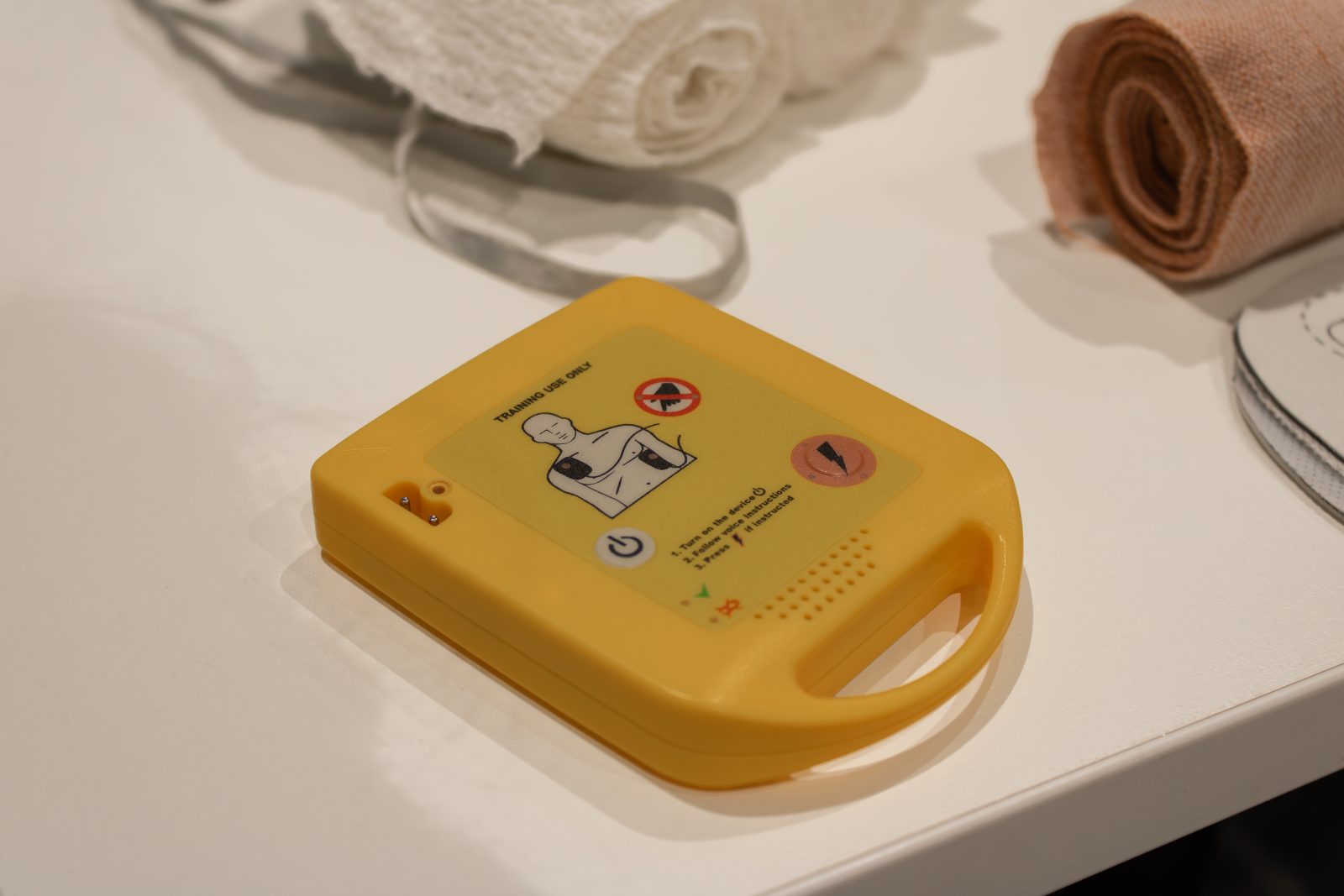
Delay is almost never intentional. People want to help. The problem is that, without training, several psychological and practical barriers get in the way.
Fear of making things worse
Many people worry that they will do the wrong thing and cause harm. This fear is understandable, but for most life-threatening emergencies, attempting first aid is far safer than doing nothing.
Uncertainty about what to do
Without a clear sequence of actions in memory, people freeze at the decision-making stage. They look for someone else to take over. They wait.
Assuming someone else will act
In group situations, a well-documented effect known as the bystander effect or diffusion of responsibility means each person assumes another is already acting, or is better qualified. The result is that no one acts. The more people watching, the stronger this effect can be.
Not recognising the emergency
Some emergencies do not look the way people expect. A person in cardiac arrest may seem to be snoring or gasping. Someone having a stroke may seem drunk or confused. Anaphylaxis may start with a cough or a quiet voice rather than dramatic swelling. If you do not recognise it, you do not act.
The stress response
When we are shocked, our bodies flood with stress hormones. Heart rate spikes, hands shake, hearing narrows and thinking becomes harder. Some people fight, some run, and many simply freeze. This is a normal human reaction, not a character flaw. The good news is that training changes how your brain handles it.
Worry about infection
Some people hold back because they are worried about blood or giving breaths to a stranger. That is fair. Gloves and a resuscitation face mask reduce the risk, and if you are not willing or able to give breaths, ANZCOR guidance supports continuous chest compressions. Compression-only CPR is far better than no CPR.
Feeling it is not your place
People sometimes hesitate because the person is a stranger, of a different gender or culture, or because they feel someone "more senior" should step in. In an emergency, the right person to help is the one who is there. You can explain what you are doing as you go, respect privacy where you can, and hand over as soon as someone more experienced arrives.
Lack of practice
Even people who completed first aid training years ago may not feel confident enough to act quickly. Skills fade without practice, and confidence fades with them.
5. The Sign Most People Miss: Agonal Breathing
One of the most dangerous moments in a cardiac arrest is when bystanders see the person "breathing" and decide they do not need CPR.
In the first minutes after the heart stops, many people make gasping, snoring or gurgling sounds. Their chest or jaw may move in slow, irregular jerks. This is called agonal breathing. It is a reflex from the brainstem, not real breathing, and it does not move enough oxygen to keep the person alive.
Remember
If a person is unresponsive and is not breathing normally, start CPR. Gasping is not normal breathing. When in doubt, start compressions and call 000. The call-taker will guide you.
This one piece of knowledge saves lives. It is also a perfect example of why reading and training matter. You only recognise agonal breathing if someone has told you about it and, ideally, shown you what it looks and sounds like.
6. "What If I Get Sued?" Good Samaritan Protection in WA
Fear of legal trouble stops some people from helping. In Australia, that fear is almost always misplaced.
WA's Civil Liability Act 2002 includes protections for good Samaritans, meaning people who help in an emergency in good faith and without expecting payment. In general terms, a good Samaritan who acts in good faith and without recklessness is protected from personal civil liability for their actions while helping. There are some limits, such as if a person is significantly affected by alcohol or drugs, or acts recklessly.
Put simply: if you genuinely try to help, you are very unlikely to be in legal trouble for it. The far bigger risk, morally and practically, is standing by.
This is general information, not legal advice. If you have a specific question about your workplace or role, speak to your employer or a legal professional.
7. Your First 60 Seconds: A Simple Plan
When everything feels overwhelming, you do not need to remember a textbook. You need a simple plan that gets you moving. This is based on DRSABCD, the action plan taught in every Australian first aid course.
- Danger. Take one quick look. Is it safe for you to approach? Traffic, electricity, fire, water, machinery or aggressive animals?
- Response. Tap their shoulders firmly and speak loudly: "Can you hear me? Open your eyes." Do they respond?
- Send for help. Call 000, or point at someone specific and tell them to call. Ask someone to get the nearest AED.
- Airway. If they are unresponsive, open the airway by tilting the head back and lifting the chin.
- Breathing. Look, listen and feel for normal breathing for no more than 10 seconds.
- CPR. If they are not breathing normally, start chest compressions: hard and fast in the centre of the chest, 30 compressions then 2 breaths.
- Defibrillation. Turn on the AED as soon as it arrives and follow its voice prompts.
That is it. You do not need to diagnose anything. You just need to start. Every accredited first aid course practises DRSABCD until it becomes second nature.
8. How to Beat the Bystander Effect
The bystander effect is powerful, but it is also easy to break once you know it exists. The trick is to make responsibility specific.
Point and delegate
Do not shout "Someone call an ambulance!" Everyone will assume someone else is doing it. Instead, point and name: "You in the blue shirt, call 000 and tell them a man has collapsed and is not breathing. Then come back and tell me." "You, go to reception and get the defibrillator."
Say out loud that you know first aid
Simply saying "I know first aid, I'll help" gives the crowd permission to follow your lead and stops the confused standing around.
Ask for help with CPR
CPR is exhausting. Ask someone to watch what you are doing so they can swap in after two minutes. Even untrained people can learn quickly from watching and a few instructions.
Be the first to move
Research into the bystander effect shows that once one person acts, others are much more likely to help. The hardest step is the first one. Training helps you take it.
9. What Training Does That Reading Cannot
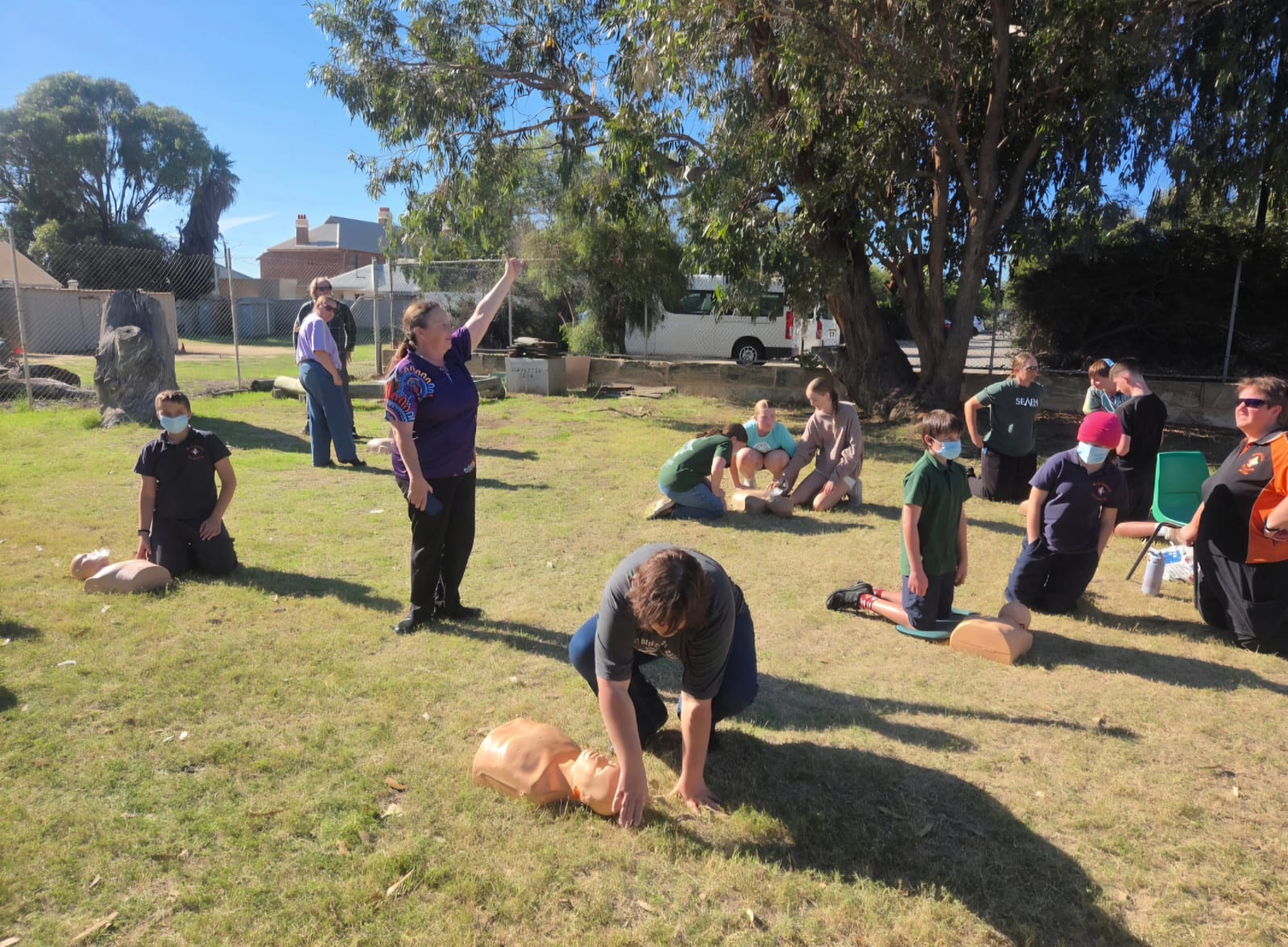
Understanding first aid conceptually is different from being able to apply it under pressure. Training builds two things that no article or video can fully replicate: procedural memory and physical confidence.
When you have practised a skill repeatedly in a controlled setting, your brain stores it differently. Under stress, trained responses are more accessible. You do not need to think through each step from scratch. It is the same reason pilots and firefighters train with realistic scenarios over and over.
Practical training also removes the fear of harming someone by letting you feel what the right technique actually involves. You understand what firm pressure feels like. You know how hard and how fast to compress during CPR. You have opened an AED and heard its voice prompts. That knowledge stays with you.
- Muscle memory: CPR, bandaging and the recovery position become automatic.
- Stress rehearsal: realistic scenarios let you experience a little adrenaline in a safe space, so the real thing feels less foreign.
- Decision confidence: you learn clear rules, such as "not breathing normally means CPR", which cut through hesitation.
- Permission to act: many people leave a course feeling, for the first time, that it is their job to step in.
10. Five More First Aid Mistakes That Cost Time
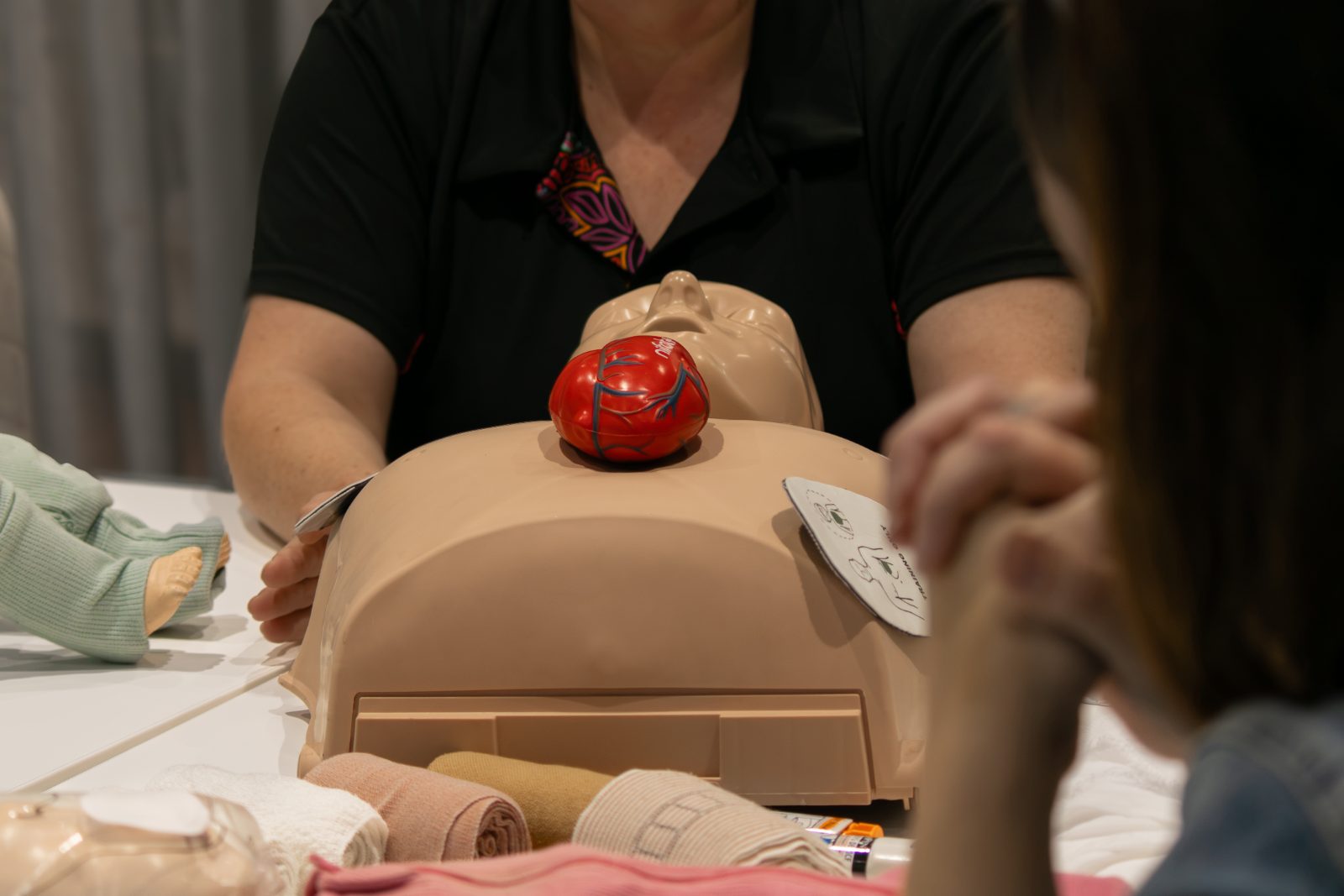
Doing nothing is the biggest mistake. These are the next most common ones we see and hear about, and each one is fixable.
1. Waiting to call 000
People often wait to see if things get better, or call a family member first. Call 000 early. The call-taker can guide you and send help sooner. If it turns out to be less serious, that is a good outcome, not a waste of time.
2. Stopping CPR too soon
Once you start CPR, keep going until the person starts breathing normally, a paramedic takes over, or you are physically unable to continue. Swap with another rescuer every two minutes if you can.
3. Using the asthma puffer before adrenaline in anaphylaxis
If someone with a known severe allergy has breathing difficulty, give adrenaline first, then asthma reliever. Read why in our guide to why adrenaline comes before the inhaler.
4. Letting someone with chest pain walk it off
Chest pain, especially with sweating, nausea, shortness of breath or pain spreading to the arm, jaw or back, needs a 000 call. Keep the person resting and do not let them drive themselves to hospital.
5. Putting something in a person's mouth during a seizure
Never put anything in their mouth. Protect their head, move hard objects away, time the seizure, and roll them onto their side once the jerking stops. Call 000 if it lasts more than five minutes, it is their first seizure, or they are injured, pregnant or not recovering.
For anaphylaxis specifically, our article on the 7 anaphylaxis first aid mistakes that cost time in WA goes deeper.
11. A Real-World Scenario
It is a Friday afternoon at a busy regional shopping centre. A man in his sixties collapses near the food court. People gather. Someone says, "Is he okay?" Another says, "I think he is breathing, he is making noises." A few people pull out phones. Nobody moves closer.
Leah, a retail worker who did her first aid course six months ago, walks over. She recognises the gasping sound from her course. She kneels, taps his shoulders and shouts. No response. She tilts his head back and watches his chest. The gasps are slow and irregular. Not normal breathing.
- She points at a man in a hi-vis shirt: "You. Call 000. Tell them a man has collapsed and is not breathing normally. Put it on speaker."
- She points at a teenager: "There is a defibrillator near the toilets. Go and get it. Run."
- She starts compressions, counting out loud.
- Two minutes later the AED arrives. She turns it on and follows the voice prompts. The AED advises a shock. She makes sure no one is touching him and presses the button, then goes straight back to compressions.
- The man in hi-vis, who has been watching, takes over compressions when Leah gets tired.
Paramedics arrive and take over. The man survives and later goes home to his family. In the debrief, Leah says the only thing she was really sure about was that gasping is not breathing. That was enough to get her moving.
12. What Acting Fast Looks Like in Other Emergencies
Cardiac arrest gets the most attention, but hesitation costs lives in many other emergencies too. Here is what "acting fast" means for the most common ones.
Severe bleeding
Do not wait for gloves, the perfect dressing or someone more qualified. Put firm, direct pressure on the wound with whatever you have, a pad, a towel, a shirt or your hand, and keep pressing. Call 000. If blood soaks through, add more padding on top and press harder. Every second of pressure is blood the person keeps. Our guide on how to stop severe bleeding explains the full technique, including when a tourniquet may be needed.
Choking
If an adult or child cannot breathe, speak or cough effectively, act immediately. Give up to five firm back blows between the shoulder blades, then up to five chest thrusts, and keep alternating while someone calls 000. If they become unresponsive, start CPR. Read our guide to choking in adults and the Australian first aid response.
Stroke
Use the FAST check. Face: has their mouth drooped? Arms: can they lift both arms? Speech: is their speech slurred or confused? Time: call 000 straight away. Do not wait to see if it passes. Treatments for stroke work best when given as early as possible, so the first person to notice the signs sets the clock.
Anaphylaxis
If someone has signs of a severe allergic reaction, especially breathing difficulty, give their adrenaline device straight away, lay them down and call 000. People often delay because they are unsure whether it is "bad enough". If in doubt, give adrenaline. It is far more dangerous to give it too late than to give it when it turns out it was not needed.
Asthma
If someone is struggling to breathe from asthma, sit them upright, give their reliever puffer following the asthma first aid steps, and call 000 if they do not improve quickly or are getting worse. Never leave them alone.
13. Confidence Is a Skill, Not a Personality Trait
We often hear people say, "I'm not a medical person," or "I'd panic, I'm not the type." Here is what years of training rooms across WA have taught us: the people who act in emergencies are not a special type of person. They are ordinary people who have practised, have a plan and have given themselves permission to help.
Confidence in first aid is built the same way as confidence in driving. The first time you sit behind the wheel, everything feels overwhelming. After enough practice, you make dozens of decisions without thinking. First aid works the same way. Repetition creates calm.
That is why we focus on quiet capability in our courses. We are not trying to turn anyone into a paramedic. We are helping people become the steady person who knows the next step, even when their hands are shaking. Shaking hands can still do great CPR.
14. Mental Rehearsal: Practise Without a Course
You can build readiness between courses with a few minutes of thinking ahead. Elite performers use a technique called if-then planning. You decide in advance what you will do in a specific situation, so your brain has a ready-made script when it happens.
- If someone collapses at work, then I will check for danger, tap and shout, and point at someone to call 000 while I start CPR.
- If I see someone choking, then I will ask "Are you choking?" and start back blows straight away.
- If I hear gasping, then I will treat it as not breathing and start CPR.
Other simple steps that remove hesitation later:
- Find out where the nearest AED is at your workplace, gym, school and shopping centre.
- Install the Emergency+ app so you can read your exact location to 000.
- Keep a small first aid kit and a resuscitation face mask in your car and bag.
- Talk your family through what they would do if someone collapsed at home.
15. What Happens After You Help
When paramedics arrive, they will ask what happened and what you have done. Tell them simply: when the person collapsed, what you saw, whether you did CPR, whether the AED shocked, and any medication given. Then let them take over.
Afterwards, it is completely normal to feel shaky, emotional, flat or replay the event in your head. You may never find out what happened to the person, which can be hard. Talk to someone you trust. If you were at work, speak to your manager and use your Employee Assistance Program. If the feelings do not settle after a few weeks, see your GP. Looking after yourself is part of first aid.
And please remember: whatever the outcome, you gave that person a chance. That matters.
16. Building a Workplace Culture Where People Act
For employers, the goal is not just to have a certificate on file. It is to create a workplace where people feel confident and expected to step in. That is a culture, and it can be built.
- Train more people than the minimum. The more people who are trained, the less likely it is that the only first aider is away, or is the person who is injured.
- Know where things are. Every staff member should know where the first aid kit and the nearest AED are. Include it in inductions.
- Run quick drills. A five-minute "someone has collapsed in the lunchroom" drill a couple of times a year makes a huge difference.
- Make it safe to act. Leaders should say clearly that trying to help is always the right call and will always be supported.
- Look after first aiders. Debrief after incidents and offer support, including your Employee Assistance Program.
- Think about AEDs. If your workplace does not have a defibrillator, consider one, register it so emergency services can direct callers to it, and make sure people know it is there.
The payoff is bigger than compliance. Teams that trust each other to act in an emergency tend to trust each other in everyday work too. Confidence spreads.
Our guide to the essential first aid course your WA business needs for compliance covers the legal side for employers.
17. Renewing Your Skills Matters
First aid certification is recommended to be renewed regularly. CPR skills in particular are known to fade within months without practice, which is why annual CPR renewal is recommended for most workplaces.
- CPR (HLTAID009): refresh every 12 months.
- First aid (HLTAID011): renew every three years, with CPR refreshed each year in between.
A refresher course does more than update your knowledge. It rebuilds the automatic, confident response that makes the difference between acting and freezing when someone needs help.
Be the person who moves first.
You do not need to be perfect. You need to be willing, and you need a plan. Training gives you both.
Book HLTAID009 Provide CPR for your yearly refresher, or HLTAID011 Provide First Aid for full workplace first aid.
Frequently Asked Questions About First Aid Hesitation
What is the most common first aid mistake?
The most common and most harmful mistake is doing nothing or waiting too long. Early action, such as calling 000, starting CPR or applying pressure to bleeding, matters more than perfect technique.
Can I make things worse by doing CPR?
A person in cardiac arrest will die without CPR. Ribs sometimes crack during compressions, but that is far better than the alternative. Doing CPR can only improve their chances.
Can I get sued for giving first aid in WA?
WA's Civil Liability Act 2002 includes protections for good Samaritans who help in good faith without recklessness. If you genuinely try to help, legal action against you is very unlikely.
What is agonal breathing?
Agonal breathing is gasping, snoring or irregular breathing that can occur after cardiac arrest. It is not normal breathing. If a person is unresponsive and not breathing normally, start CPR.
Why do people freeze in emergencies?
Freezing is a normal stress response. It is made worse by uncertainty, fear of doing harm, not recognising the emergency and assuming someone else will help. Training reduces all of these.
How do you overcome the bystander effect?
Be specific. Point at individuals and give clear jobs, such as calling 000 or fetching the AED. Once one person acts, others are much more likely to help.
How often should I refresh my CPR?
Every 12 months. CPR skills fade quickly without practice. First aid qualifications such as HLTAID011 are usually renewed every three years.
Can anyone use an AED?
Yes. AEDs are designed for untrained members of the public. Turn it on and follow the voice prompts. It will only deliver a shock if one is needed.
What should I do if I am not sure it is an emergency?
Call 000 and describe what you see. The call-taker will help you decide what to do. It is always better to call and not need help than to wait and lose valuable time.
Is it normal to feel upset after giving first aid?
Yes. Feeling shaky, emotional or unsettled afterwards is a normal reaction. Talk to someone you trust, use your workplace support program, and see your GP if the feelings do not ease.
Practise CPR, AED use and emergency response in a supportive, hands-on course with REACHAU. Nationally recognised training across Perth and regional WA.
View First Aid CoursesGet in TouchTraining and Assessment is delivered by Britt at Regional Education and Career Help Australia on behalf of ABC First Aid RTO 3399.

Written by Britt Brennan
Empowerment-Focused First Aid Trainer and Employment Coach, and founder of REACHAU. Britt trains people across Western Australia to act with confidence, not just pass a course.
This article is general first aid information based on ANZCOR guidelines and publicly available St John WA data current at the time of writing. It does not replace a first aid course, medical or legal advice. In an emergency, call 000.