
Seizure First Aid: Why Timing Needs to Be Taught and Practised
Seizure First Aid: Why Timing Needs to Be Taught and Practised
What a New South Wales coronial finding teaches us about timing a seizure, using the person's plan and making sure support staff are ready.
By Britt Brennan, REACHAU | 8 December 2026

If you have ever supported someone who has seizures, you know how long a few minutes can feel. Time seems to stretch. It can be hard to know when a seizure started, and harder still to say when it ended.
This article looks at a published New South Wales coronial finding about a 28 year old woman with epilepsy who lived in supported accommodation. It is written with respect for Carney and her family, and for the support workers who care for people in these settings. The coroner was clear that the purpose of the inquest was not to blame anyone, and that care was generally of good quality. The lessons are about preparation.
What the coroner found
What the finding says
The inquest into the death of Carney Schultz was held in February 2018, and the Deputy State Coroner delivered the finding on 16 February 2018. Carney was 28 and lived with cerebral palsy and other disabilities in a group home at Figtree, NSW, staffed around the clock by disability support workers. She had had seizures since about age five. She died on 21 April 2015. The coroner found the cause of death was complications of epilepsy, and the manner of death was natural causes. The precise mechanism of her death could not be determined.
In the early hours of that day a night worker heard signs of a seizure, went to Carney, placed her in the recovery position and stayed with her. Carney recovered, was alert and drank. The worker recorded the seizure as lasting "8+ minutes" in the notes, and did not call an ambulance. Later that morning another worker checked on her and found her in her usual state after a seizure. At about 8.50am she was found unresponsive. CPR was started, 000 was called, and paramedics arrived, but she was pronounced deceased at 9.45am.
Her epilepsy management plan said an ambulance should be called if a seizure lasted more than five minutes untreated. The coroner found that staff had not been provided with training on how to time a seizure or when it ends. The worker had included the recovery period in her figure to be sure Carney was back to herself. The coroner concluded it was more probable than not that the seizure ended when the convulsions stopped, after about four minutes, so the five minute trigger in the plan was not reached.
The worker said that in hindsight she should have followed the plan. A neurologist found no causal link between the ambulance not being called and Carney's death, though the coroner noted it is possible to speculate that a hospital stay could have allowed an event to be observed.
The coroner also found that the plan and other records had inconsistencies, that seizures had to be recorded in up to six places, and that some workers, including casual staff and those on solo night shifts, were not trained in rescue medication. Since her death, medication training has become compulsory for workers in homes where a resident needs it, and seizures are recorded in one place.
The recommendations were that a copy of the finding be provided to the National Disability Insurance Agency and the current home provider, for consideration of the shortcomings and improvements made, and a team approach to drafting epilepsy management plans.
Everything else in this article is my teaching reflection. It is not a finding of the coroner.
Why timing is harder than it sounds
The finding shows how a simple question can have different answers. Does the seizure end when the shaking stops, or when the person is fully alert again?
The neurologist told the inquest that for a convulsive seizure, the end can easily be recognised by the end of the convulsions. The worker, wanting to be sure, measured until Carney was back to herself.
ANZCOR Guideline 9.2.4 tells us to time the seizure. It also notes that seizure duration varies and most end in under five minutes. The page does not give a precise definition of when a seizure starts or ends. That is why a person's own plan matters, and why a team should agree on how they will time seizures before one happens.
My own suggestion is to ask the person's doctor how their plan wants timing done, and write it into the plan.
What ANZCOR guidance says to do
During a seizure:
- Stay calm and note the time the seizure starts.
- Protect the person from injury. Ease their fall if you can, move harmful objects away, and place something soft under their head.
- Do not restrain them, unless it is essential for safety. Do not force their mouth open or put anything in it.
- Follow their seizure management plan if they have one.
- If they are not breathing normally once the seizure stops, start CPR with 30 compressions and 2 breaths.
After the seizure:
- If the person is unresponsive but breathing normally, place them in the recovery position.
- Keep checking their airway and breathing.
- Reassure them as they recover. Give nothing to eat or drink until they are fully alert.
When to call an ambulance
ANZCOR guidance is to call an ambulance if:
- the seizure lasts more than 5 minutes, or another seizure begins
- the person does not regain consciousness within 5 minutes
- it is a first or unknown seizure
- there is no management plan
- the seizure is unusual for the person
- it happens in water, or the person may be pregnant
- you are concerned about an injury
Always check the person's own plan as well. It may call for an ambulance earlier or in particular circumstances. If you are ever in doubt, call.
A question for your team
If a person we support had a seizure at 3am, who would time it, where is the plan, and what would we do at the five minute mark?
The plan has to be usable
The neurologist in this case described the plan as too long and containing inaccurate medication information, and called for a multidisciplinary approach. The coroner's recommendation also asked for that approach to be considered. In a busy or overnight setting, a plan that is long or inconsistent is hard to follow.
Here are my suggestions for services, families and workplaces:
- Keep the emergency steps to one page, in plain language.
- Make sure the numbers are consistent. For example, does the five minute mark mean total seizure time, or time after medication? Write it clearly.
- Keep one place to record seizures, and make sure everyone knows where it is.
- Put the plan where everyone can find it, including casual and new staff.
- Review it with the person's doctor regularly, and after any change.
Practise, not just read
The finding shows that reading a plan is not the same as being ready. These are my suggestions for support teams.
- Run a short drill using a timer. Someone starts it when a role player "begins" a seizure, and calls out the time at one, three and five minutes.
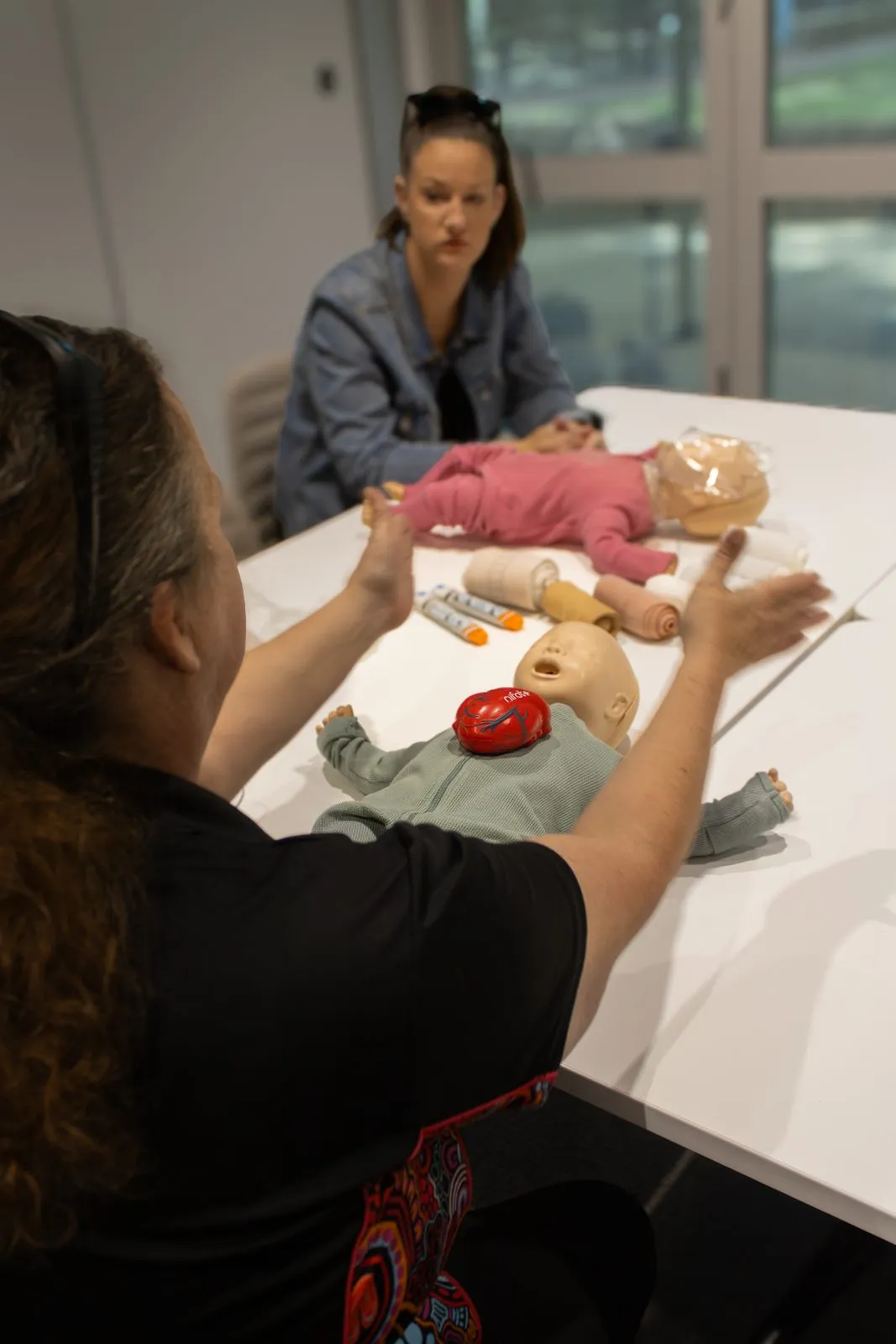
- Practise the recovery position on each other, or with a manikin.
- Make sure everyone knows who is trained in rescue medication, and what to do if no one on shift is.
- Talk about what staff should do if they feel hesitant to call an ambulance. The finding records that the worker's perceptions of how an earlier call had been received influenced her decision. Make it clear that anyone can call, and that no one will be criticised for a call made in good faith.
Rescue medication should only be given by people with the right training, following the person's plan. A first aid course does not replace that training.
Looking after yourself afterwards
Support workers, family and housemates can carry a lot after a death. It is normal to replay it and to feel responsible, even when you did your best. Our guide on looking after yourself after giving first aid explains what is common and when it is worth seeing a GP.
Frequently asked questions
How do I time a seizure?
Note the time it starts and keep track until it ends. ANZCOR guidance is to time the seizure. If the person has a seizure plan, follow how it says to time it, and ask their doctor if it is not clear.
When should I call an ambulance for a seizure?
Call if the seizure lasts more than 5 minutes, another begins, the person does not regain consciousness within 5 minutes, it is a first or unknown seizure, there is no plan, it is unusual for the person, it happens in water, the person may be pregnant, or you are worried about injury.
Should I put something in the person's mouth?
No. Do not force the mouth open or put anything in it. Protect their head and keep them safe.
What should I do after the seizure stops?
If the person is unresponsive and breathing normally, place them in the recovery position and keep checking their airway and breathing. If they are not breathing normally, start CPR.
Did the coroner find that not calling an ambulance caused the death?
No. A neurologist found no causal link, and the coroner could not determine the precise mechanism of death. The coroner noted that it is possible to speculate that hospital admission may have allowed an event to be seen.
Who can give rescue medication?
Only people who have been trained to do so, following the person's plan. A general first aid course does not replace that training.
Sources and current guidance
- Coronial finding: Inquest into the death of Carney Schultz, Coroners Court of NSW
- ANZCOR Guideline 9.2.4, First aid management of a seizure
REACHAU first aid training focuses on understanding what to do, why it matters and how to act when someone needs help.
View upcoming first aid sessionsTraining and Assessment is delivered by Britt at Regional Education and Career Help Australia on behalf of ABC First Aid RTO 3399.
Related reading
- DRSABCD: the first aid action plan
- CPR and AED first aid guide
- After the emergency: looking after yourself when you helped
This article shares learning points from a published coronial finding and current ANZCOR guidance. It is general information, not medical advice, and it does not replace a person's seizure management plan from their doctor or hands-on training. Rescue medication should only be given by people trained to do so, following the person's plan. In an emergency, call 000.