
When Should You Start CPR? Focus on Response and Breathing
When Should You Start CPR? Focus on Response and Breathing
What a Western Australian coronial finding teaches us about when to start CPR, and why the decision rests on response and breathing, not a pulse check.
By Britt Brennan, REACHAU | 10 November 2026

Many people think the first step of CPR is to check for a pulse. It is a very natural idea. It is also not how current first aid guidance works, and a Western Australian inquest helps show why.
This article is written with care. The finding behind it involves a death by suicide, so I have left out the details of what happened and kept to what matters for first aiders: how training shapes the decisions we make in the first minute. If this subject is close to you, there is a support line at the end of this section.
What the coroner found
What the finding says
The inquest into the death of Mary Josephine Van der Walt was held in Perth, and the finding was delivered on 15 September 2017 by Coroner King. Mary was 28 and lived in Maylands. She died on 23 April 2014 at Royal Perth Hospital. The coroner found the manner of death was suicide. The inquest focused on the training police officers receive for responding to a person who is unresponsive and not breathing.
Two police officers attended and found Mary unresponsive. They checked for a pulse, did not find one, and concluded she had died. They did not start CPR. The coroner recorded that it was their understanding at the time that they were to work out whether she was still alive before starting CPR.
Paramedics arrived about six minutes after the call for an ambulance. They started CPR and gave adrenaline, and after about 15 minutes her circulation returned. She had a severe brain injury from lack of oxygen, and she died in hospital.
The coroner was satisfied the officers acted in line with their training and said they bear no responsibility for her death. The coroner accepted that, in hindsight, the officers could have started CPR, and described their decision as understandable. The coroner also said it could not be determined whether earlier CPR would have changed the outcome.
The coroner made no formal recommendations. The coroner did encourage WA Police and the Government to equip police vehicles with AEDs at the earliest opportunity, which was a comment rather than a recommendation. The finding records that the content of the police refresher course was changed after Mary's death, so that the same steps apply to every unconscious person. It also records that it was not clear whether all officers had completed the changed course by the time of the hearing.
Everything else in this article is my teaching reflection. It is not a finding of the coroner.
If this article has stirred something for you, Lifeline is available on 13 11 14, any time. In an emergency, call 000.
Why this matters for every first aider
It is easy to read a case like this and think about what the officers should have done. That is not the lesson I take from it, and it is not what the coroner concluded.
The more useful point is about training. People do what they have been taught to do. If the starting point is "work out whether the person is alive", then the person can lose valuable minutes while someone tries to decide. If the starting point is "unresponsive and not breathing normally means start CPR", the decision is simpler and faster.
The coroner recorded evidence that checking for a pulse is unreliable, and that it should not be used to decide whether to start resuscitation. That is why modern guidance moved away from it.
The current starting point
ANZCOR Guideline 8 is clear about when to start CPR. Rescuers should start if a person is unresponsive and not breathing normally. In practice:
- Danger. Check for any danger to you, the person and others.
- Response. Talk to the person, squeeze their shoulders and look for any response.
- Send for help. Call 000, put the phone on speaker and ask someone to fetch an AED.
- Airway. Open the airway and look for normal breathing.
- Breathing. If the person is not breathing normally, start CPR straight away.
- CPR. Give 30 compressions followed by 2 breaths if you are trained and willing, and keep going. If you are not able to give breaths, chest compressions alone are better than nothing.
- Defibrillation. Attach an AED as soon as one arrives and follow its voice prompts.
Notice what is missing. There is no pulse check. The decision is based on two things you can see: whether the person responds, and whether they are breathing normally.
Gasping is not normal breathing
One of the most important details is easy to miss. Occasional gasps are not normal breathing.
Someone in cardiac arrest can make slow, noisy gasping breaths for several minutes. It can look like breathing to a worried bystander. ANZCOR guidance is to start CPR even if the person is taking occasional gasps.
If you are unsure, start. ANZCOR advises starting CPR for presumed cardiac arrest without concern about harming someone who is not in cardiac arrest. Bystander CPR is actively encouraged.
A question to talk through
If you found someone unresponsive and you could not tell whether they were breathing, what would your first action be? Would you hesitate, or would you start?
Why the AED comment matters
The coroner commented that AEDs in police vehicles would clearly be a positive step. The coroner also said the lack of an AED did not appear to be connected with this death, so I do not want to over claim.
The wider point stands. Time to defibrillation strongly affects survival, and an AED is only helpful if it is close and someone knows to use it. Do you know where the nearest AED is at your workplace, your club or your street?
What I would do with this in a training room
Here are my own suggestions for teams and groups. They are not requirements.
- Teach the starting point in plain words: not responding and not breathing normally means start CPR.
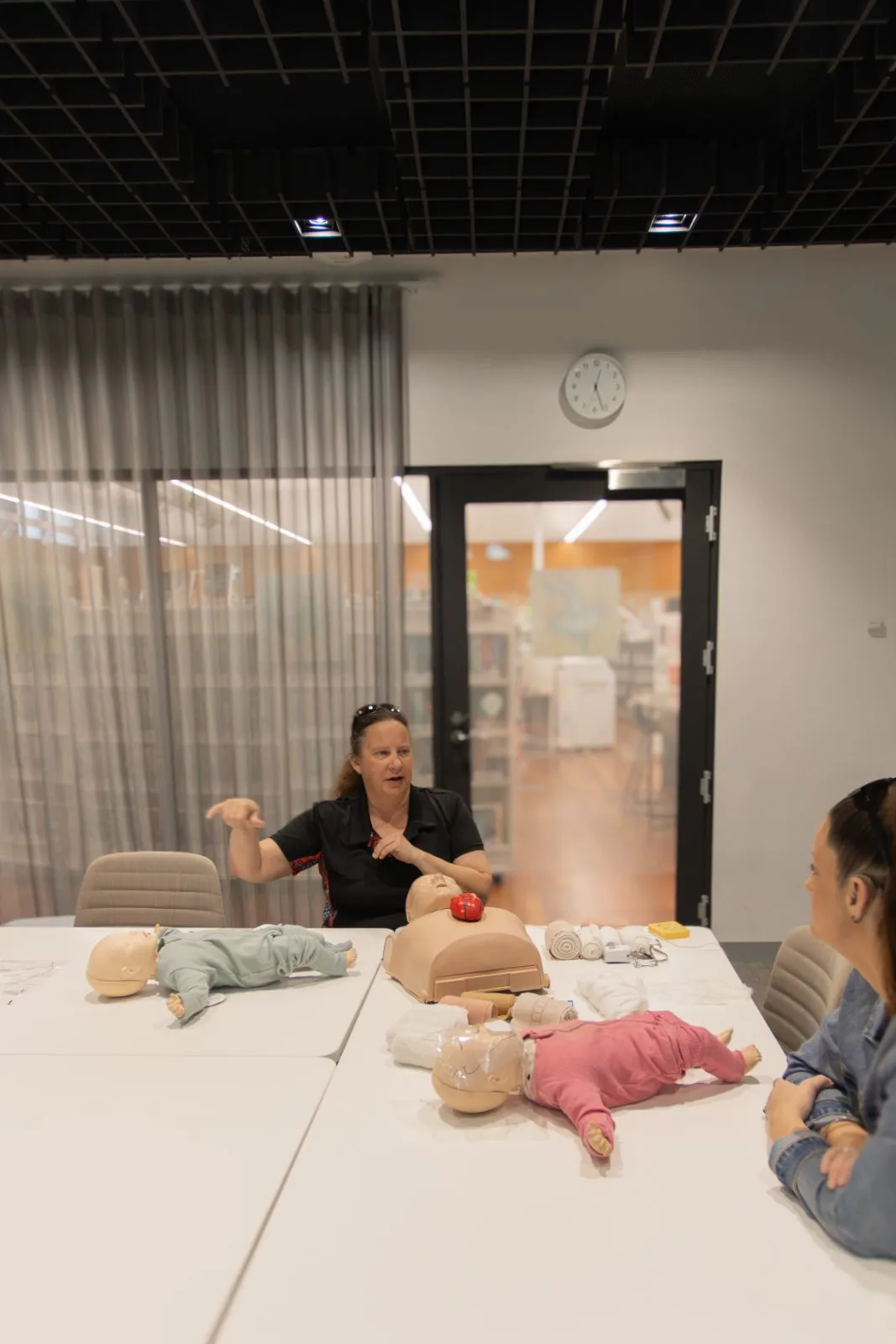
- Practise on a manikin, so that starting feels automatic.
- Practise recognising gasping, and say out loud that it is not normal breathing.
- Make sure the person who calls 000 is not the person doing compressions.
- Review your AED location and how people would find it quickly.
Looking after yourself afterwards
If you have given CPR or been involved in a death, it is normal to replay it and to wonder what could have been different. Our guide on looking after yourself after giving first aid explains what is common, what helps and when it is worth seeing a GP.
Frequently asked questions
When should I start CPR?
Start CPR if the person is unresponsive and not breathing normally. Call 000 first or ask someone to do it, then begin compressions straight away.
Should I check for a pulse before starting CPR?
No. ANZCOR's steps are based on response and breathing, not a pulse check. The finding records evidence that checking a pulse is unreliable.
What if the person is gasping?
Occasional gasps are not normal breathing. ANZCOR guidance is to start CPR even if the person is taking occasional gasps.
What if I am not sure the person is in cardiac arrest?
Start anyway. ANZCOR advises that CPR for presumed cardiac arrest should begin without concern about harming someone who turns out not to be in cardiac arrest.
Does this finding show that earlier CPR would have saved this person?
No. The coroner said it could not be determined whether earlier CPR would have changed the outcome. The finding is a reason to teach the starting point clearly, not a judgement about the officers.
What if I do not want to give rescue breaths?
Compressions alone are far better than doing nothing. Start compressions straight away and use an AED as soon as one arrives.
Sources and current guidance
- Coronial finding: Inquest into the death of Mary Josephine Van der Walt, Coroner's Court of Western Australia
- ANZCOR Guideline 8, Cardiopulmonary resuscitation
- ANZCOR Guideline 7, Automated external defibrillation in basic life support
REACHAU first aid training focuses on understanding what to do, why it matters and how to act when someone needs help.
View upcoming first aid sessionsTraining and Assessment is delivered by Britt at Regional Education and Career Help Australia on behalf of ABC First Aid RTO 3399.
Related reading
- CPR and AED first aid guide
- DRSABCD: the first aid action plan
- After the emergency: looking after yourself when you helped
This article shares learning points from a published coronial finding and current ANZCOR guidance. The finding concerns a death by suicide. If this topic affects you, please call Lifeline on 13 11 14, or 000 in an emergency. This article is general information, not medical or legal advice, and it does not replace hands-on training.