
Call for Help Early: What a WA Asthma Inquest Teaches Teams
Call for Help Early: What a WA Asthma Inquest Teaches Teams
What a Western Australian coronial finding teaches us about calling an ambulance early, and making sure everyone knows they are allowed to.
By Britt Brennan, REACHAU | 20 November 2026

Asthma is common, and most episodes are managed at home with a reliever. But severe asthma can turn quickly into an emergency, and the minutes before anyone calls for help can matter.
This article looks at a published Western Australian coronial finding about a man who died in custody after a worsening asthma and lung condition. It is written with respect for Mr Lane and his family. The setting was a prison, and I am not suggesting that other workplaces should operate in the same way. The lessons I want to draw out are simpler: call early, make sure everyone knows they are allowed to, and practise.
What the coroner found
What the finding says
The inquest into the death of Ashley Adrian Lane was heard in May 2022, and the finding was delivered on 21 June 2022 by Coroner Jenkin. Mr Lane was 56 and a remand prisoner at Eastern Goldfields Regional Prison. He died on 26 April 2019 at Kalgoorlie Regional Hospital. The coroner found the cause of death was an acute exacerbation of chronic obstructive pulmonary disease (bronchial asthma), in a man with heart disease. The manner of death was natural causes. Because he died in custody, an inquest was required.
Earlier that year he had a near-fatal asthma attack and spent three days in hospital. The coroner found that nobody at the prison realised this showed his asthma was poorly controlled.
In the early hours of 26 April 2019, Mr Lane used his cell call button and said he could not breathe properly. Officers attended, and over the next minutes tried to find what he needed and to use an oxygen resuscitator. A second call from his cellmate urging officers to hurry was answered in the control room without asking what was wrong. It took about four minutes for the officer holding the cell keys to arrive. Mr Lane lost consciousness as the cell door was being unlocked. CPR started at about 1.56am, and a defibrillator was attached but did not advise a shock. An ambulance was called at about 1.59am and arrived at 2.14am. He was declared deceased at hospital at 3.00am.
The coroner found that a Code Red, the prison's emergency radio call, should have been called at the first cell call, and that the officer in the control room should have asked what was wrong. The coroner also said that officers should be strongly encouraged to adopt a low threshold for calling an ambulance: when in doubt, call it out. There was evidence that junior officers might be reluctant to call an ambulance without a senior officer's approval.
The coroner found the CPR was prompt and done correctly, and that by the time he became unresponsive his condition was almost certainly irreversible. It is impossible to know whether the outcome would have been different if staff had reached him sooner.
The coroner made eight recommendations, directed mainly at the Department of Justice and the prison. They included nursing support, a list of prisoners with serious conditions, a bulletin reminding officers that checking a pulse before starting CPR is obsolete, a bulletin reminding all officers that they can call an ambulance without senior approval, and regular scenario based training on medical emergencies.
Everything else in this article is my teaching reflection. It is not a finding of the coroner.
Lesson 1: Call early
ANZCOR Guideline 9.2.5 says to send for an ambulance if the person does not improve within 5 minutes, or if they are having a severe attack. Signs of severe asthma include:
- gasping for breath
- being unable to speak more than one or two words per breath
- sucking in at the throat and ribs
- bluish lips
- drowsiness or reduced consciousness
- little or no improvement after reliever medication
- symptoms rapidly worsening
If any of these is present, call 000 immediately and keep following the asthma plan until help arrives.
If you are not sure, call. The coroner's phrase, "when in doubt, call it out", is a good rule for any workplace.
Lesson 2: Nobody should have to ask permission
One of the strongest messages of this finding is that people must know they are allowed to call for help, whatever their rank or role.
In many workplaces, someone will hesitate. They may worry about getting in trouble if the call turns out to be unnecessary, or think a more senior person should decide. That hesitation costs time.
These are my suggestions for teams:
- State clearly, in writing and out loud, that anyone can call 000.
- Say that no one will be criticised for a call made in good faith.
- Check that new, casual and junior staff have heard this.
- Review any plan that says "tell the supervisor first". Calling and telling can happen at the same time.
A question for your team
If a new team member thought someone could not breathe, would they feel able to call 000 straight away, or would they look for someone senior?
Lesson 3: Gather the right information
The finding records that a call from a cellmate was answered without anyone asking what was wrong. The coroner said basic enquiries might have revealed a breathing problem.
Whether you work in a call centre, a school office, a reception desk or a venue, simple questions help:
- What is happening?
- Is the person breathing? Can they speak?
- Where are they?
- Does this person have asthma, and where is their reliever?
Another practical lesson is that a record of earlier serious episodes helps. If a person has had a near-fatal attack, the people responsible for their care should know. A written asthma action plan, kept where people can find it, is one way to share that.
Lesson 4: Equipment must be reachable
The finding records that a replacement part for Mr Lane's nebuliser was left in a box at the front gate overnight, and that there was disagreement about what was said at handover. The coroner recommended that the box be used only for oral medication.
You do not need to be a prison to see the point. Equipment can be on site and still unavailable. Ask:
- Where are our reliever inhalers and spacers kept, and can anyone reach them quickly?
- Who checks that they are in date?
- When something needs fixing or replacing, who is told, and how do we know it has been done?
What asthma first aid looks like
ANZCOR guidance for a person having an asthma attack includes:
- Sit the person upright and stay with them. Stay calm and reassuring.
- Follow their asthma action plan if they have one. If not, use a reliever inhaler, with a spacer if available.
- Use the person's own reliever if possible. If not, use a first aid kit inhaler or borrow one. No harm is likely from giving reliever to someone who does not have asthma.
- Call an ambulance if there are signs of severe asthma or if the person does not improve within 5 minutes.
- If the person becomes unresponsive and is not breathing normally, start CPR with 30 compressions and 2 breaths. Do not check for a pulse first. Use an AED when it arrives.
The coroner noted that modern training says not to check a pulse to decide whether to start CPR. The decision is based on response and breathing.
Practise it
The coroner suggested regular scenario based training on medical emergencies. In a workplace, that might look like:
- a short drill, a few times a year, where a colleague pretends to have an asthma attack
- practice saying the first two sentences of the 000 call
- finding the nearest reliever, spacer and AED
- using a training inhaler and spacer
- debriefing: what worked, what was confusing, what would we change?
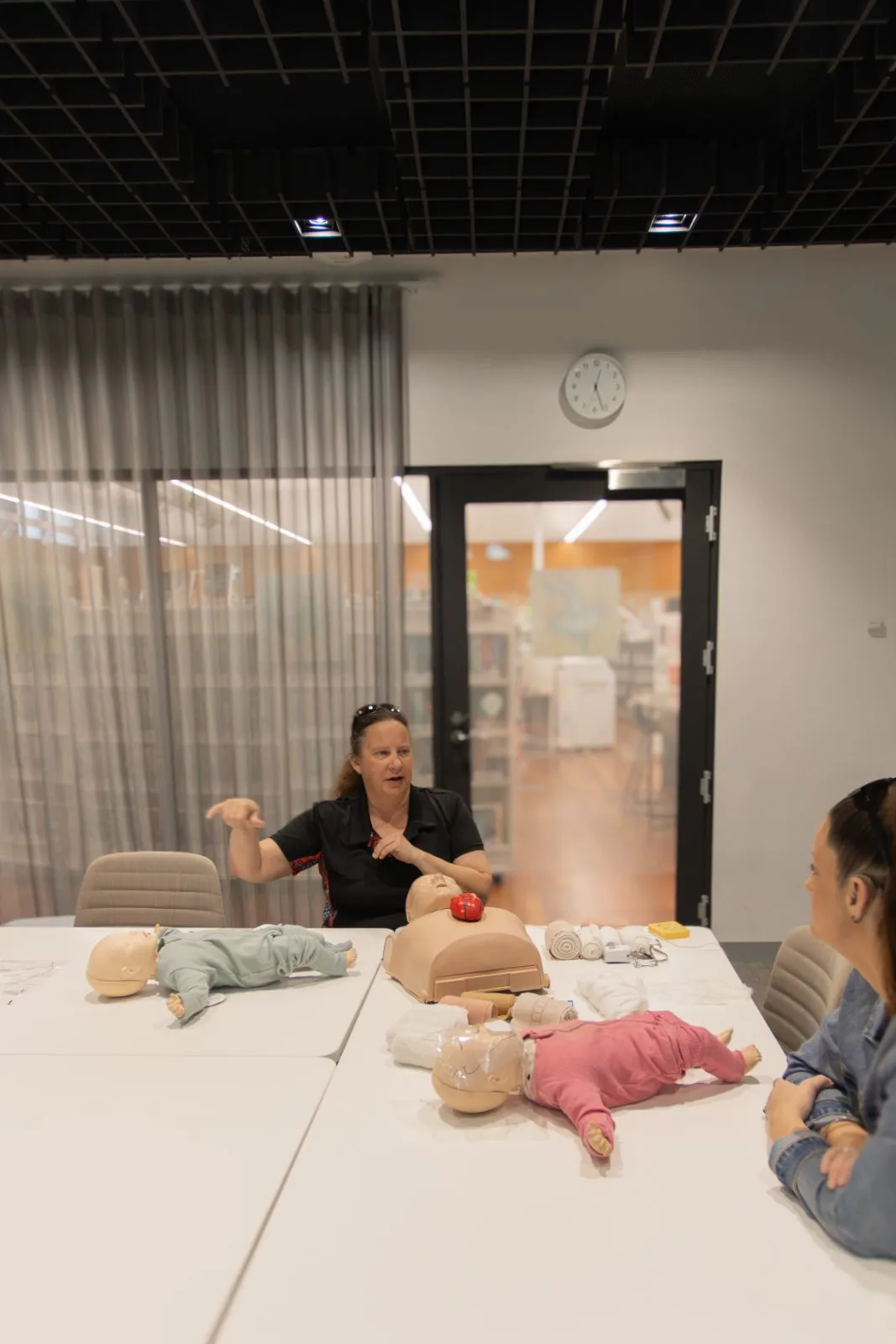
A hands-on course with a qualified trainer is the best way to build confidence.
Looking after yourself afterwards
After a death, staff and bystanders can carry a lot. It is normal to replay it and to wonder what could have been different. Our guide on looking after yourself after giving first aid explains what is common and when it is worth seeing a GP.
Frequently asked questions
When should I call an ambulance for asthma?
Call immediately if there are signs of severe asthma, such as gasping, being unable to speak more than one or two words per breath, bluish lips or drowsiness. Also call if the person does not improve within 5 minutes of reliever.
Do I need permission to call 000?
No. Anyone can call 000. The coroner in this case stressed that junior staff should know they do not need senior approval for a call made in good faith.
Should I check for a pulse before starting CPR?
No. The decision to start CPR is based on response and breathing, not a pulse check. If the person is unresponsive and not breathing normally, start CPR.
Is it harmful to give a reliever to someone who might not have asthma?
ANZCOR guidance is that no harm is likely from giving a reliever to someone who does not have asthma. Call an ambulance if they are in severe distress.
Does this finding apply to my workplace?
The recommendations were directed at a prison and the Department of Justice. The first aid lessons about calling early, clear authority to call and practice apply to most workplaces.
What if I am not sure whether it is asthma or an allergic reaction?
If someone with asthma and a known allergy may have been exposed and suddenly has trouble breathing, give the adrenaline autoinjector first, then their asthma reliever. Call an ambulance either way.
Sources and current guidance
- Coronial finding: Inquest into the death of Ashley Adrian Lane, Coroner's Court of Western Australia
- ANZCOR Guideline 9.2.5, First aid for asthma
- ANZCOR Guideline 8, Cardiopulmonary resuscitation
REACHAU first aid training focuses on understanding what to do, why it matters and how to act when someone needs help.
View upcoming first aid sessionsTraining and Assessment is delivered by Britt at Regional Education and Career Help Australia on behalf of ABC First Aid RTO 3399.
Related reading
- Max McKenzie inquest: anaphylaxis and asthma lessons
- DRSABCD: the first aid action plan
- After the emergency: looking after yourself when you helped
This article shares learning points from a published coronial finding and current ANZCOR guidance. The setting was a prison, and the recommendations were directed at prison services. This article does not suggest that workplaces or the public should act as prison staff do. It is general information, not medical advice, and it does not replace an asthma action plan or hands-on training. In an emergency, call 000.