
Peptides and Anaphylaxis: Lessons from Richard Norton
Peptides, Anaphylaxis and the Warning Signs We Cannot Afford to Miss
What the Richard Norton coronial finding teaches us about recognising danger early, why a puffer is not enough, and why adrenaline comes first.
By Britt Brennan, REACHAU | 16 November 2026
The injection was not the first warning
Imagine someone telling you they have started something new for their health or recovery. They are pleased with how they feel. Their sleep has improved, the pain has eased and they have more energy.
Then they mention that after the injections their skin went red. A few days later they were flushed across their whole body. One morning they had chest tightness and shortness of breath. They used their asthma puffer and the symptoms settled.
What would you make of that?
Would you hear "asthma" and stop looking? Would you assume that because the breathing improved, the danger had passed? Would it matter that they had used the product several times before?
These are not invented details. They come from the Victorian coronial finding into the death of Richard John Norton, the Australian martial artist, actor and stunt performer.
I want to focus on what happened before his cardiac arrest. In first aid, the skill is not only remembering what to do once somebody collapses. The skill is recognising what might be happening early enough to act.
What the coroner found
What the finding says
Richard Norton died at The Alfred Hospital in Melbourne on 30 March 2025, aged 75. Coroner David Ryan signed the finding into his death without inquest on 28 October 2026 (COR 2025 001710). The coroner found that his death was triggered by an anaphylactic reaction to an injection of CJC-1295 and ipamorelin. The medical cause of death was complications of an out-of-hospital cardiac arrest, due to anaphylaxis, with asthma and hypertrophic cardiomyopathy (a thickened heart muscle, found at autopsy) as contributing conditions.
Richard had spent much of his life working with his body, as a martial artist, actor, stunt performer and instructor. The finding records that he had asthma, osteoarthritis and previous shoulder reconstructions. He had been prescribed peptides before and found them helpful for fatigue, recovery, shoulder pain and loss of lean muscle.
In March 2025 he consulted a doctor about peptide therapy, had tests and signed an informed consent form. That form listed anaphylaxis as a risk. On 19 March he was prescribed an injectable combination of CJC-1295 and ipamorelin, made by a licensed compounding pharmacy in Queensland and supplied through the clinic.
This matters. This is not a story about someone buying an anonymous vial from a social media account. It was a prescribed, compounded product. The finding notes that none of the peptides involved are on the Australian Register of Therapeutic Goods. Being prescribed did not make the product approved, and it did not remove the risk.
What happened in those last days
On 25 March, Richard reported that he was feeling good and the therapy was helping.
At about 4pm on 28 March, he spoke with a nurse at the clinic about replacing a broken vial. He told the nurse he was sleeping better, had less pain and could exercise more. He also said he had been taking double the prescribed dose. The nurse advised him to go back to the prescribed dose from the following week, and the doctor authorised a replacement.
Hospital records made after his collapse fill in another part of the story. Since his first injections he had noticed local redness and swelling and, over the last few days, whole-body flushing. On the morning of 28 March, after injecting, he had whole-body flushing, chest tightness and shortness of breath. Those symptoms eased after Ventolin.
At about 9pm that evening he injected again. His wife recalled that he said he felt hot and flushed, then collapsed and became unresponsive. She rang their GP, who called emergency services at 9.10pm, and she started CPR. Paramedics arrived at about 9.22pm and found him in cardiac arrest. His circulation returned at 9.55pm and he was taken to The Alfred.
He died in hospital on 30 March from the effects of the cardiac arrest on his brain, bowel and heart.
Those are the documented facts. We should not rearrange them to make a more dramatic story, and we should not claim that any particular first aid action would definitely have saved him. We can look at the warning signs and ask what they mean for the next person.
What the investigation found about care, and what the coroner recommended
The finding is careful, and it deserves to be read that way.
The coroner found that Richard had been taking more than the prescribed dose. It would be wrong to say the double dose alone caused the reaction. Anaphylaxis is not a toxic overdose. It is a severe whole-body allergic reaction, and it can happen with a small exposure to a trigger. The finding did not establish that a particular dose was needed to cause it.
The forensic pathologist favoured the peptide injections as a possible cause of the anaphylaxis, and the coroner was satisfied the injection triggered it. Hospital tests showed raised tryptase, a marker that supports anaphylaxis when read alongside the clinical picture. Toxicology testing was not able to detect the specific peptides.
An independent expert reviewed the medical care for the Medical Board of Australia. He considered the care overall to be at a reasonably expected standard, but found the clinical notes well below standard and said the doctor should have spoken with Richard directly before authorising the replacement. The Medical Board decided regulatory action was not warranted for the clinical care itself, but cautioned the doctor about assessing risk before a replacement prescription, and placed conditions on his registration requiring education and an audit of his record keeping.
The same expert found there was insufficient evidence that CJC-1295 and ipamorelin is safe, effective or beneficial for human use.
The coroner went further. He was not satisfied these peptides should be available for prescription at all, and recommended that the Therapeutic Goods Administration (TGA) review their benefits and risks and consider stronger restrictions, such as listing them under Schedule 10. Schedule 10 covers substances so dangerous to health that their supply and use should be prohibited. The coroner suggested a listing could still allow exceptions such as clinical trials.
A coronial finding sets out the circumstances of a death and makes prevention recommendations. It is not an invitation for strangers to assign blame or to guess at conversations we were not part of.
What is a peptide?
A peptide is a short chain of amino acids, the building blocks of protein. Peptides are part of normal human biology, and some well-established, regulated medicines are peptides. Insulin is a familiar example.
So "peptides are dangerous" is too broad to be accurate. The useful questions are: which peptide, in what product, for what purpose, with what evidence, from what supply chain, and with what risks?
CJC-1295 and ipamorelin are promoted for stimulating growth hormone pathways, recovery, body composition and anti-ageing. Other unapproved products being promoted in Australia include BPC-157, TB-500 and GHK-Cu, usually marketed with claims about healing, injury recovery, skin or performance. Retatrutide, an experimental weight-loss medicine still in clinical trials, also appears in recent warnings. It is a different product with different risks, and it should not be lumped in with what happened to Richard.
People come across peptide marketing in gyms, sports recovery conversations, anti-ageing and wellness clinics, and all over social media. The packaging can look very professional. Marketing language is not clinical evidence.
Approved, compounded and experimental are not the same thing
In Australia, medicines generally need to be on the Australian Register of Therapeutic Goods before routine supply, unless a specific exemption or access pathway applies.
- Approved means the TGA has evaluated the medicine for quality, safety and effectiveness.
- Compounded means a pharmacist has prepared a medicine for an individual patient. That can be legitimate and necessary, but a compounded product is not the same as a TGA-registered one.
- Prescribed means a doctor has authorised it. A prescription is not proof that an experimental substance works or that its risks are understood.
Words like "prescription" and "compounded" can make a product sound approved. They mean different things.
What Australian health authorities are seeing
In June 2026, the TGA and Australia's Chief Medical Officer issued a joint warning about the growing availability and use of unapproved peptide products. Harms reported included severe allergic reactions requiring hospitalisation, liver injury, and inflammation and other complications.
On 27 October 2026, Victoria's Chief Health Officer issued a health advisory reporting 13 notifications of anaphylaxis linked to unapproved peptides in Victoria since July 2025. Before July 2025, only one such case had been notified since anaphylaxis reporting began in 2018. Five of the 13 were notified in the second half of September 2026, and 12 were believed to be the person's first ever episode of anaphylaxis.
That tells us a problem is being seen. It does not tell us what proportion of peptide users will react, because nobody knows how many people are using these products. It is a count for one state over one period, not a national risk figure.
The advisory makes two points every first aider should know. Anaphylaxis can follow a first dose, or happen after several doses that seemed fine. And you do not need a history of anaphylaxis to react.
On 5 November 2026, the TGA published laboratory testing of some Synedica-branded peptide products. Several labelled as containing TB-500 had no detectable TB-500, and a retatrutide product contained less than the label claimed, with big differences between samples. Those results are about the products tested. They tell us nothing about what was in the vial Richard used. What they do show is that you cannot judge what is in a vial, or how much, from a neat label.
How anaphylaxis can turn into a cardiac arrest
Anaphylaxis is not just an extreme skin allergy. It is a rapidly developing reaction that can affect breathing and circulation at the same time.
During anaphylaxis, the immune system releases chemicals that act on blood vessels and airways. Blood vessels widen and leak fluid into the surrounding tissue, so blood pressure can fall sharply. The airway can swell. The muscles around the smaller airways can tighten, causing wheeze and difficulty breathing.
If not enough oxygen gets into the lungs, or the circulation cannot deliver it to the brain and heart, those organs are in immediate danger. Severe breathing problems and shock can progress to cardiac arrest.
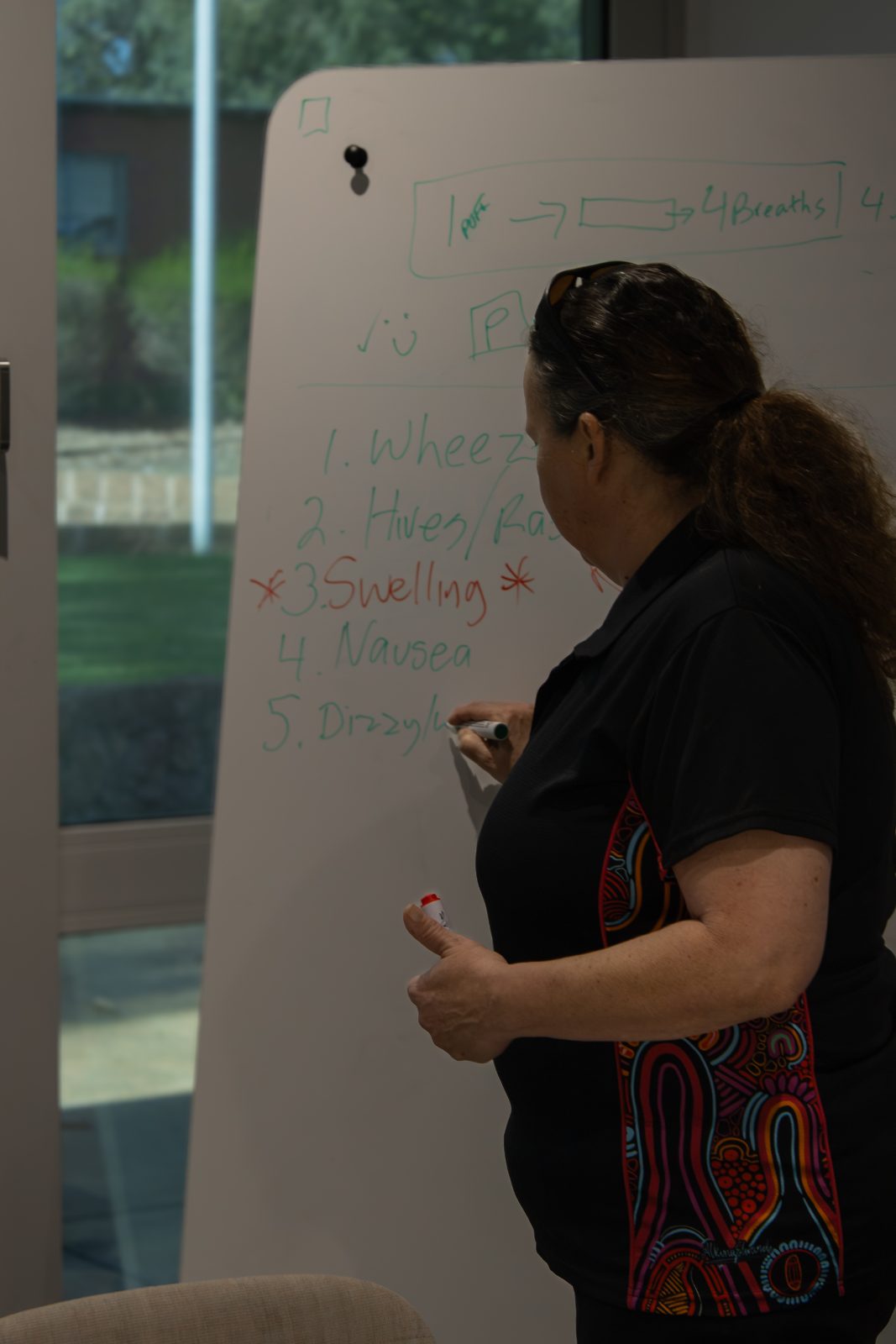
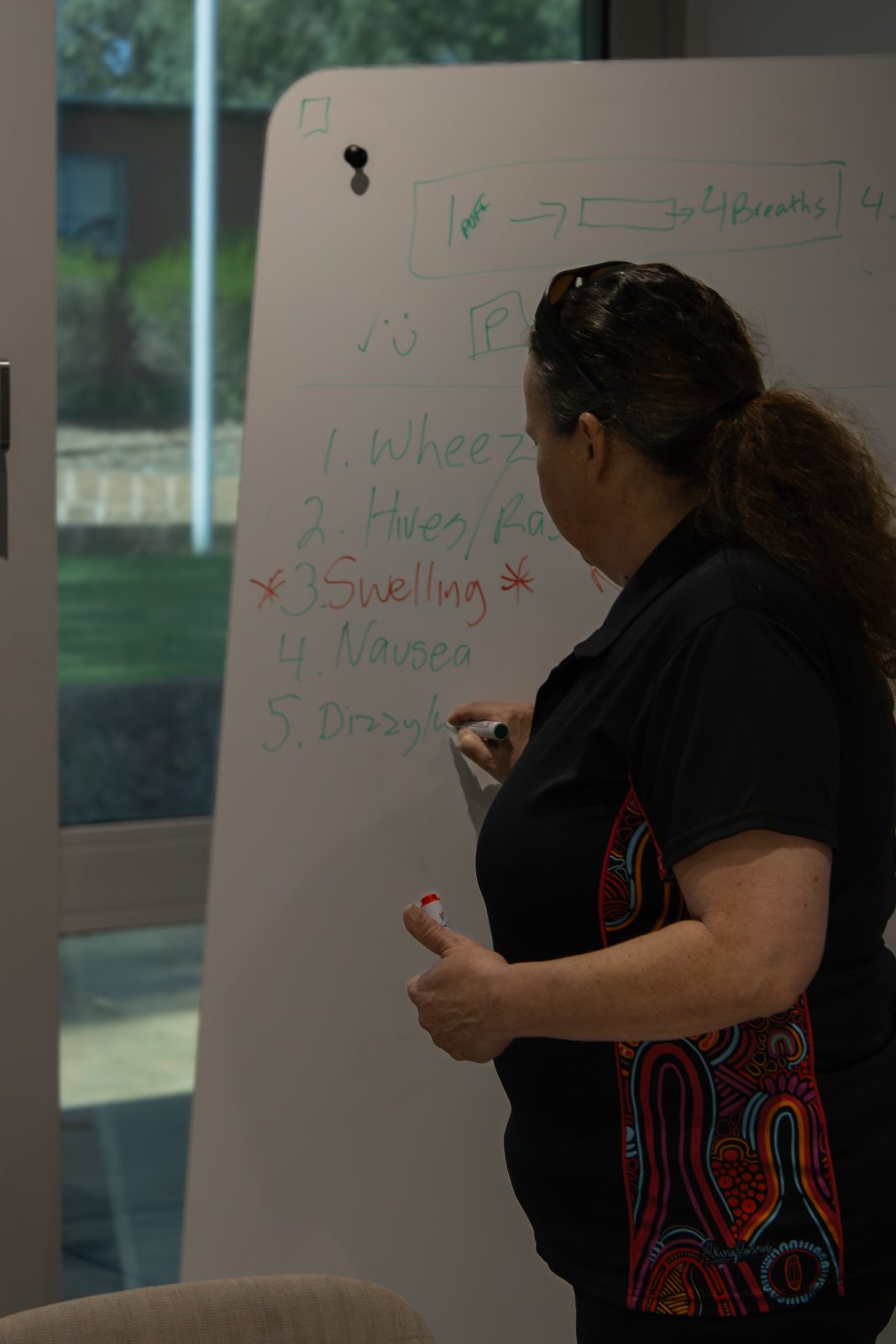
There is no single way anaphylaxis looks. The 2026 ASCIA Action Plan is clear that it can occur without skin symptoms. Watch for:
- difficult or noisy breathing, wheeze or a persistent cough
- swelling of the tongue, or swelling or tightness in the throat
- difficulty talking or a hoarse voice
- persistent dizziness or collapse
Pay attention, too, when someone suddenly says they feel hot, flushed or very unwell after a possible trigger.
Look at the whole person, not just the skin. What changed? What were they exposed to, and when? Are their breathing, voice, colour or level of alertness changing? Recognising anaphylaxis is not a medical diagnosis. It is an emergency decision based on what you can see and what has just happened.
The asthma trap
The detail that stays with me from this case is the morning episode. He injected, then had whole-body flushing, chest tightness and shortness of breath. He used Ventolin, and the symptoms settled.
It is completely understandable that someone with asthma reaches for their reliever when they feel tight and breathless. But feeling better after a puffer does not prove the problem was only asthma.
Asthma and anaphylaxis can both tighten the airways, which is why wheeze and chest tightness show up in both. A reliever like salbutamol (Ventolin) relaxes tight airway muscles. It does not reverse throat swelling or the fall in blood pressure that anaphylaxis can cause. Adrenaline treats all of those at once.
ASCIA guidelines say unexpected sudden wheeze should be treated as anaphylaxis. If someone with known asthma has sudden breathing difficulty after possible exposure to an allergen, give the adrenaline device first, then the asthma reliever. We cover this in more detail in why adrenaline comes before the inhaler.
This is the lesson I would draw out in class. Someone who has just injected something and develops widespread flushing with chest tightness or difficulty breathing needs to be treated as possible anaphylaxis. Do not dismiss it because they have asthma. Do not dismiss it because the puffer seemed to help.
We cannot know from the finding whether emergency treatment that morning would have changed what happened that night. But that symptom pattern is exactly the kind we need to teach people not to ignore.
Previous doses do not give you permission to relax
One of the most misleading things anyone can say about a medicine, supplement or food is: "I've had it before and nothing happened."
That history is useful, but it is not a guarantee. People can react after earlier exposures that went smoothly. With unapproved injectable products, there is extra uncertainty about the ingredients, the strength, the batch and how they were made.
The Victorian advisory specifically warns that anaphylaxis can happen after several previous doses without a problem. The same is true well beyond peptides: medicines, foods and insect stings can all cause a serious reaction in someone who has had them before.
In first aid, we respond to what is happening now, not to what happened last time.
The adrenaline hesitation problem
I see this again and again in training. People can tell me the right answer in a classroom discussion, then hesitate when the scenario becomes realistic.
They worry they might be wrong. They want another symptom to appear. They think it might be asthma. They want to ring a family member, or drive to hospital, or wait and see if the person settles.
Those reactions are human. But anaphylaxis does not give us unlimited time to make up our minds.
Adrenaline is the first-line treatment for anaphylaxis. It tightens blood vessels to support blood pressure, reduces swelling and opens the airways. The 2026 ASCIA Action Plan puts it plainly: if in doubt, give the adrenaline device.
The question people ask is "What if it is not anaphylaxis?" The more important question is "What happens if it is, and we wait?"
Severe reactions can change quickly. The person may be talking, frightened but otherwise looking fairly well, with only a few visible signs. Then they become dizzy, their breathing worsens or they collapse. By the time they lose consciousness, the chance to act early has gone.
- Do not delay adrenaline to look for an antihistamine. Antihistamines do not treat life-threatening breathing or circulation problems.
- Do not use a reliever puffer instead of adrenaline when anaphylaxis is suspected.
- Do not put the person in a car and hope to reach hospital in time.
An adrenaline device can feel like a bigger decision than handing someone a glass of water. That is exactly why realistic scenario practice matters. The right action does not depend on how dramatic a rash looks. It depends on whether anaphylaxis may be happening.
What to do if you suspect anaphylaxis
Follow the person's ASCIA Action Plan if they have one. Otherwise, these are the steps from the 2026 ASCIA Action Plan:
- Lay the person flat. Do not let them stand or walk, even if they say they feel better. If breathing is difficult, they can sit on the floor with legs outstretched rather than on a chair. If they are unconscious or vomiting, use the recovery position. If pregnant, lay them on their left side. Hold young children flat, not upright.
- Give the adrenaline device without delay, following the instructions for that device. In Australia this may be an autoinjector (EpiPen, Anapen or Jext) into the outer mid-thigh, or neffy nasal spray. Our guide to adrenaline devices in Australia explains the differences.
- Call 000 and say "anaphylaxis" clearly.
- Contact family or an emergency contact once the essentials are done.
- Give further adrenaline if there is no response after 5 minutes.
- If they have asthma and breathing symptoms, give the reliever puffer after the adrenaline.
- Start CPR at any time if they are unresponsive or not breathing normally, and get an AED on as soon as one is available.
A person who improves after adrenaline still needs to go to hospital. ASCIA advises at least 4 hours of observation, because symptoms can come back.
What to tell the 000 call taker
Say you suspect anaphylaxis. Describe the breathing or circulation signs you can see. Tell them what was injected, eaten or taken, and when, if you know. Say when adrenaline was given and how many doses. Then follow their instructions.
A first aider does not need to know whether a product was legally prescribed before treating suspected anaphylaxis. The Victorian advisory is clear that people should not delay calling for help because they are worried about where a product came from. Medical staff need accurate information to treat you. That is the only reason they ask.
A word about CPR in this case
When Richard collapsed, his wife started CPR. Paramedics continued resuscitation and restored his circulation before taking him to hospital. That is an important part of the documented story.
A return of circulation is not the same as recovery. A cardiac arrest can starve the brain and other organs of oxygen long enough to cause devastating injury, even when the heart starts again. That is what happened here.
We should not promise that CPR always gives someone their previous life back. We should also resist the opposite mistake: deciding a person is beyond help because the situation looks frightening. A bystander cannot judge the outcome in that moment.
CPR keeps blood moving while help is on the way, and an AED can treat certain heart rhythms. In a severe allergic emergency, early adrenaline treats the reaction itself, while CPR and the AED become critical if cardiac arrest happens. Recognising anaphylaxis early may create a chance to act before collapse. It is never a reason to wait for the person to get worse.
A three-decision scenario
This is the kind of scenario I would use in a first aid class. It is inspired by the warning signs in the finding. It is not a recreation of what happened to Richard.
You are at a gym, a workplace or at home. A friend tells you they have just injected a peptide they use for recovery. They have used it before. Suddenly their face and chest go red. They say their chest feels tight and they cannot get a full breath. They have asthma, and they reach for their Ventolin.
Decision one: what are you thinking?
"It could be asthma" is not enough. What else could explain sudden breathing difficulty straight after an injection? Recent exposure plus flushing plus breathing symptoms should make you think of anaphylaxis immediately.
Decision two: they say they feel better after a few puffs. What now?
Improvement is not proof of safety. If anaphylaxis is suspected, lay them flat or let them sit with legs outstretched, give adrenaline, call 000 and keep watching them closely. Do not let them walk off or drive.
Decision three: their breathing worsens and they collapse. What now?
Make sure 000 has been called, check whether they respond and whether they are breathing normally, start CPR if needed and send someone for the AED. Keep going until help takes over.
Then I would stop the scenario and ask the question that matters most: at which point did we have enough information to act?
That is where confidence comes from. Not from another list to memorise, but from seeing how the information connects.
Being precise about what we know
If we want people to trust first aid education, we have to be precise. These distinctions do not soften the message. They make it stronger.
- Not all peptides are experimental or unapproved. Some are well-established medicines.
- This finding is about the injected CJC-1295 and ipamorelin combination. It does not mean every peptide named in a TGA warning caused this death.
- The double dosing was an important finding, but the coroner did not find that it alone explains why anaphylaxis happened.
- We should not assume contamination caused the reaction. The finding did not identify a contaminant as the trigger.
- The Victorian figure of 13 cases is a count for one state over one period, not a national rate or a risk per injection.
- The finding does not say whether adrenaline was available at home, or what would have happened if the morning episode had been recognised as anaphylaxis. We should not invent those facts.
- A coroner's role is to establish the facts, not to decide criminal or civil liability.
- The Medical Board's outcome was specific: no regulatory action over the clinical care itself, but a caution about risk assessment before a replacement prescription, and conditions on his registration about record keeping.
What I want people to take into their own lives
I do not expect everyone reading this to remember the names CJC-1295 and ipamorelin. In a year there may be a different product being promoted online, with a different set of claims.
I want people to remember something more useful.
A familiar person can have an unfamiliar reaction. A prescribed product can still carry serious risk. Something used before can cause a reaction today. Wheeze is not automatically asthma. Feeling better after a puffer does not rule out anaphylaxis.
And when someone may be having anaphylaxis, adrenaline is not the last resort. It is the first treatment.
- If you live with a severe allergy, keep your adrenaline device with you and make sure the people around you know how to use it.
- If you are thinking about using a peptide, talk with a qualified Australian health professional about the evidence, the risks and approved options. Do not buy or inject unapproved products because someone online says they worked for them.
- If you have used an unapproved peptide and feel unwell, tell your medical team exactly what you took, including the packaging or dose details if you have them. The goal is treatment, not embarrassment.
- If you work with people, practise scenarios where the information is incomplete, the decision feels uncomfortable and waiting seems tempting.
For first aiders, the message is simple: you do not need to know every possible diagnosis to recognise that breathing difficulty after an injection may be an emergency.
Frequently asked questions
What did the coroner find about Richard Norton's death?
The Coroners Court of Victoria found his death was triggered by anaphylaxis after an injection of the unapproved peptide combination CJC-1295 and ipamorelin, which led to cardiac arrest. Asthma and a thickened heart muscle were contributing conditions.
Can peptide injections cause anaphylaxis?
Yes. Victoria's Chief Health Officer reported 13 notifications of anaphylaxis linked to unapproved peptides in Victoria between July 2025 and October 2026. Reactions can happen after a first dose or after several doses that seemed fine.
If someone's breathing improves after Ventolin, can it still be anaphylaxis?
Yes. A reliever puffer can ease tight airways but does not treat throat swelling or falling blood pressure. ASCIA advises treating sudden unexpected wheeze as anaphylaxis and giving adrenaline first when anaphylaxis is possible.
Does anaphylaxis always cause a rash?
No. The 2026 ASCIA Action Plan states that anaphylaxis can occur without skin symptoms. Breathing difficulty, throat tightness, a hoarse voice, dizziness or collapse after a possible trigger are enough to act on.
What if I am not sure it is anaphylaxis?
If in doubt, give the adrenaline device. That is the wording of the 2026 ASCIA Action Plan. Then call 000.
When can a second dose of adrenaline be given?
ASCIA advises that further adrenaline may be given if there is no response after 5 minutes.
Should someone who has used an unapproved peptide still call 000?
Yes. Victorian health authorities say not to delay emergency care because of concerns about where a product came from. Tell the paramedics and hospital staff what was used so they can treat you properly.
Are all peptides dangerous?
No. Some peptides, such as insulin, are well-established approved medicines. The concern is unapproved products that have not been evaluated by the TGA for quality, safety or effectiveness.
Why I use coronial findings in first aid education
Coronial findings show us what real emergencies look like outside the neat boundaries of a training manual.
Real people rarely have symptoms in the tidy order listed on a classroom slide. They have other health conditions. They explain away a warning sign. They seem better. They are at home with someone they love. They make decisions based on the information they have.
It is easy to look back and say what should have happened. It is far more valuable to ask what we can learn that might change a decision next time.
Richard Norton's death was a tragedy for his family and his community. I do not use his story to entertain or to blame. I use it to ask whether the next person who sees widespread flushing and sudden breathing difficulty after an injection will think of anaphylaxis sooner.
Whether that is in a home, a gym, a stable, a workplace or a remote community, the principles are the same. Recognise the danger. Lay them flat. Give adrenaline. Call 000. Watch them closely. Be ready to start CPR and use an AED.
First aid is about understanding why an action matters, so you can make the decision when it counts. That is the confidence I want people to leave training with.
Test how you would respond. Take the free 8-question quiz and get the Anaphylaxis Action Pack.
REACHAU first aid training focuses on understanding what to do, why it matters and how to act when someone needs help.
View upcoming first aid sessionsTraining and Assessment is delivered by Britt at Regional Education and Career Help Australia on behalf of ABC First Aid RTO 3399.
Allergy and Anaphylaxis Awareness
Every dollar raised supports research, education and resources that improve outcomes for people living with serious allergies. I am helping raise funds for anaphylaxis research initiatives in Australia.
Sources and current guidance
- Coroners Court of Victoria: Finding into death without inquest, Richard John Norton, COR 2025 001710 (signed 28 October 2026)
- Victorian Department of Health: Increase in anaphylaxis notifications related to unapproved peptides (advisory 261027, 27 October 2026)
- TGA and Australia's Chief Medical Officer: Concerns regarding the public health risks associated with unapproved peptide products (June 2026)
- TGA: Testing finds unapproved peptides do not contain what their labels claim (5 November 2026)
- ASCIA Action Plans for Anaphylaxis (2026)
- ASCIA Guidelines: Acute Management of Anaphylaxis (2026)
Related reading
- Anaphylaxis and Asthma Hub: every guide in one place
- Asthma or anaphylaxis? Why adrenaline comes before the inhaler
- Anaphylaxis or asthma? Lessons from Max McKenzie's inquest
- Anaphylaxis first aid: the 7 mistakes that cost time
This article shares learning points from a published coronial finding, Australian health warnings and current ASCIA guidance. It is general information, not medical advice, and it does not replace an ASCIA Action Plan from a doctor, advice from a qualified health professional or hands-on training. In an emergency, call 000.